Where the land turns salty: How coastal farmers in Bangladesh are keeping traditional rice knowledge alive
- Regenerative Agriculture
- Regenerative Croplands
- Sustainable Rice Farming
- Seed Diversity
- Smallholder Farming
- Sustainable Livelihoods
- Community Action
- Indian Subcontinent
- Indomalaya Realm

In Bangladesh's Sundarbans coastal belt, rising salt is redrawing the map of the farm. The people who work that land are answering it not with a technology handed down from outside, but with something closer to a rediscovery; farming methods their own communities have practiced for generations, now recognized under a global name: agroecology.
At low tide, the line between land and river is mostly a matter of patience. Where a rice field stood a generation ago, brackish water now pools for weeks, leaving a fine white crust villagers call "the salt that stayed." This is a mosaic of tidal rivers, mangrove forest, and densely farmed land where the Bay of Bengal keeps pressing inland. Nothing happens all at once: a saltier plot here, a delayed monsoon there, a season where one crop won't take.
Spend time in these villages, though, and you see more than loss. Farmers are redesigning what they grow, how they source seed, and which soil-management practices they trust, many of them predating the word "agroecology" by generations. At its core, agroecology means farming that works with an ecosystem rather than against it: multiple crops, seed saved and shared rather than bought fresh, soil built up gradually rather than chemically forced. What researchers call traditional ecological knowledge is now treated as the foundation that formal agroecology stands on, not something it replaced.
A farming coastline learning to live with salt
Bangladesh's coastal zone spans roughly 47,150 square kilometers along a 710-kilometer coastline, home to an estimated 38.5 million people. Its southwest corridor, bordered by the Sundarbans, absorbs the brunt of cyclones and tidal surges. But the deeper driver of saltwater intrusion isn't any single storm: it's tidal dynamics, sedimentation, and reduced upstream freshwater flow compounding over decades. For most households, this isn't abstract. It's a seasonal calculation: which plot can still be sown, which crop will tolerate this year's salt level, which older variety might outperform whatever the market is promoting.
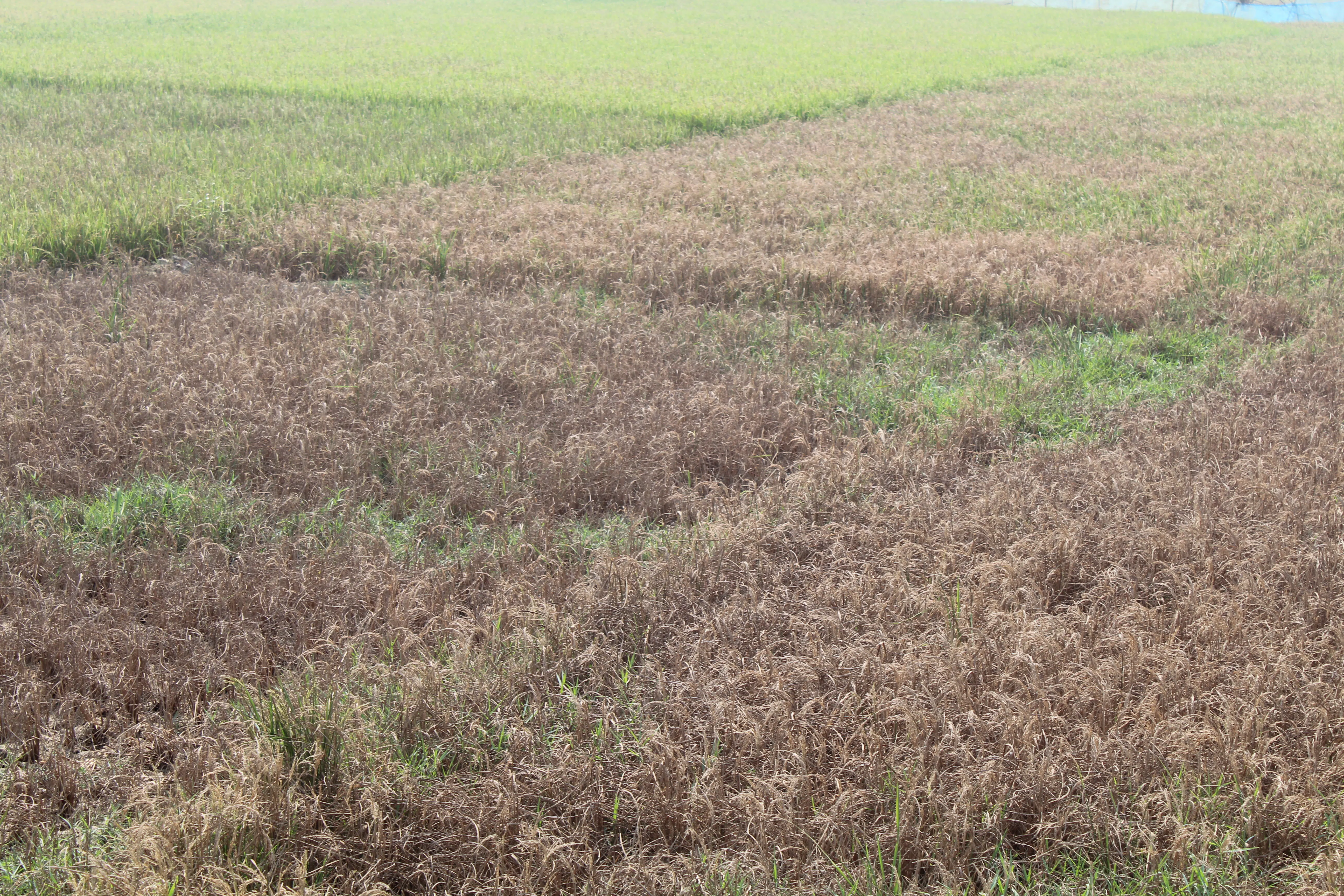
Green and dried patches across a coastal field reveal the uneven growing conditions that shape farmers’ choices from season to season.Image Credit: Syed Navid Anjum Hasan.
Rice that learned to taste salt: The coast's own seed
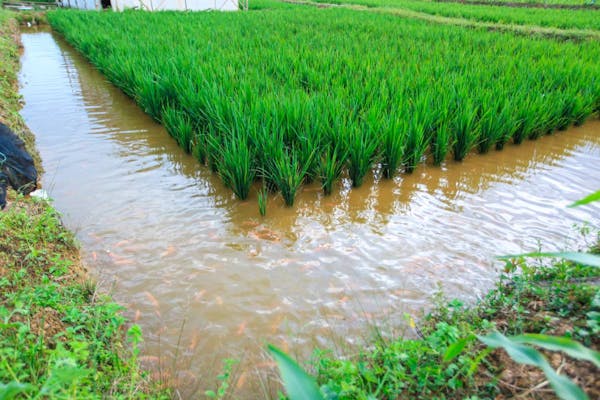
Farmers here haven't waited for the tide to recede on its own. Across Satkhira and neighboring districts, for generations, they've selected, tested, and kept alive their own strains of rice—Rajashail, Kajalshail, Patnai, Morichshail, Lokkhishail—varieties that still yield grain in salt-heavy soil. These aren't laboratory creations, but varieties shaped by knowledge tested in the field, season after season. Farmer Salam Gazi still grows them in Patkelghata; Indigenous Munda farmers Sanatan Munda, Phanindra Munda, and Krishnapada Munda do the same in Dhumghat.
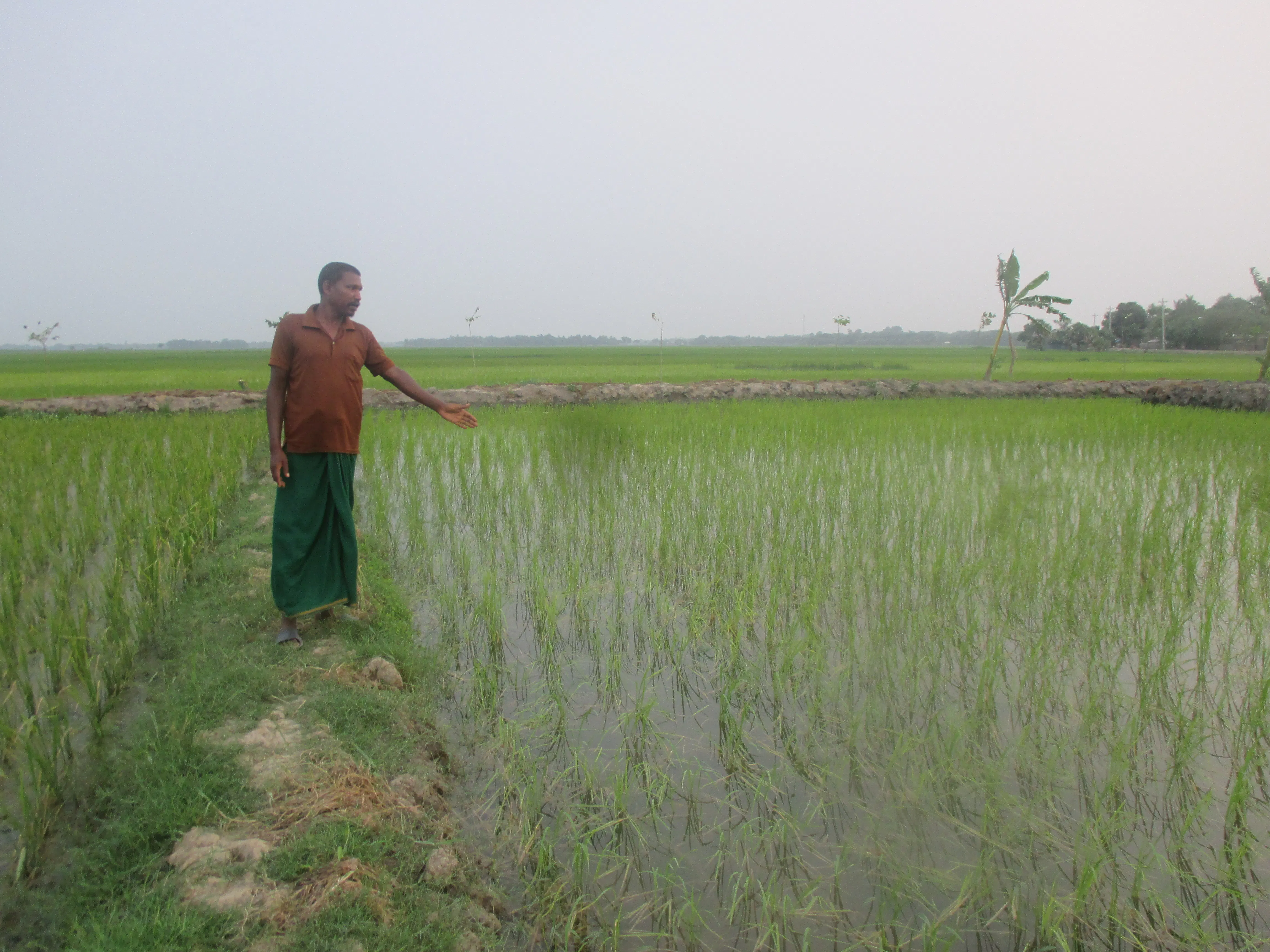
Farmer Sanatan Munda checks the waterline against rice stalks during the Boro season. His plot carries Rajashail, a salt-tolerant variety his family has cultivated for generations. Despite higher salinity levels following a dry monsoon, the variety still produces grain where non-tolerant varieties fail completely. Image Credit: Syed Navid Anjum Hasan.
On a half-bigha plot at the edge of Dhumghat, Sanatan Munda checks the waterline against his rice stalks, as he does most mornings this Boro season. The plot carries Rajashail, the variety his family has planted for as long as he can remember. Last year salinity ran higher than usual after a dry monsoon, but the rice still filled out, where a neighbor's non-tolerant variety failed outright. Adaptation here isn't one decisive switch; it's a running comparison, plot by plot, season by season.
These desi varieties aren't relics standing in for something better, they're the underlying resource any institutionally bred variety depends on. The Bangladesh Rice Research Institute’s (BRRI) own gene bank, established in 1974, holds roughly 7,500 rice germplasm samples, nearly all originally drawn from farmers' collections. Nayakrishi's Community Seed Wealth Centre separately maintains over 2,500 local varieties.
Newer released varieties such as BRRI dhan97 and BRRI dhan99 have survived salinity levels of 8–16 dS/m in field trials Kaliganj, Satkhira, where standard check varieties have failed. But that salt tolerance exists because farmers first kept those traits alive across generations.
A household typically keeps five or six varieties in stock—staple, festival aromatic, flood-year, dry-year—a redundancy no single high-yield variety reproduces. These are grown without the input package hybrid cultivation usually requires, and with no certification fee or repurchase cost.
That strength has to be weighed against the spread of hybrid and registered varieties, which complicates any simple story of farmers freely choosing what works best. Bangladesh's seed laws have formalized certification around registered seed while marginalizing traditional practice, and Boro-season HYV/hybrid rice arrives bundled with subsidized inputs so adoption may reflect the availability of the support package as much as the performance of the seed itself.
The private sector supplies over 95 percent of hybrid seed sold in Bangladesh. Yet national adoption and yield data complicate a simple argument for hybrid rice based on yield alone: hybrid rice covers only about 6 percent of total rice area, with negligible gains over the widely grown inbred BRRI dhan29.
Munda farmers and the quiet work of seed preservation
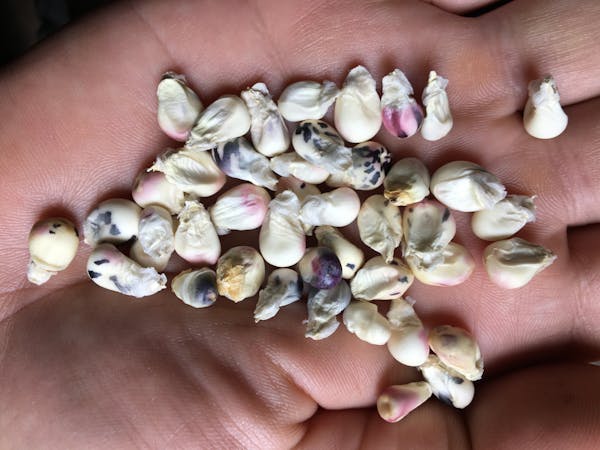
Nowhere is that instinct more visible than in seed. In Dhumghat, the Munda farmers mentioned above have kept Rajashail and Morichshail growing for generations not rejecting newer strains, but running a parallel seed reserve, a living, farmer-managed gene bank beyond the reach of formal systems. Nearby, trials documented by Bangladesh Resource Center for Indigenous Knowledge (BARCIK) and International People’s Agroecology Movements (IPAM) have tested native stem amaranth cultivars in Dhumghat, grown without agrochemicals and judged by the farmers themselves the same logic applied to rice.
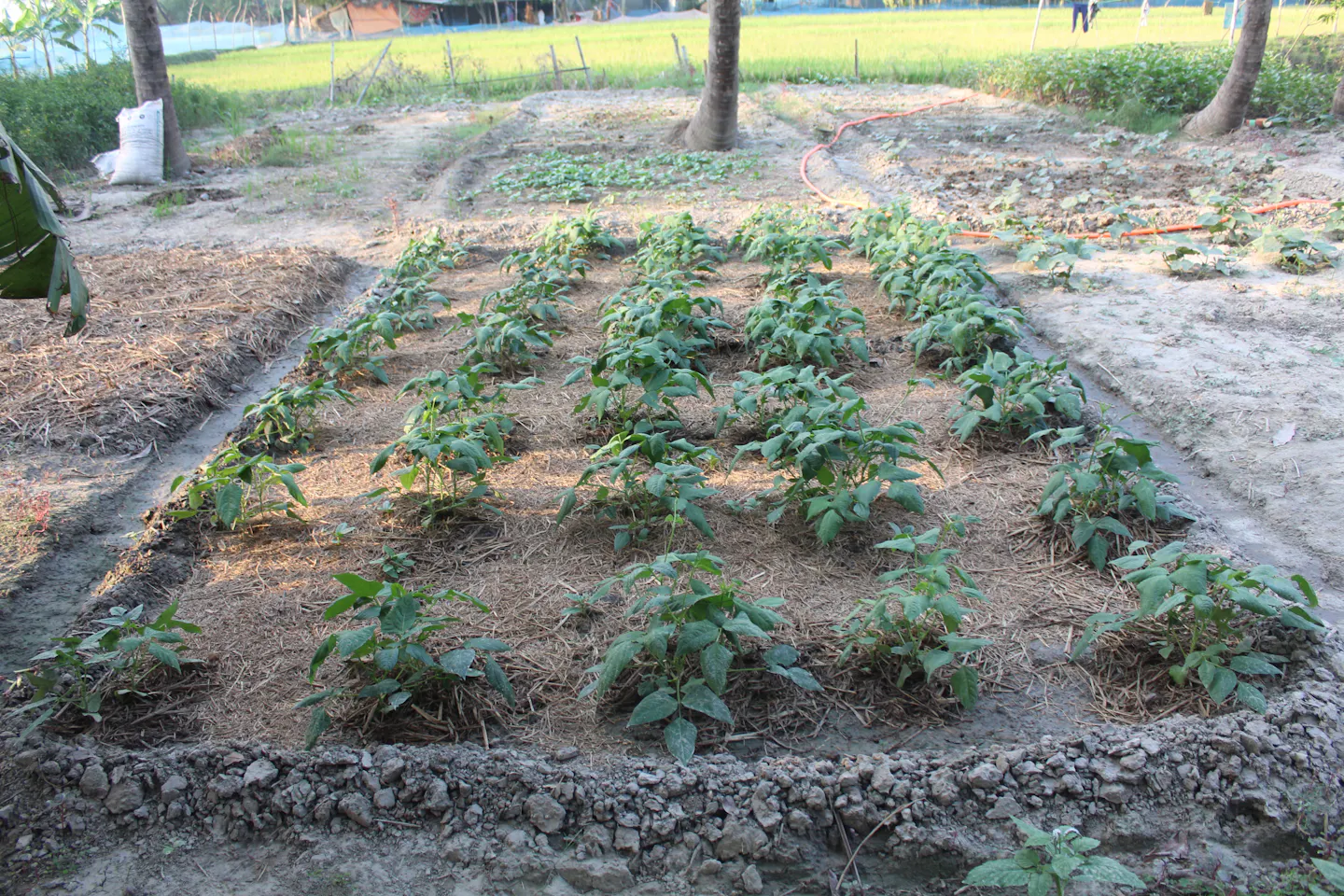
Also in Dhumghat, Alpana Rani Mistri keeps dozens of vegetable varieties in containers around her homestead, after losing her land to Cyclone Aila. She exchanges seed with farmers well beyond her own yard, Munda neighbors among them. "Plants, soil, water, birds, cattle, our rural household is built from all of it together," she says. "I've realized that people have to take responsibility for their own change. You have to discover your own strength." Much of this may never show up in a project document, but together with desi rice, native vegetables, a homestead seed store it amounts to a functioning, farmer-run biodiversity network running alongside whatever formal infrastructure exists on paper.
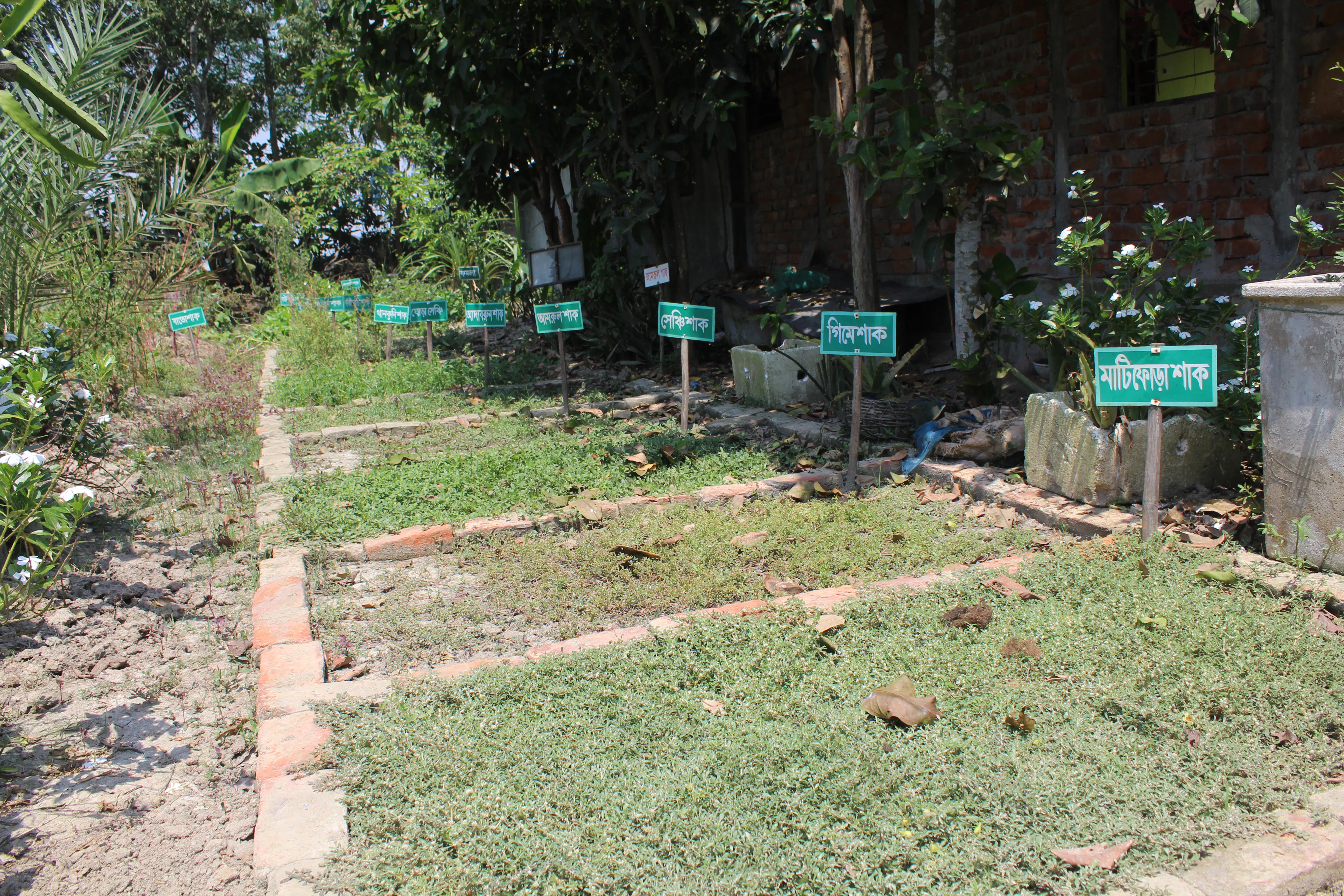
A traditional seed preservation plot showing labeled varieties of local rice and crops in Bengali. This farmer-managed seed bank preserves agricultural biodiversity and represents centuries of farmer-led selection and knowledge accumulated in coastal agroecological systems. Image Credit: Syed Navid Anjum Hasan.
What agricultural resilience looks like from here
None of these developments erases what coastal agriculture is losing. Fields that once fed a family outright now need a second income; some go out of rice altogether when even salt-tolerant varieties can't keep up. What's different is the direction of travel: generations-old desi seed, Research Initiatives Bangladesh (RIB)'s agroecology camps, and Munda farmers' seed-preservation work aren't competing strategies; they're a functioning agroecological system already at work.
The lesson from the Sundarbans isn't that farming under salt has been solved. It's that resilience looks less like one imported technology and more like traditional knowledge and contemporary agroecology reinforcing each other, plot by plot.
Explore similar content

Subscribe to receive monthly updates on climate solutions, environmental heroes, and the profound beauty and wonder of our shared planet Earth.