How the snow petrel thrives at the frozen edge of the world
- Nature Conservation
- Land Conservation
- Iconic Species
- Wildlife
- Birds
- Antarctic Continent & Islands
- Antarctica Realm

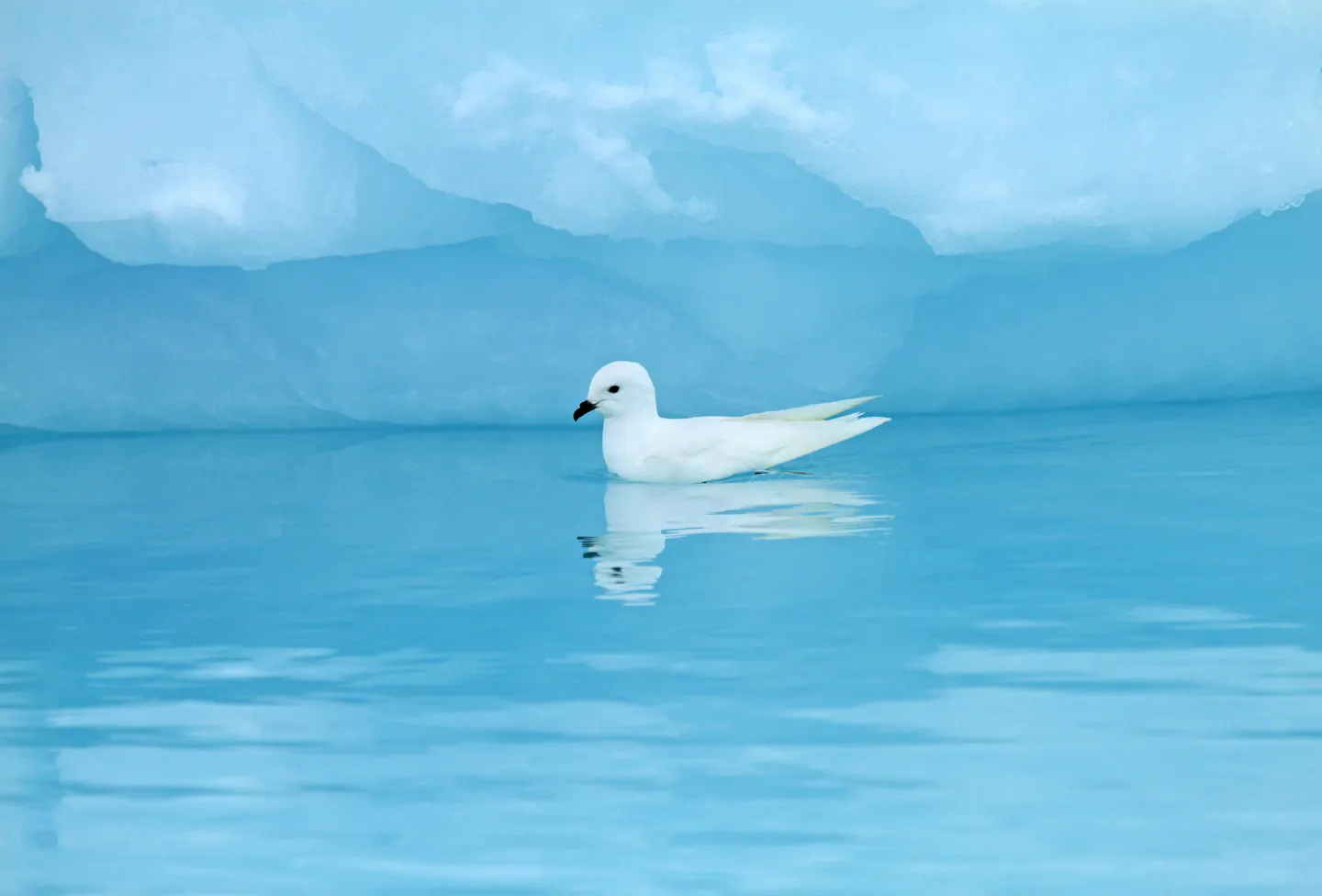
Against the immense whites and blues of Antarctica, the snow petrel (Pagodroma nivea) can seem almost like a piece of the landscape taking flight.
Pure white except for its black eyes and bill and blue-gray feet, this small seabird is remarkably at home in one of the coldest environments on Earth. Snow petrels gather on ice floes, skim above Antarctic waters in search of food, and nest among rocky cliffs and crevices, sometimes far from the coast.
They are among the most distinctly Antarctic birds on the planet. Snow petrels are one of only three bird species that breed only in Antarctica, and they have the southernmost breeding distribution of any bird. More than four million are alive today, making them a familiar presence across parts of the frozen continent and surrounding seas.
A bird of ice in both name and nature
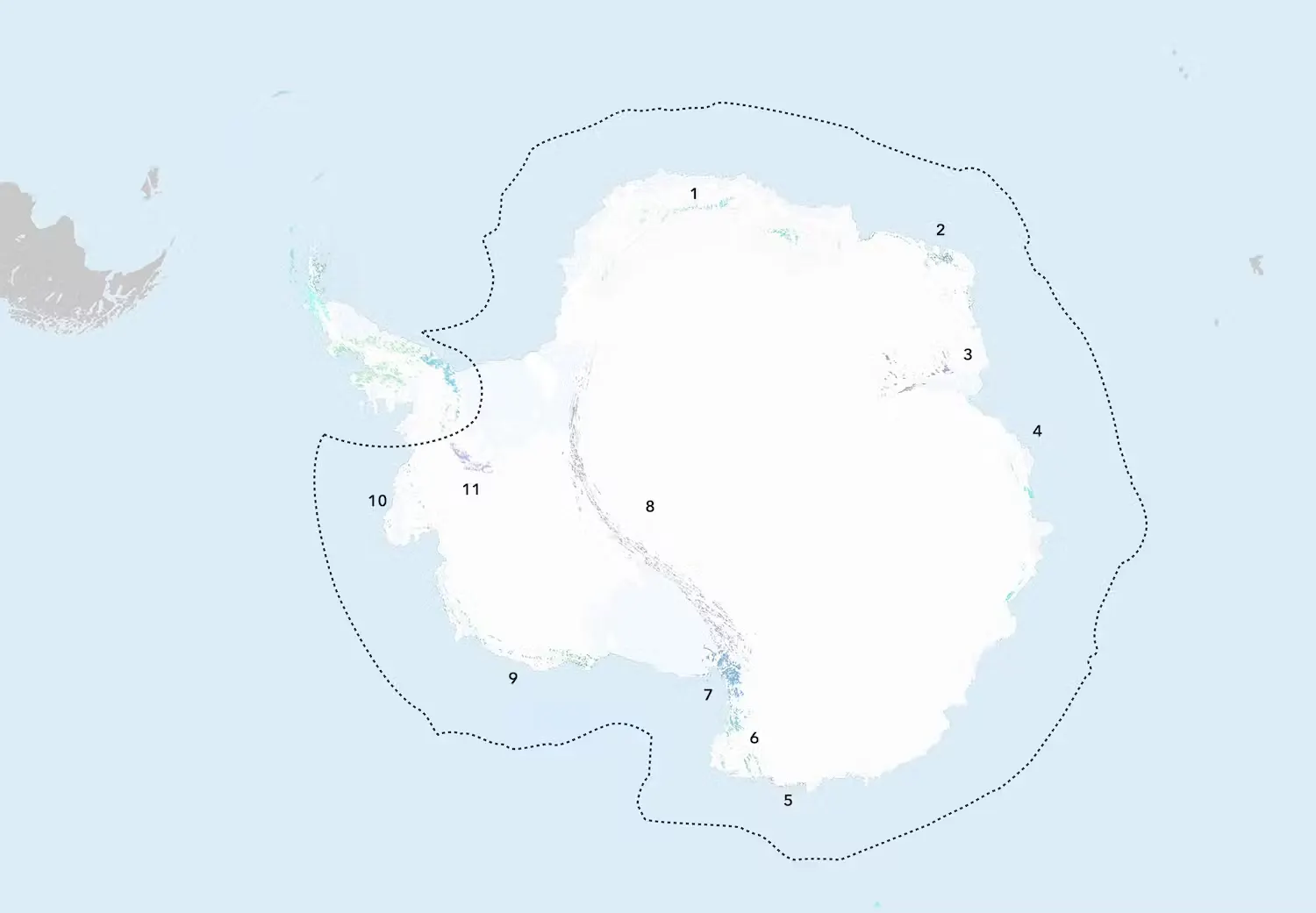
The snow petrel is the iconic species of the Continental Antarctica bioregion (AN1), located in the Antarctic Continent & Islands subrealm of Antarctica.
The snow petrel lives almost exclusively in the frigid waters and ice fields surrounding Antarctica. It ranges across some of the most remote and inhospitable destinations on the planet, including the South Orkney Islands, the Ross Sea, and South Georgia.
Their relationship with ice is reflected even in their scientific name. Pagodroma comes from the Greek words pagos, meaning “ice,” and dromos, meaning “a running course.” The species name nivea comes from the Latin niveus, meaning “snowy.”
The name “petrel” has its own unusual origin. Deriving from Peter the Apostle in Christianity and and the story of his walking on water, it refers to the way petrels appear to run across the water as they take off.
White plumage, fast flight, and adaptations for survival
A snow petrel measures roughly 35 to 40 centimeters (14–16 in) in length and weighs between 250 and 450 grams (9–16 oz), making it a relatively small seabird. True to its name, its plumage is entirely white, offering natural camouflage against snow and ice. The bird's black eyes and black bill stand out sharply against its white feathers, while its feet are a distinctive blue-grey.
In flight, snow petrels are known for quick, erratic changes of direction, and they can reach speeds of around 40 kilometers per hour (25 mph) as they maneuver along cliffs and ice edges.
Like other seabirds that consume large amounts of salt through their marine diet, snow petrels possess a gland above the nasal passage that excretes a concentrated saline solution. This helps them regulate the amount of salt in their bodies.
They also produce an oil in their stomachs with several important uses. The energy-rich substance can help sustain adults during long flights, feed growing chicks, or be sprayed toward predators as a form of defense.
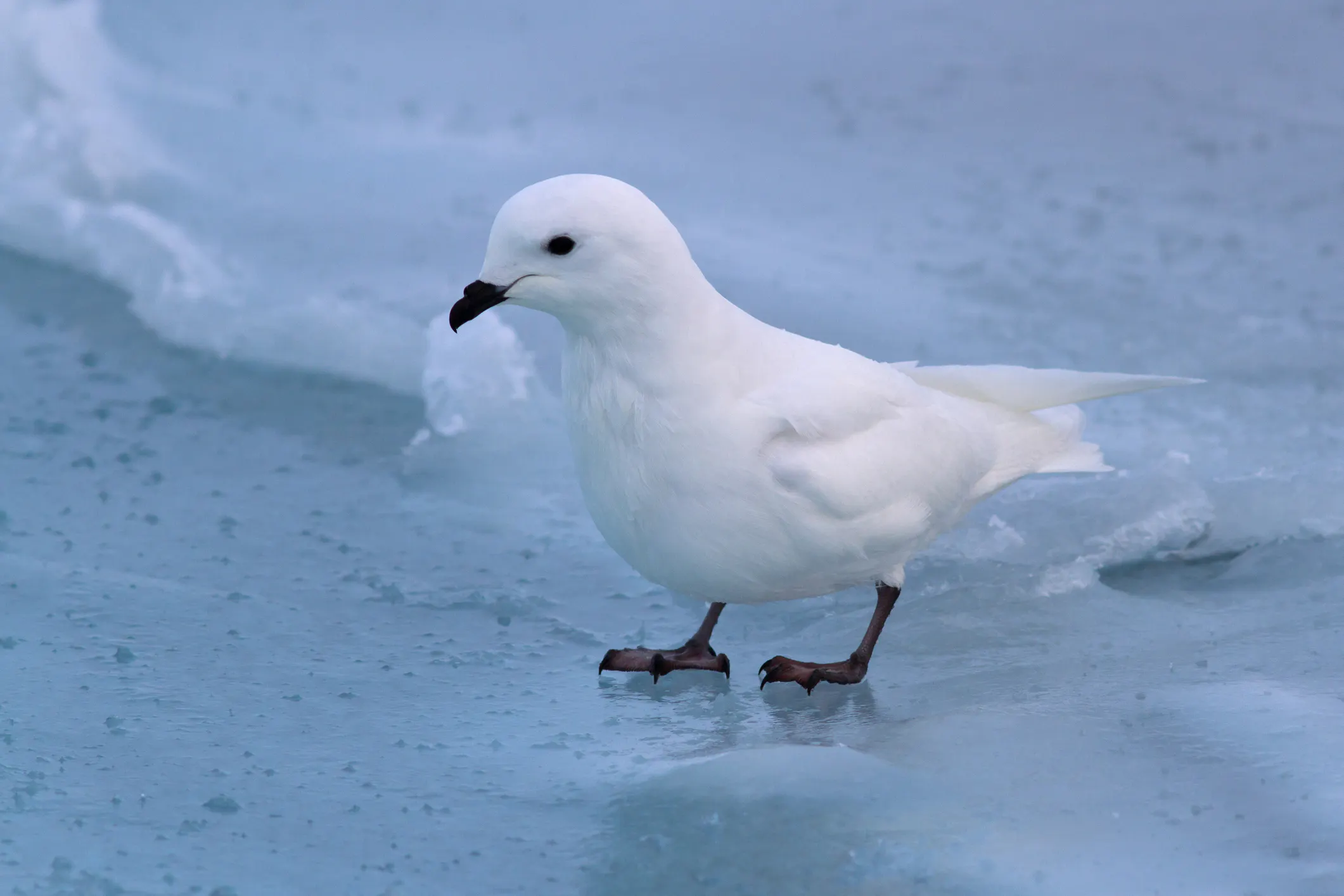
Snow petrel standing on the frozen ocean. Image Credit: © Agami Photo Agency, Dreamstime.
Diet and role in the marine food web
Snow petrels feed close to the surface of the water, rarely diving deep to pursue prey. Instead, most of their hunting happens right at or just below the surface. Their diet includes fish, cephalopods, mollusks, and krill, supplemented by carrion when the opportunity arises. Scavenging is a notable part of their feeding strategy, and they are not above cleaning up after larger Antarctic animals.
As both predator and scavenger, the snow petrel helps keep the Antarctic marine ecosystem in balance. By feeding on fish, krill, and cephalopods, it links itself into the ocean's food chain, while its scavenging habits help recycle nutrients from carrion back into the environment.
In turn, snow petrel eggs and chicks serve as a food source for skuas, making the species part of a delicate predator and prey relationship that plays out on Antarctica's remote coastal cliffs.
Colonies, lifelong mates, and hatchlings
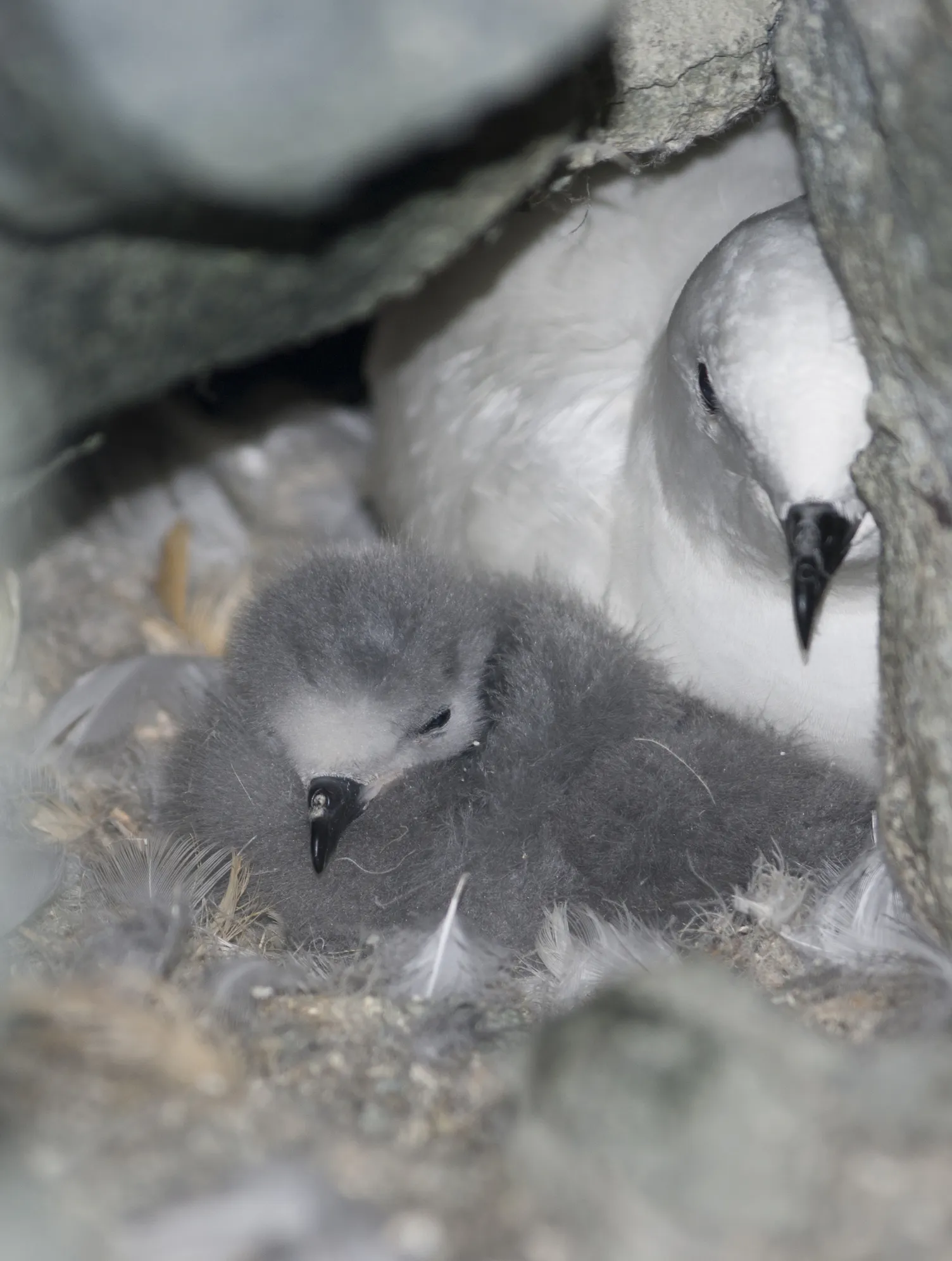
Snow petrel chick and mother nesting among rocks on the Antarctic island. Image Credit: © Tarpan, Dreamstime.
Snow petrels are social birds, though not in the way that some other seabird species are. They form breeding colonies and, outside the breeding season, gather on ice floes in flocks that can number in the hundreds. However, they do not form the massive colonies of hundreds of thousands or millions of birds seen in some other seabird species.
Snow petrel breeding colonies are typically found along coastal cliffs, though some colonies are located farther inland. While a portion of the population remains at the colonies year-round, most birds arrive between mid-December and early November. During courtship, females choose their mates based on aerial ability, watching for males who can match their acrobatic flying. Once a pair bonds, snow petrels stay together for life.
Nests are simple, built by lining small rock crevices or depressions with pebbles, usually beneath some form of rock overhang for protection. A single egg is laid around the start of December, and incubation lasts 40 to 50 days. After hatching, the chick is brooded for about another week before the parents leave it to fend for itself between feedings.
Fledging, when the young bird takes its first flight, happens anywhere from late February through mid-May. In the wild, snow petrels can live up to about 20 years.
Threats from a warming planet
The snow petrel is a bird built for cold. Its life is closely tied to Antarctica’s pack ice, ice floes, frigid waters, and remote breeding grounds, making the stability of that frozen environment central to its future. As the planet warms and Antarctic conditions shift, protecting the cold, ice-dominated ecosystems the species depends on becomes increasingly important.
For now, the snow petrel remains abundant. It is classified as Least Concern, with an estimated population of more than four million birds spread across a vast Antarctic range. Its remote breeding grounds have also helped shield the species from many of the direct habitat pressures experienced by birds elsewhere.
But the snow petrel’s greatest strength, its remarkable specialization for life in Antarctica, also ties its future closely to the fate of the continent itself. Keeping snow petrel populations thriving in the generations ahead means protecting the frozen Antarctic environment that has shaped their lives.
A life shaped by Antarctica
From its lifelong pair bonds to the southernmost breeding distribution of any bird, the snow petrel is uniquely shaped by Antarctica. Small, swift, and almost indistinguishable from the ice itself, it remains a quiet symbol of life at the bottom of the world and of the frozen landscape it depends on.
Explore similar content

Subscribe to receive monthly updates on climate solutions, environmental heroes, and the profound beauty and wonder of our shared planet Earth.
What is an Iconic Species?
One Earth’s Species of the Week series highlights charismatic and ecologically significant animals that represent the diversity of each of our 185 bioregions. These iconic species are part of the One Earth Bioregions Framework. Learn more >
%20(1).jpg?auto=compress%2Cformat&h=600&w=600)