Iberian lynx: How conservation brought this wild cat back from the brink of extinction
- Nature Conservation
- Land Conservation
- Species Rewilding
- Iconic Species
- Wildlife
- Mammals
- Mediterranean
- Western Eurasia Realm

There was a moment, not so long ago, when the Iberian lynx looked destined for extinction. In 2002, only 94 individuals remained, scattered across two isolated populations in Andalusia in southern Spain.
Today, that number tells a very different story. By 2024, 2,401 Iberian lynxes were living across a growing range in Spain and Portugal. This is the story of a spotted, tufted-eared cat that came back from the edge, and the conservation efforts that refused to let it disappear.
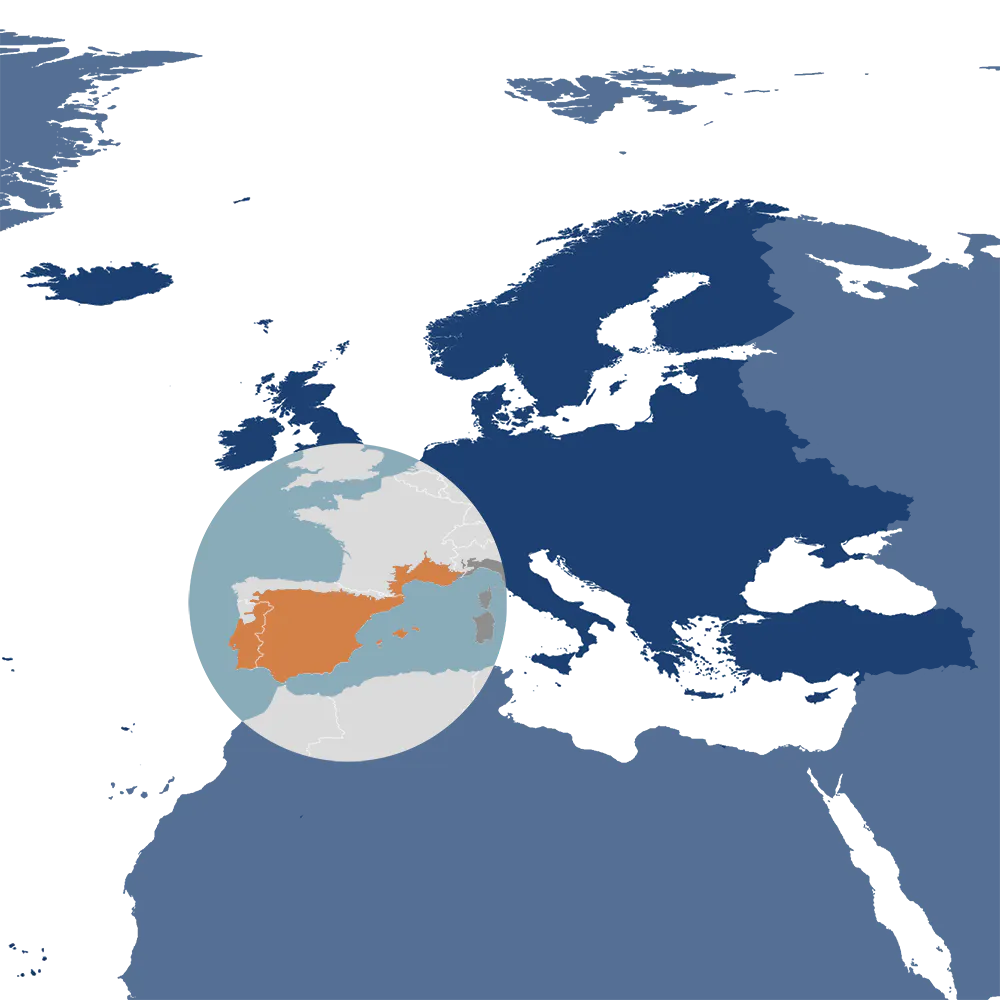
The Iberian lynx is the iconic species of the Balearic Sea & West Mediterranean Mixed Forests bioregion (PA20), located in the Mediterranean subrealm of Western Eurasia.
A shrinking range begins to expand again
The Iberian lynx (Lynx pardinus) is found nowhere else on Earth except the Iberian Peninsula, the swath of land shared by Spain and Portugal. That exclusivity is part of what makes its story so fraught.
As recently as the 1950s, the species ranged widely. A northern population stretched from the Mediterranean coast to Galicia and parts of northern Portugal, while a southern population spread across central and southern Spain.
The decline that followed was staggering. The species dropped from 15 known subpopulations in the 1940s to just two by the early 1990s.
Between the early 1960s and 2000, it lost about 80% of its historical range. By 2012, breeding had been confirmed in only two breeding populations: the Sierra Morena mountains and the coastal plains of Doñana.
The tide has since turned. As of 2024, the lynx's range has expanded into new territory, including the northern and central reaches of Extremadura around Valdecañas and Cornalvo Nature Park, the Albacete region of Castilla-La Mancha, and the Sierras Subbéticas in Andalusia.
Tufted ears and a coat built for camouflage
The Iberian lynx is compact and powerfully built, with a body designed for stalking through Mediterranean scrubland. Males measure 74.7 to 82 centimeters (29.4–32.3 in) in head-and-body length, with a short 12.5 to 16 centimeter (4.9–6.3 in) tail, and weigh between 7 and 15.9 kilograms (15–35 lb).
Females run smaller, at roughly 68.2 to 77.5 centimeters (26.9–30.5 in) in length and 9.2 to 10 kilograms (20–22 lb) in weight.
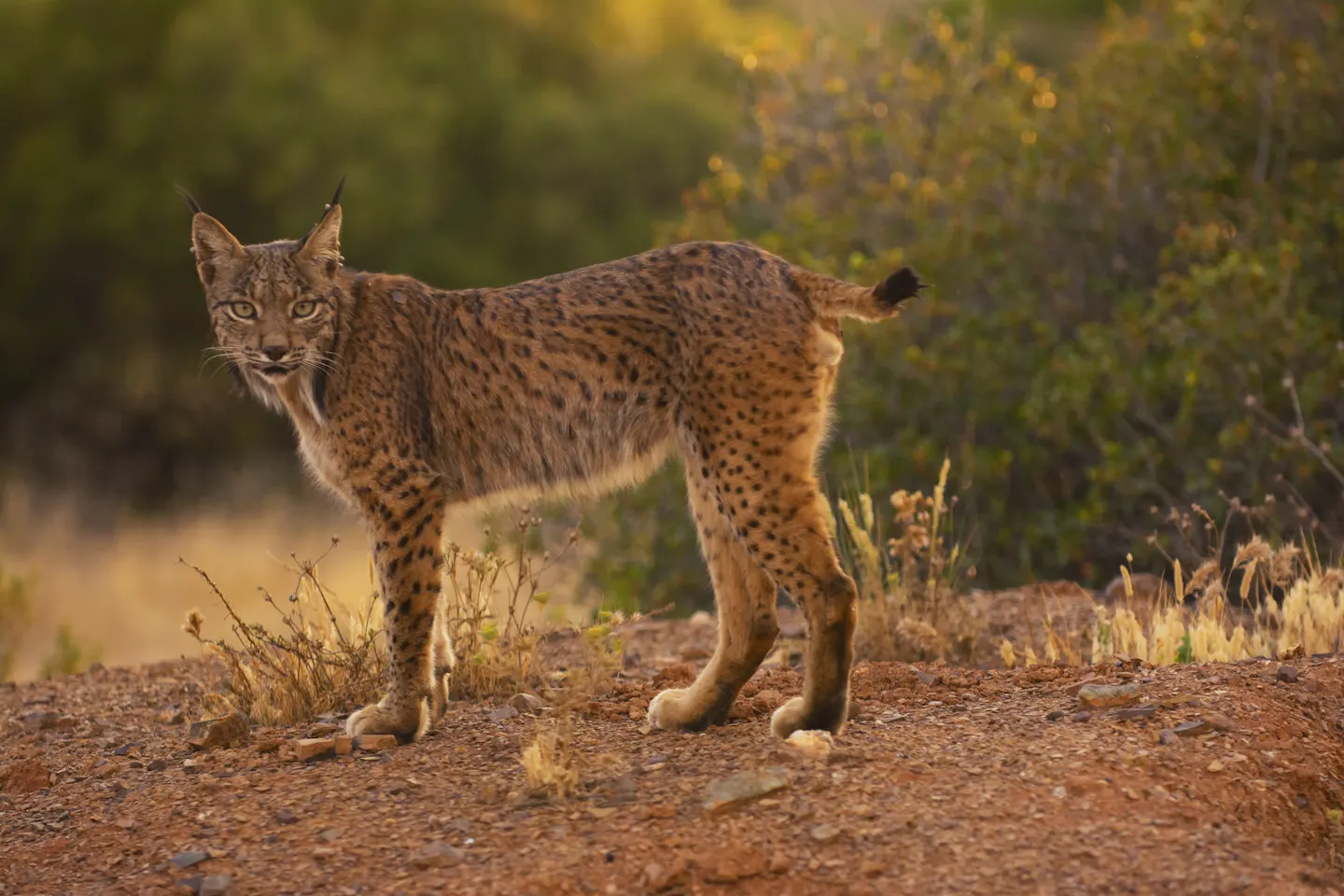
Its short, bright yellowish-to-tawny coat is covered in dark spots that vary from small and round to elongated, arranged in lines that shrink toward the animal's sides. Two distinct coat patterns exist across the species.
Lynxes in the Sierra Morena tend to carry many small, dense brown-to-blackish spots, while those in Doñana show fewer, larger spots arranged in dotted lines. The face is small and framed by tufted ears and a ruff of fur around the cheeks, giving the animal its unmistakable, almost owl-like expression.
In an extraordinary rarity, a white-coated Iberian lynx has been documented only twice ever. The most recent sighting was photographed near Jaén, Spain, in October 2025.
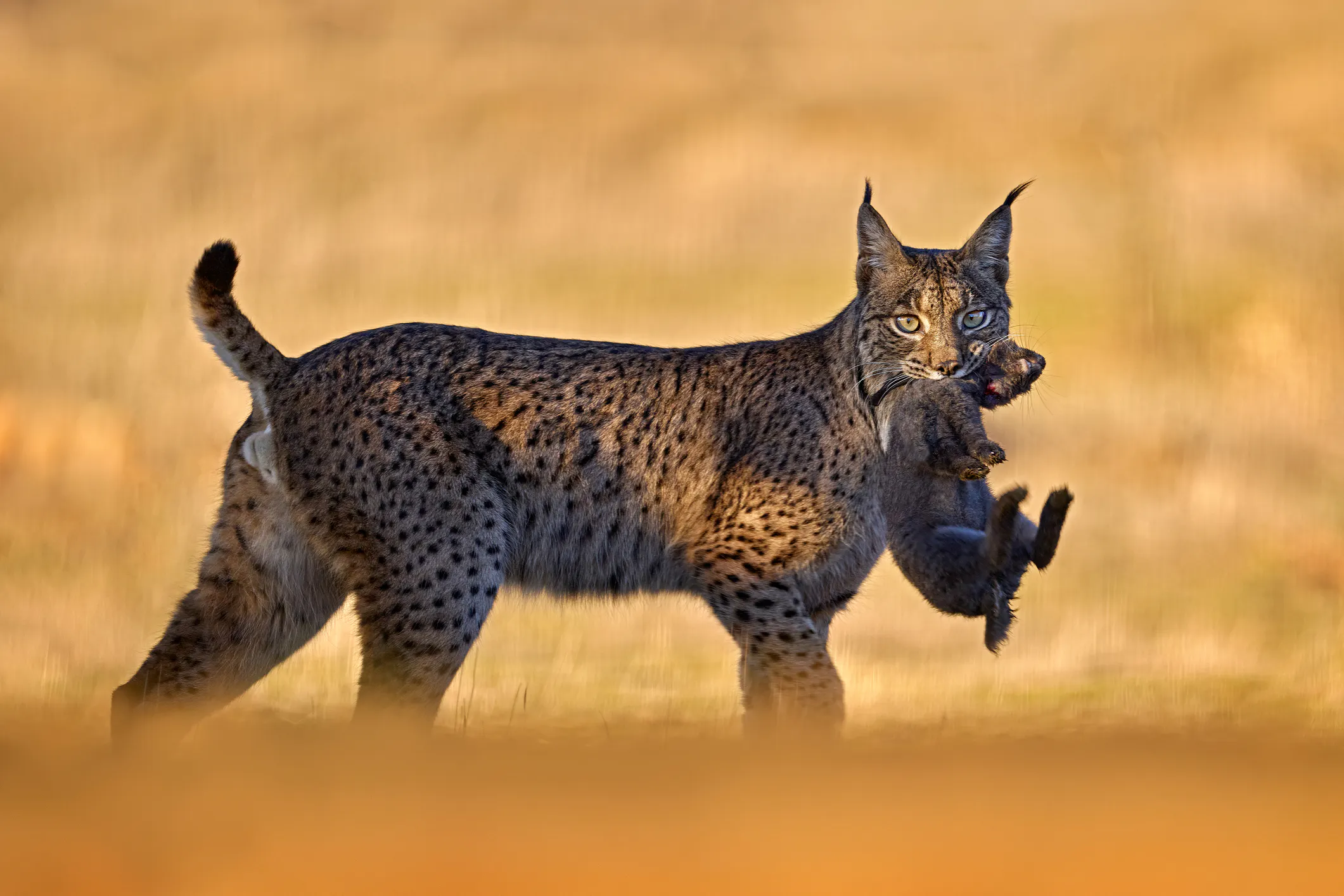
An Iberian lynx with its primary prey, the European rabbit, which makes up roughly 75% of the species' diet. Image Credit: © Ondrej Prosicky, Dreamstime
A diet built almost entirely around rabbits
Few predators are as tied to a single prey species as the Iberian lynx is to the European rabbit. Rabbits make up roughly 75% of the lynx's diet, supplemented by red-legged partridge, rodents, and occasionally young fallow deer, European roe deer, European mouflon, and ducks.
A male lynx needs to catch about one rabbit per day to survive, while a female raising kittens needs three.
This dependence is a double-edged sword. The lynx has shown low dietary adaptability, meaning it hasn't shifted toward alternative prey even as rabbit populations have repeatedly crashed from diseases like myxomatosis and rabbit haemorrhagic disease.
Researchers have even found that anaerobic bacteria in the lynx's gut appear to help it digest rabbit meat and break down plant material left in its prey's digestive tract. It's an adaptation that shows just how specialized this relationship has become.
Territorial and an apex predators
As an apex predator, the Iberian lynx interacts with several other carnivores across its range. It competes for prey with the Iberian wolf, red fox, Egyptian mongoose, and European wildcat.
Lynxes are territorial and mark their boundaries with urine, scratch marks on tree bark, and scat. Once established, a home range tends to stay stable for years.
Camera trapping surveys conducted in the eastern Sierra Morena Mountains between 1999 and 2008 found that female home ranges spanned 5.2 to 6.6 square kilometers (2–2.5 square miles), while males claimed larger territories of 11.8 to 12.2 square kilometers (4.6–4.7 square miles).
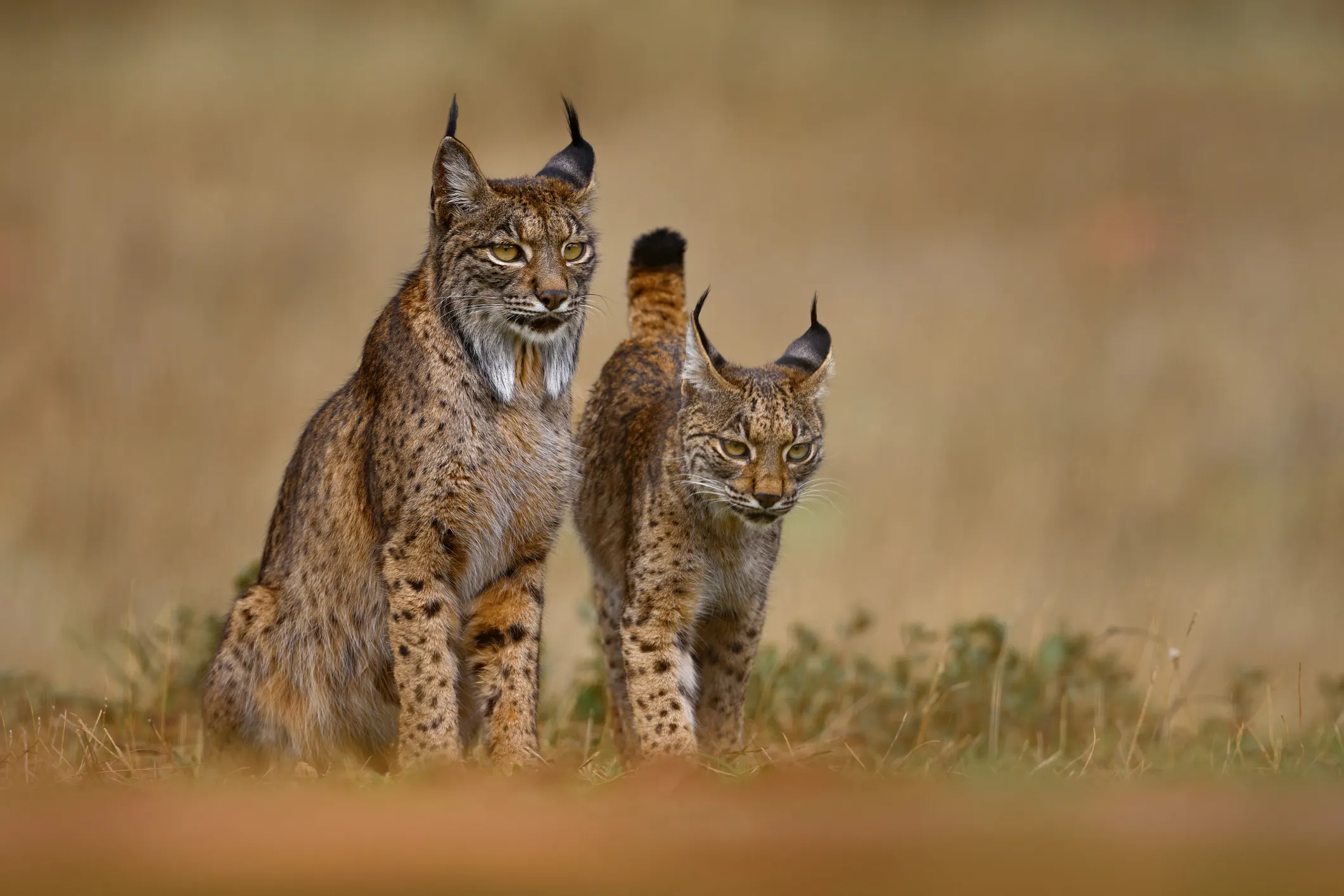
Iberian lynx mother with her young kitten. Image Credit: © Ondrej Prosicky, Dreamstime
Slow to breed, vulnerable to inbreeding
Both male and female Iberian lynxes reach sexual maturity around one year old, but in practice they rarely breed until a territory of their own opens up. In one documented case, a female didn't breed until age five, when her mother's death finally freed up territory.
Kittens become independent between 7 and 10 months old but often stay near their mother until around 20 months. In the wild, lynxes can live up to 13 years.
The species' small, fragmented population has created a serious genetic problem. With fewer potential mates available, inbreeding has increased, resulting in fewer kittens and higher rates of non-traumatic death. Inbreeding has also been linked to greater infertility in males.
Threats facing the Iberian lynx
The Iberian lynx continues to face threats from habitat loss, road accidents, and illegal hunting, while the historical collapse of its primary prey also played a major role in its decline.
Habitat loss stems largely from infrastructure development, resort and urban expansion, and monoculture tree plantations, all of which fragment the scrubland the lynx depends on.
Through much of the 20th century, the collapse of the rabbit population due to myxomatosis and rabbit haemorrhagic disease removed the species' primary food source almost overnight.
Human persecution compounded the crisis. Under a law passed during the Francisco Franco era, lynxes were hunted as vermin from the 1950s until hunting them was finally banned in the late 1970s.
Illegal hunting continues today and remains a serious problem. In the 1990s, illegal traps set for rabbits and foxes were the leading cause of lynx deaths.
Roads have since overtaken traps as the deadliest human-made threat, now accounting for the majority of lynx fatalities. The toll has climbed sharply: 14 lynxes died on roads in 2013, 21 in 2014, and by 2023 that number had surged to 144.
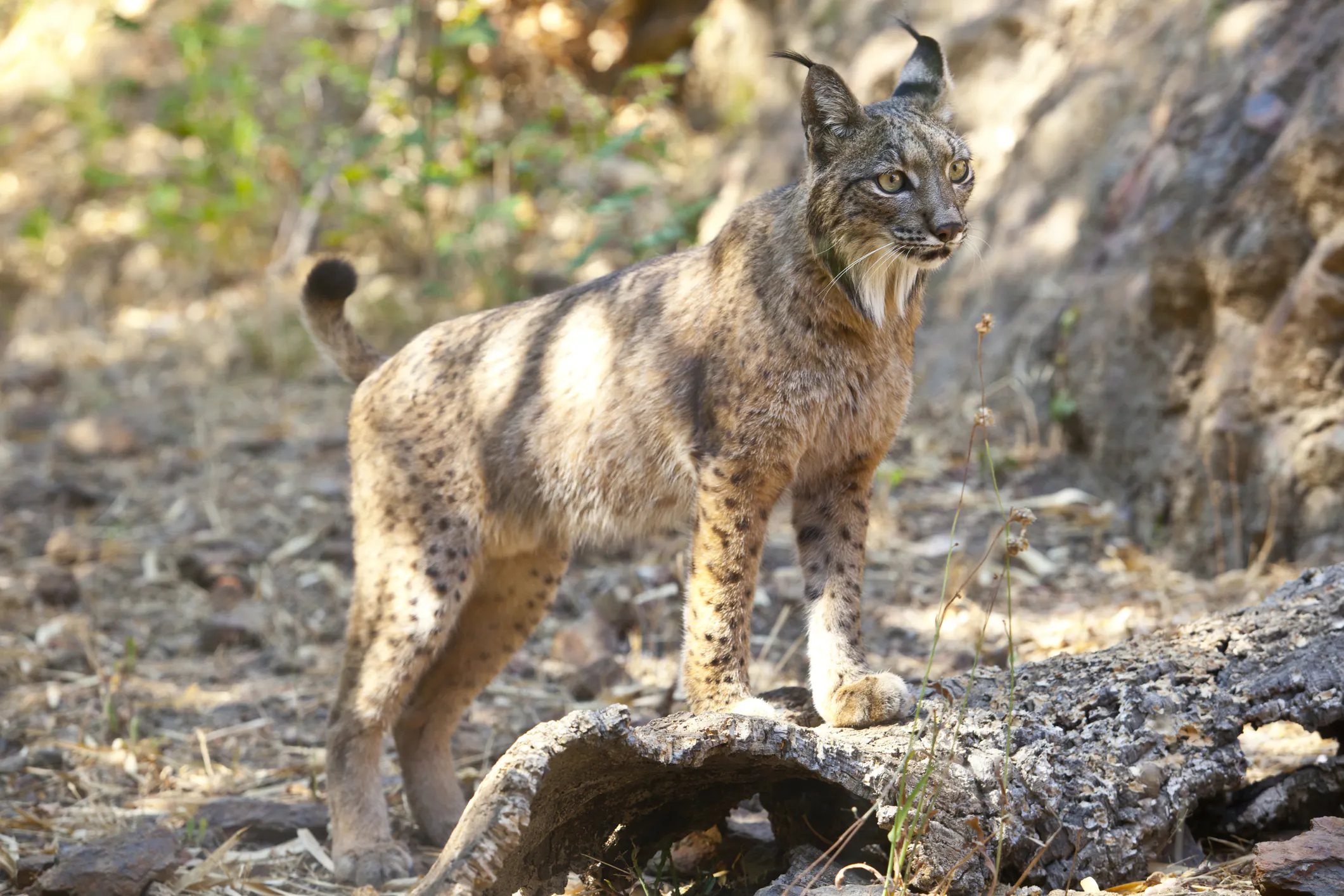
An Iberian lynx in the wild, a symbol of successful conservation and rewilding efforts. Image Credit: © Whpics, Dreamstime
A conservation success story two decades in the making
The Iberian lynx is now fully protected under CITES Appendix I, the Berne Convention, and the European Union's Habitats Directive. In 2024, it was formally reclassified from Endangered to Vulnerable on the IUCN Red List, a reflection of the population climbing past 2,000 mature individuals.
That recovery didn't happen by accident. Between 1994 and 2013, roughly €90 million was spent on Iberian lynx conservation measures, with the European Union contributing up to 61% of funding.
Captive breeding programs have been central to this turnaround. It traces back to 2002, when the Jerez Zoo began developing a breeding plan around three female lynxes, including one named Saliega.
In March 2005, Saliega became the first Iberian lynx to give birth in captivity, delivering three kittens at the El Acebuche Breeding Centre in Doñana National Park. From there, the numbers grew steadily: 14 surviving kittens in 2008, 15 in 2009, a dip to 8 survivors in 2010 after heavy rains and health problems, then a rebound to 26 survivors out of 45 births in 2011.
By 2017, the total population had reached 475 individuals, and by February 2019, the population was estimated at around 650 individuals.
Rewilding in the Iberian landscape
Reintroduction efforts have carried that momentum into the wild. Releases began in Guadalmellato in 2009 and expanded to Guarrizas in 2010.
By April 2013, Andalusia's wild population had tripled from its 2002 low of 94 to 309 individuals. That July, environmental groups confirmed a wild-born litter in Cáceres, Extremadura.
In November 2014, three lynxes released in the Montes de Toledo included one that wandered near Madrid, the first lynx sighting in that region in 40 years.
Portugal has become an equally important chapter in the recovery. The Centro Nacional de Reprodução do Lince-Ibérico, a breeding center near Silves, has raised 122 lynxes since its founding, with 89 surviving and 73 eventually reintroduced into the Guadiana Valley.
Of the 17 animals released as part of Portugal's program, 12 have gone on to establish their own territories. By 2020, around 140 lynxes were living wild across roughly 50,000 hectares (123,553 acres) of Portuguese habitat

This playful Iberian lynx sculpture by street artist Bordalo II, built from salvaged materials, has become a beloved landmark at Lisbon's Park of Nations. Image Credit: © Marion Meyer, Dreamstime
A cat worth rooting for
The Iberian lynx's story is far from over, but the numbers speak for themselves. A cat that stood at 94 individuals in 2002 now numbers in the thousands, spread across a widening map of Spain and Portugal.
Few conservation stories offer as clear a lesson in what sustained, well-funded effort can accomplish, and few animals wear the results of that effort as visibly as the Iberian lynx, tufted ears, spotted coat, and all.
Explore similar content

Subscribe to receive monthly updates on climate solutions, environmental heroes, and the profound beauty and wonder of our shared planet Earth.
What is an Iconic Species?
One Earth’s Species of the Week series highlights charismatic and ecologically significant animals that represent the diversity of each of our 185 bioregions. These iconic species are part of the One Earth Bioregions Framework. Learn more >
.png?auto=compress%2Cformat&h=600&w=600)