Amsterdam albatross: The rarest albatross on Earth
- Nature Conservation
- Land Conservation
- Iconic Species
- Wildlife
- Birds
- Madagascar & East African Coast
- Afrotropics Realm

One Earth’s “Species of the Week” series highlights iconic species that represent the unique biogeography of each of the 185 bioregions of the Earth.
Few seabirds are as elusive as the Amsterdam albatross (Diomedea amsterdamensis). Discovered by science only in 1983, this immense ocean wanderer breeds on a single remote island and numbers fewer than a few hundred individuals worldwide. Its story is one of late recognition, extreme rarity, and a fragile hold on existence in the vast southern oceans.
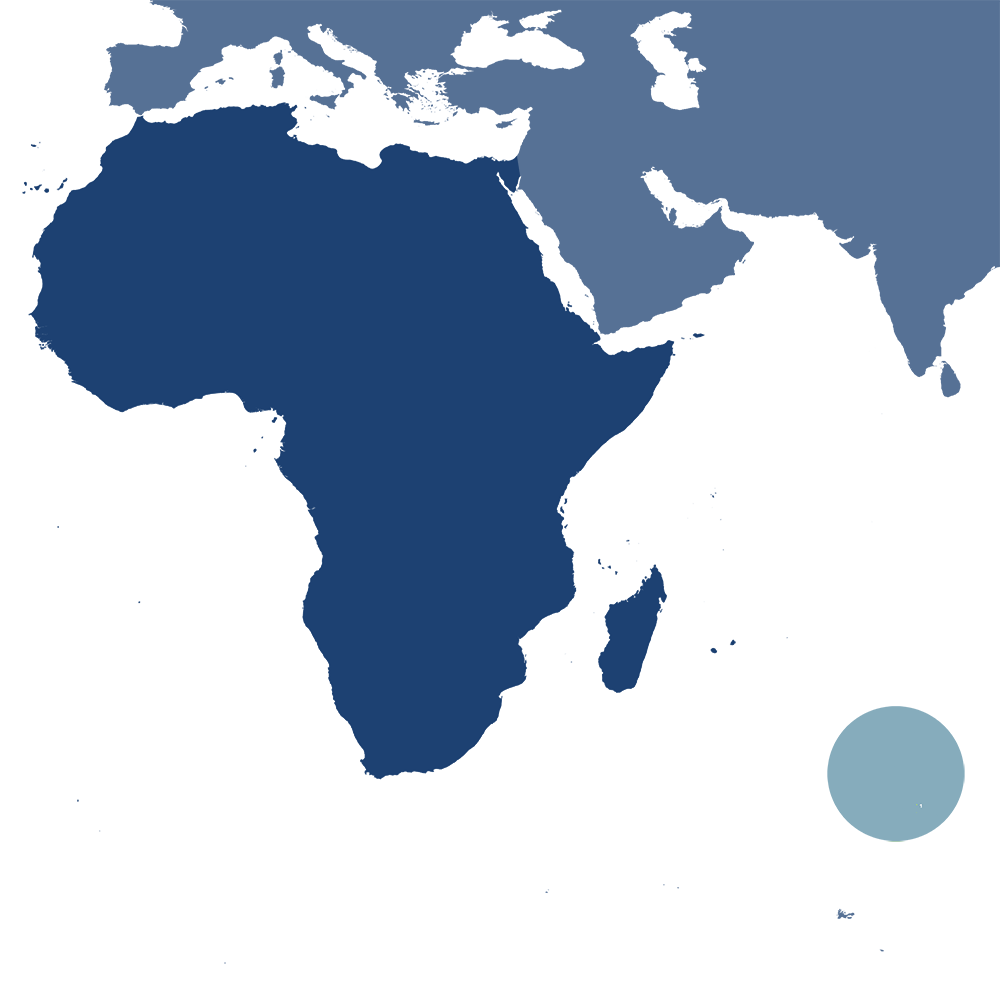
In the One Earth Bioregions Framework, the Amsterdam albatross is the iconic species of the Amsterdam-Saint Paul Islands bioregion (AT3), located in the Madagascar & East African Coast subrealm of the Afrotropics.
Life on a remote island at the edge of the Indian Ocean
The Amsterdam albatross breeds exclusively on Amsterdam Island, part of the French Southern Territories in the southern Indian Ocean. Nesting occurs high on the Plateau des Tourbières, an open, marshy landscape between 500 and 600 meters above sea level.
This isolated plateau provides the only known breeding habitat for the species. When not breeding, the birds vanish across the ocean, with only a handful of confirmed sightings far from the island, mainly near Australia and possibly New Zealand.
A dark-plumed giant among albatrosses
The Amsterdam albatross is a great albatross, similar in size to the wandering albatross but distinct in appearance. Adults weigh between 4.8 and 8 kilograms (11—18 lbs) and measure 107 to 122 centimeters (42—48 in) in length, with an enormous wingspan of 2.8 to 3.4 meters (9.2—11.2 ft).
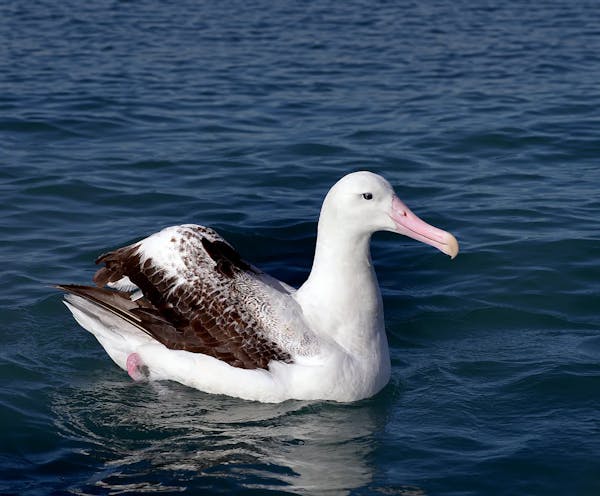
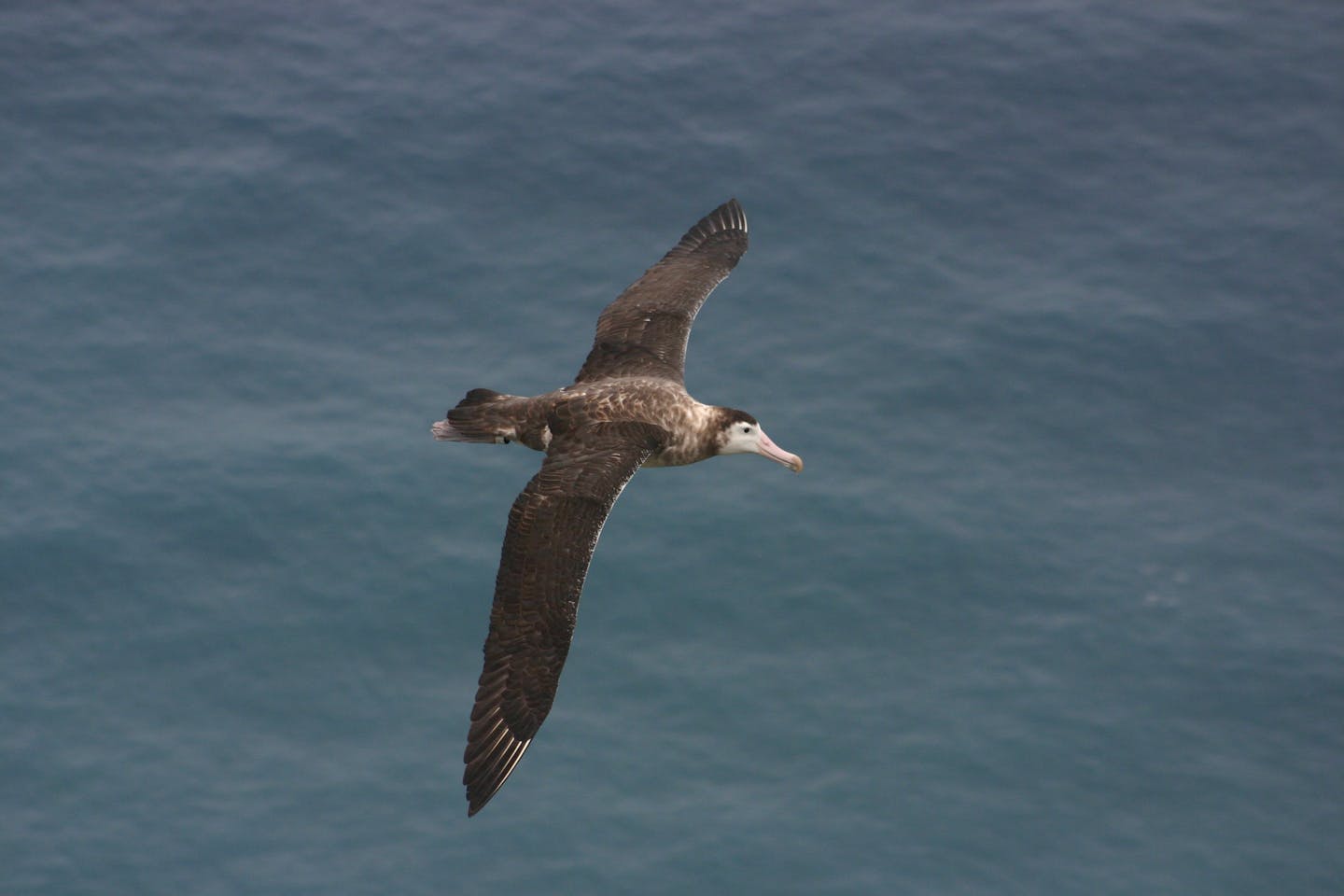
Unlike most great albatrosses, which are predominantly white as adults, this species retains dark brown plumage. Its upper parts are chocolate brown, contrasted by a white face mask, throat, lower breast, and belly, with a broad brown band across the chest.
The pink bill has a darker, greenish tip and narrow black cutting edges, often described as black lips, a feature unique among wandering-type albatrosses.
Feeding on the open ocean
The feeding ecology of the Amsterdam albatross is still poorly understood due to its rarity. Available observations suggest it feeds on squid, crustaceans, and fish while ranging widely across the Indian Ocean. During incubation, off-duty adults may travel up to 2,400 kilometers (about 1,500 miles) from the breeding colony searching for food.
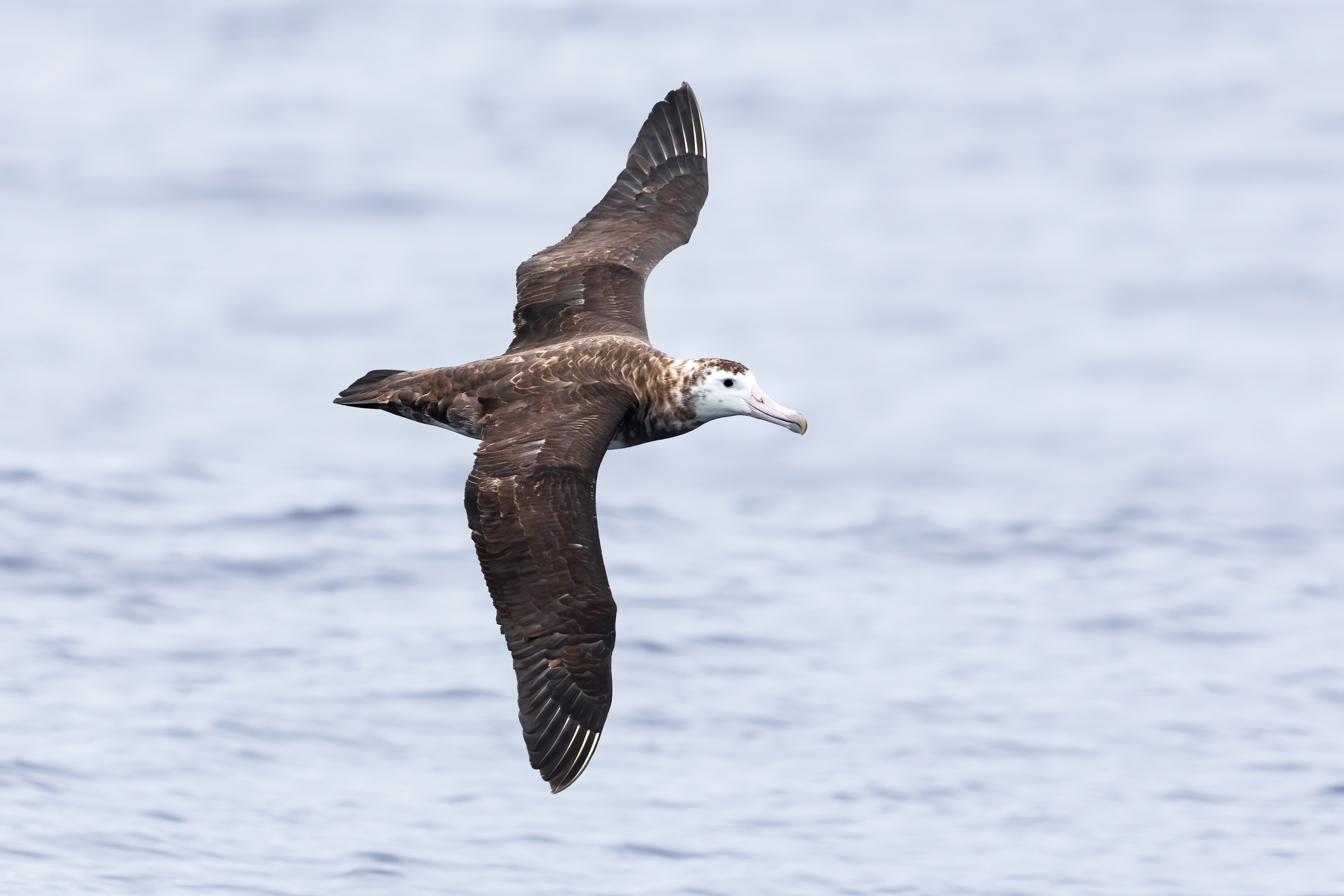
Adult Amsterdam albatross in flight, showing dark plumage typical of the species. Image Credit: JJ Harrison, Wiki Commons.
A quiet role in marine ecosystems
As a large pelagic predator, the Amsterdam albatross plays a role in regulating populations of squid and fish in the open ocean. Like other albatrosses, it also contributes to the movement of nutrients between marine and terrestrial ecosystems, returning ocean-derived nutrients to the island during the breeding season.
Life at sea and on land
Much of the species’ life is spent far from land. At sea, these birds are capable of traveling enormous distances using dynamic soaring over ocean winds. On land, their behavior closely resembles that of other great albatrosses, including ritualized displays and vocalizations during breeding.
A slow and demanding breeding cycle
Amsterdam albatrosses breed every two years on open marshy ground. Both parents share incubation duties, alternating stints of about a week over an incubation period of roughly 80 days.
After hatching, the chick is brooded for a month and takes about 230 days to fledge. Early in development, chicks are fed every three days, with feeding frequency decreasing as fledging approaches. At peak growth, a chick can outweigh its parents before slimming down as energy reserves are converted into feathers.
After fledging, young birds remain at sea for about five years before returning to the colony and eventually beginning to breed.
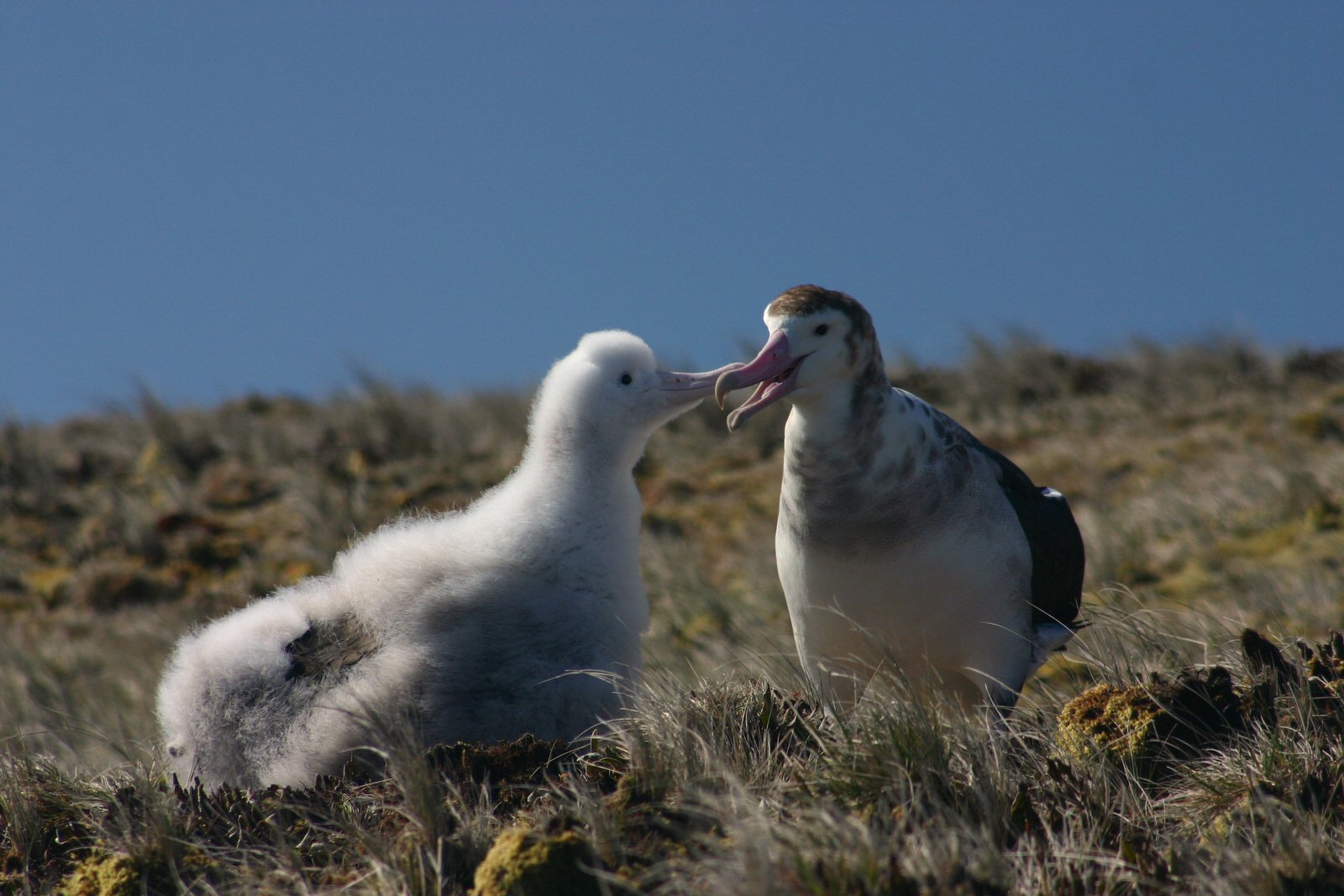
Amsterdam albatross and chick. Image Credit: Vincent Legendre, Wiki Commons.
Threats facing a species on the brink
With only one breeding site, the Amsterdam albatross is exceptionally vulnerable. On land, habitat degradation has occurred due to introduced ship rats, feral cats, and cattle, as well as the draining of peat bogs on the breeding plateau.
At sea, longline fishing poses a serious threat through accidental bycatch. Diseases such as avian cholera and Erysipelothrix rhusiopathiae are also major concerns, as a single outbreak could have devastating consequences for the entire population.
Conservation status and ongoing efforts
The Amsterdam albatross is listed as Endangered by the IUCN and is also protected under the Bonn Convention on migratory species. When the species was first described, only five breeding pairs were known. Continuous monitoring, banding programs, and habitat management have helped increase this number to approximately eighteen to twenty-five breeding pairs.
Today, the global population is estimated at 130 individuals, including about 80 mature birds. Conservationists emphasize the importance of managing longline fisheries away from the birds’ foraging areas to reduce bycatch risks.
A future that hangs on every bird
The Amsterdam albatross embodies both the vulnerability and resilience of long-lived seabirds. Its survival depends on careful protection of a single windswept plateau and responsible stewardship of distant oceans.
In a world where many species decline unnoticed, the fate of this rare albatross is a reminder that even the most remote corners of the planet are closely tied to human actions.
Explore similar content

Subscribe to receive monthly updates on climate solutions, environmental heroes, and the profound beauty and wonder of our shared planet Earth.
What is an Iconic Species?
An iconic species is a charismatic and ecologically significant animal selected to represent the unique biogeographical diversity of each bioregion in One Earth's Bioregions Framework. Learn more >