A life devoted to elephant conservation: Remembering Dr. Iain Douglas-Hamilton
- Nature Conservation
- Land Conservation
- Biodiversity
- Climate Heroes
- Wildlife
- Mammals
- Afrotropics Realm
- Horn of Africa

Each week, One Earth is proud to feature a Climate Hero from around the globe who is working to create a world where humanity and nature can thrive together.
Few conservationists have shaped the fate of a species as profoundly as Dr. Iain Douglas-Hamilton. A pioneering scientist, fearless advocate, and lifelong champion for African elephants, Douglas-Hamilton devoted more than six decades to understanding and protecting one of Earth’s most iconic species.
His work transformed how the world sees elephants, exposed the devastating scale of the ivory trade, and helped secure one of the most important conservation victories of the twentieth century.
Learning to see elephants as individuals
Douglas-Hamilton’s journey began in 1965, when, at just 23 years old, the Scottish native traveled to Lake Manyara National Park in Tanzania to study a population of elephants confined to a small protected area. At the time, no one had lived among wild elephants long enough to understand their social lives. Iain decided to try.
For five years, he lived in close proximity to the elephants, teaching himself to recognize them as individuals rather than numbers in a dataset. He observed their family bonds, hierarchies, migrations, and emotional lives, laying the foundation for the first in-depth scientific study of elephant social behavior.
That work fundamentally changed conservation science. By showing that elephants are intelligent, socially complex beings with deep family ties and long memories, Douglas-Hamilton helped shift global attitudes toward wildlife and set a new standard for ethical, empathetic field research.
Following their movements to protect their lives
Through his early research, Douglas-Hamilton came to a powerful realization: to protect elephants, conservationists needed to understand where they moved and why. Migration routes, seasonal patterns, and access to water were central to their survival.
As both a scientist and a skilled pilot, he pioneered aerial survey techniques that allowed elephant populations to be counted and tracked across vast landscapes. These surveys revealed an alarming truth. During the 1970s and 1980s, Africa’s elephants were being slaughtered at an unprecedented scale.
By the late 1980s, elephant populations had plummeted from an estimated 1.3 million to fewer than 600,000. Douglas-Hamilton was among the first to sound the alarm, calling the crisis what it was: the greatest wildlife tragedy of the century.
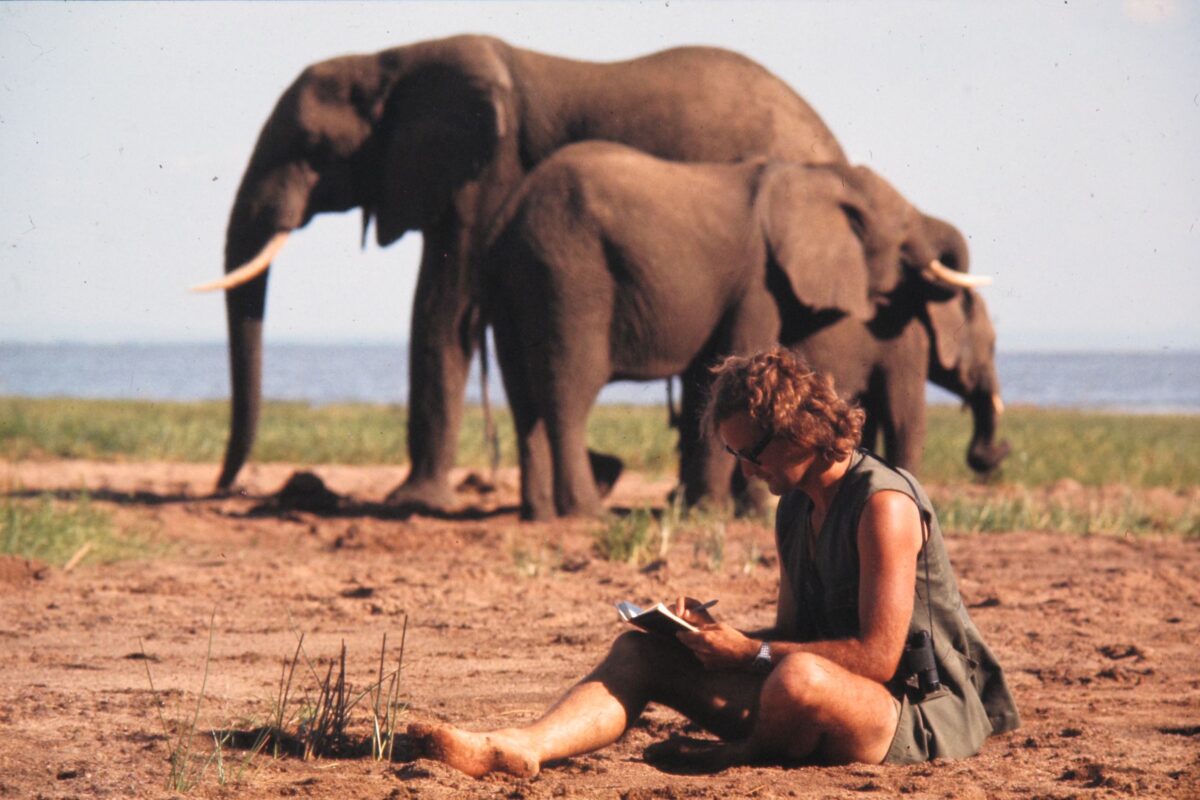
Dr. Iain Douglas-Hamilton during his early years of field research, where he lived alongside elephants and documented their social lives through long-term observation. Image Credit: Save The Elephants.
Confronting the ivory trade head on
Douglas-Hamilton’s data made the invisible visible. His pan-African surveys exposed how industrial-scale poaching and the global ivory trade were devastating elephant populations across the continent.
Working with governments, conservation organizations, and international bodies, he helped build the scientific and moral case for a complete ban on the international ivory trade. In 1989, Kenya publicly burned twelve tons of confiscated ivory, a moment that captured the world’s attention and shifted public opinion.
The following year, the Convention on International Trade in Endangered Species enacted a global ban on ivory trade. While not a complete solution, the ban gave elephant populations a crucial reprieve and remains one of the most significant conservation policy achievements in history.
Founding Save the Elephants and advancing coexistence
In 1993, Douglas-Hamilton founded Save the Elephants, a conservation organization dedicated to securing a future for elephants by combining cutting-edge science with community-centered solutions. Based in Samburu, Kenya, the organization became a global leader in elephant research and protection.
Under his leadership, Save the Elephants pioneered GPS tracking technology, allowing scientists to follow elephant movements in real time and anticipate conflict hotspots before they turned deadly. The Samburu elephant population is now one of the best-studied elephant communities in the world, with decades of data informing conservation strategies across Africa.
Equally important was Douglas-Hamilton’s belief that elephants and people must coexist. Save the Elephants invested in community-led solutions that reduce human-elephant conflict, including innovative approaches like beehive fences that protect crops while keeping elephants safe.
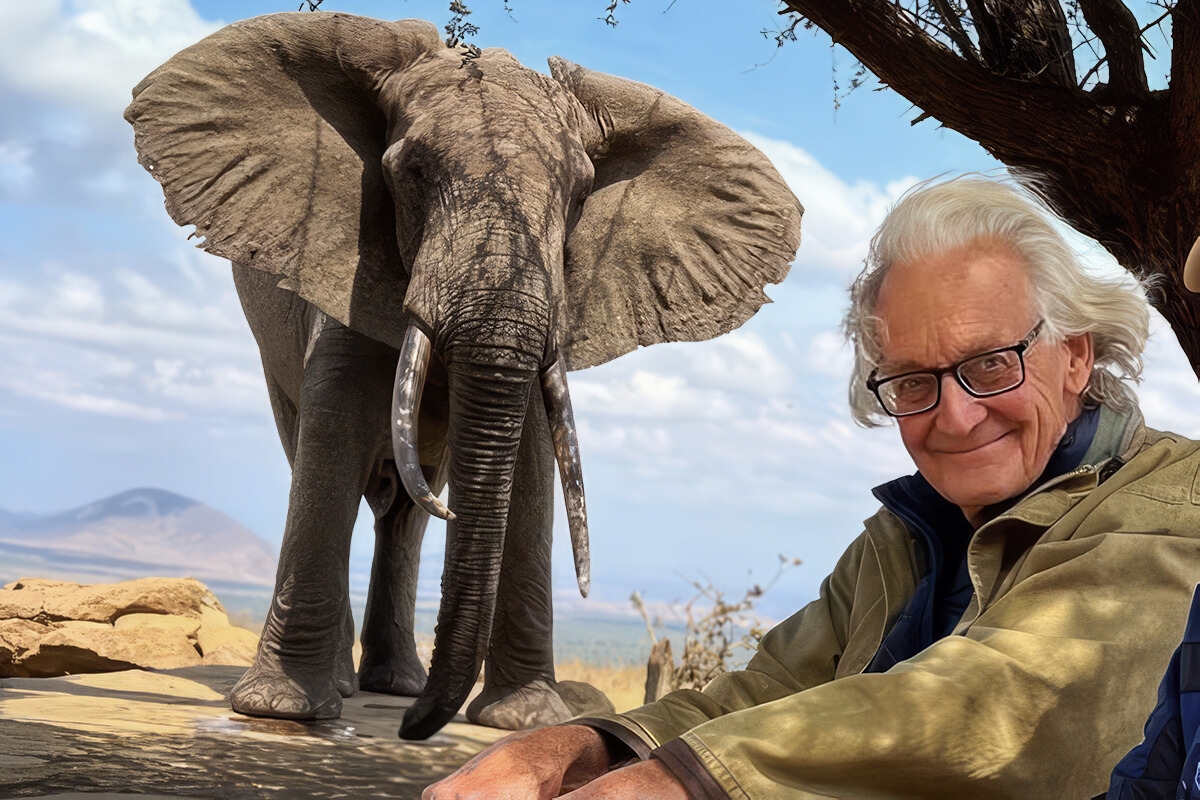
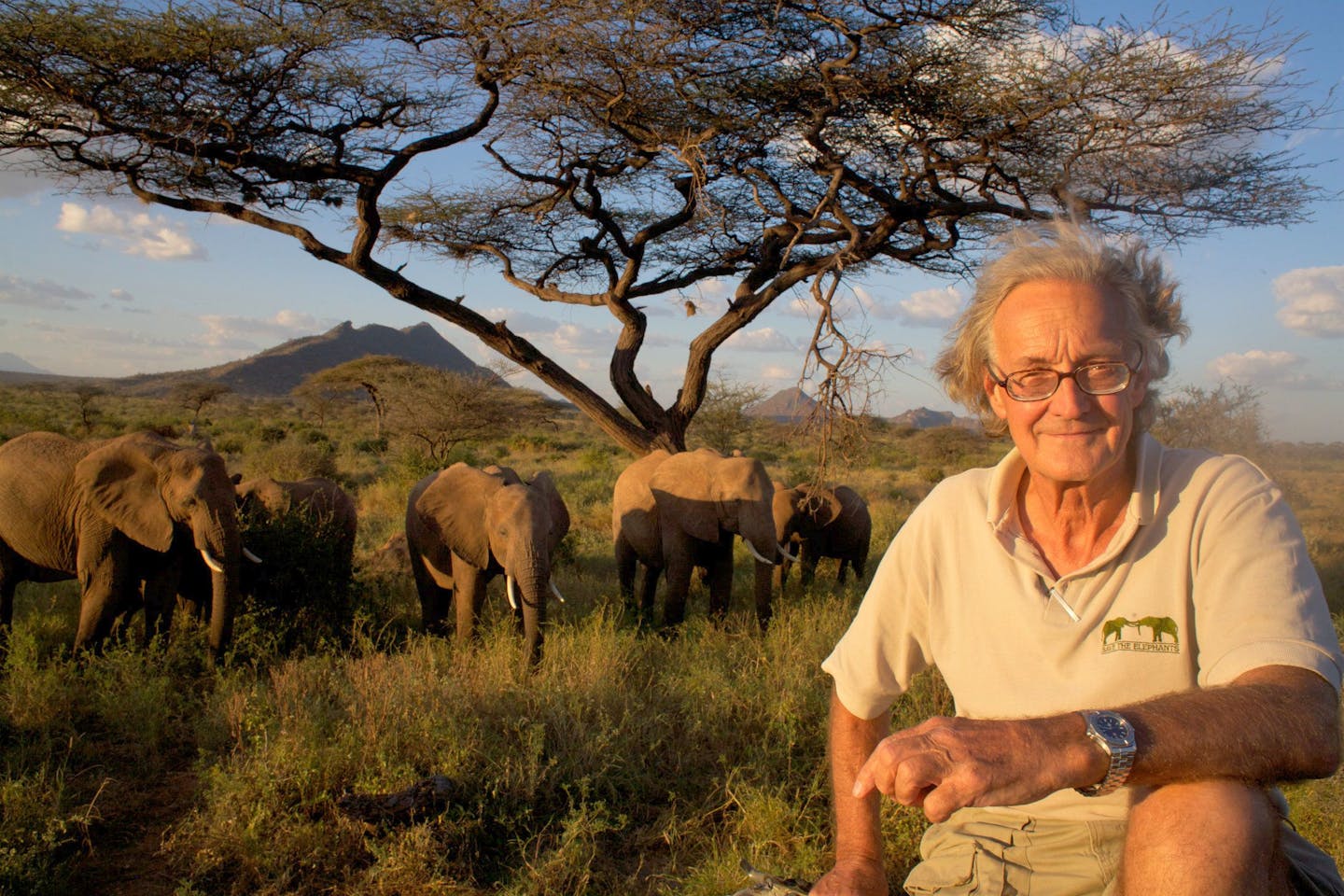
Later in life, Dr. Iain Douglas-Hamilton continued to guide global elephant conservation through science, advocacy, and the work of Save the Elephants. Image Credit: Big Life Foundation.
A close ally and friend to the One Earth community
Dr. Iain Douglas-Hamilton’s impact reached far beyond the field. He was a trusted partner and close ally to many across the conservation movement, including members of the One Earth community.
Our Executive Director, Justin Winters, worked closely with Iain through the Elephant Crisis Fund, where his leadership, generosity, and clarity of purpose left a lasting impression:
“Iain was a magnificent human being, and it was an honor and a joy to work with him. His wisdom, humility, and unwavering commitment to elephants shaped so much of what we were able to accomplish together.”
Through the Elephant Crisis Fund, Douglas-Hamilton helped direct critical, flexible funding to frontline organizations working to stop poaching, disrupt trafficking networks, and protect elephant landscapes. His ability to bridge rigorous science with decisive action made him a powerful force for change.
A legacy that endures
Dr. Iain Douglas-Hamilton passed away in December 2025 at the age of 83, leaving behind his wife Oria, their daughters Saba and Dudu, six grandchildren, and a global community of conservationists who continue his work.
His legacy lives on in the elephants he helped protect, the landscapes he helped safeguard, and the countless scientists, advocates, and communities he inspired along the way. More than anything, he leaves us with a reminder that lasting conservation begins with understanding, compassion, and the courage to act.
Explore similar content

Subscribe to receive monthly updates on climate solutions, environmental heroes, and the profound beauty and wonder of our shared planet Earth.