How the Beneficial Design Institute is transforming Germany’s toughest textile waste
- Regenerative Agriculture
- Circular Fibersheds
- Recycle & Reuse
- Sustainable Fiber & Pulp
- Green Textiles
- Technology & Products
- Climate Heroes
- Greater European Forests
- Western Eurasia Realm

Each week, One Earth is proud to feature a Climate Hero from around the globe who is working to create a world where humanity and nature can thrive together.
Designing local solutions for fashion waste
Following One Earth’s first feature in this series on Circle Economy’s Netherlands pilot, the next chapter of the Biomimicry Institute's Nature of Fashion: Design for Transformation turns to Germany.
In Berlin-Brandenburg, the Beneficial Design Institute is exploring what happens when so-called unrecyclable textiles are treated not as trash, but as a resource. Their pilot focuses on blended, contaminated, and low-value materials that are often incinerated or exported, asking whether these discarded textiles could instead be turned into useful new materials for other industries.
What happens to the textiles the system cannot use?
Germany collects about 1 million tons of textile waste each year, roughly two-thirds of the country’s annual textile consumption. Yet, only a small share finds a second life. Around 54,000 tons are incinerated annually, while more material is exported abroad, where it can end up overwhelming local markets and polluting landfills and waterways.
Part of the problem is that today’s most celebrated recycling solutions do not work well for most garments. Fiber-to-fiber recycling is designed for relatively uniform materials, often requiring textiles that are at least 95% homogeneous. But many clothes are made from cotton-polyester blends, synthetic mixes, stretch fabrics, and chemically treated materials that are difficult to separate and recover.
That leaves what the pilot describes as the “stubborn 10%,” textiles that are unsuitable for rewear, reuse, redesign, or conventional recycling. These materials sit at the lowest level of the waste hierarchy, but they are exactly where the Germany pilot begins.
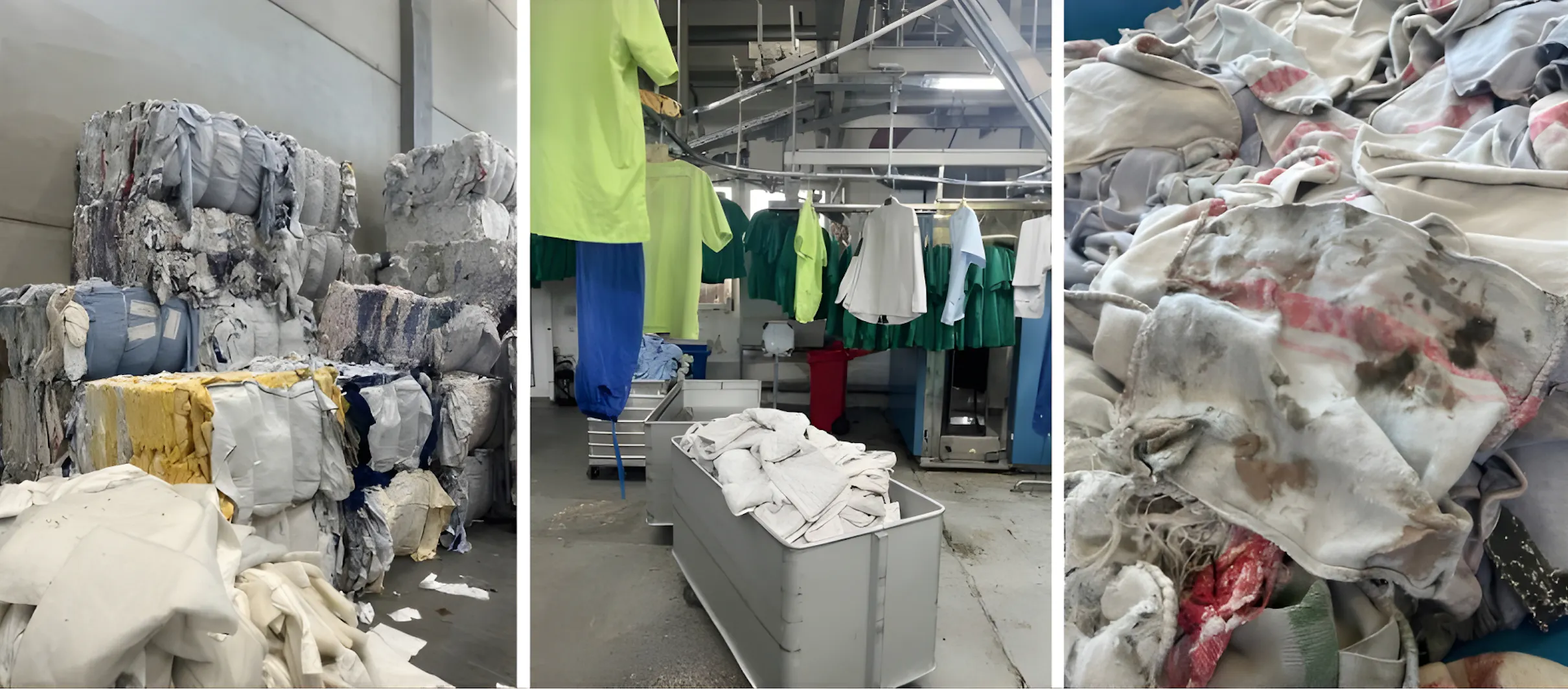
Imputs | Left to right: Mixed fast fashion waste (SOEX), Medical Workwear (Sitex), Industrial Cleaning Cloths (Mewa) © Beneficial Design Institute GmbH.
A pilot built around regional waste streams
In Berlin-Brandenburg, the team mapped three major waste streams for their potential in the pilot: post-consumer household textiles, medical workwear, and industrial cleaning cloths. All three showed promise, but not equally.
Medical workwear and other business-to-business textiles emerged as the most immediately viable because they are more homogeneous, better documented, and easier to collect through established logistics systems. Household textiles remain abundant, but their variability and chemical complexity make them harder to process efficiently at this stage.
Turning textiles into new materials
Those findings helped shape the next phase of the pilot. With more traceable and consistent waste streams as a starting point, the team began testing two main ways to turn hard-to-recycle textiles into useful new materials.
1. Turning polyester-rich textiles into biodegradable materials
Textiles with a high amount of polyester, including fast fashion, workwear, and cleaning cloths, are broken down into basic ingredients. Those ingredients are then used with bacteria to create PHB, a biodegradable material that could be used in products for medicine, agriculture, forestry, and packaging. In early lab testing, the team worked with 18 different textile samples, showing that this approach could work with a range of low-value materials.
2. Using waste gases to grow new materials
The pilot is also looking at how gases released during textile processing can be put to use instead of going to waste. In this pathway, those gases are used to grow microalgae, which can produce useful substances for agriculture and industry. Early results are promising, especially for beta-glucan, which could be used in products like biofertilizers, plant stimulants, and other biomaterials.
Together, these two pathways show how textile waste can be used in new ways instead of simply being burned or thrown away. Rather than trying to make old clothes into new clothes, the pilot is exploring how discarded textiles can become useful materials for entirely different purposes.
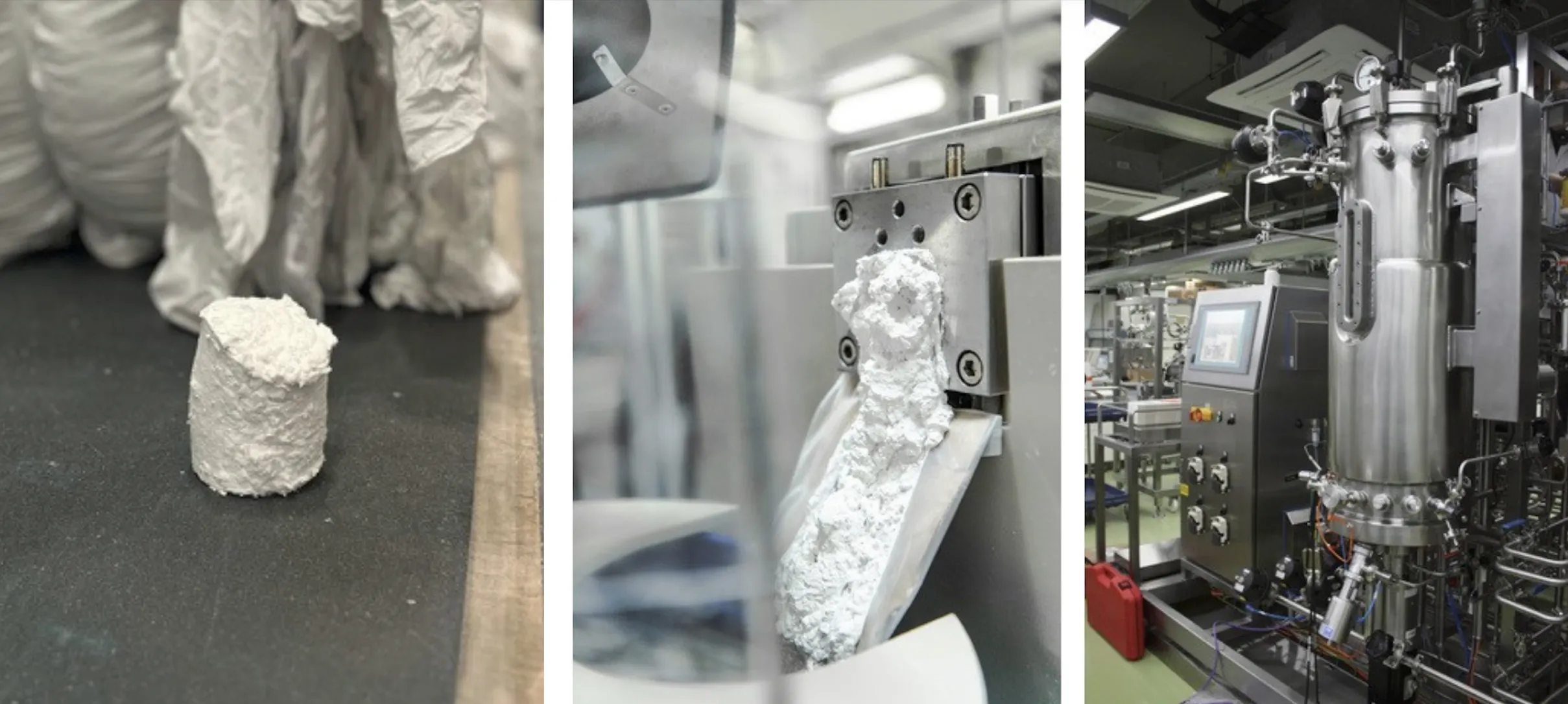
Pathway 1 Bacterial Fermentation | Left to right: Waste preparation PES © Beneficial Design Institute GmbH; Hydrolysis matterr technology © matterr; Bioreactor for Bacterial Fermentation Fraunhofer IAP © Fraunhofer IAP.
What the pilot has learned so far
The early results are encouraging, but the project is still in its early stages. Some textiles are much easier to work with than others. Items like workwear and industrial cleaning cloths are more consistent, while fast fashion and heavily soiled materials are harder to process.
There are still challenges to solve before this can work at a larger scale. The biodegradable material PHB needs to be improved for some uses, and parts of the process still rely on chemicals that need to be refined or replaced. The pilot also points to bigger obstacles, including gaps in funding, limited infrastructure, and the difficulty of connecting all parts of the system into one smooth regional process.
Why this matters beyond Germany
This pilot matters because it shows that hard-to-recycle textiles could become something useful instead of being burned or thrown away. Early findings suggest this process could use fewer fossil resources, create fewer emissions, and produce materials that are biodegradable and less harmful to the environment.
It also points to a bigger opportunity. By collecting, processing, and reusing materials closer to home, regions like Berlin-Brandenburg could cut transport emissions, shorten supply chains, and support local jobs. That makes this more than a recycling experiment. It is a way of thinking differently about waste and value.
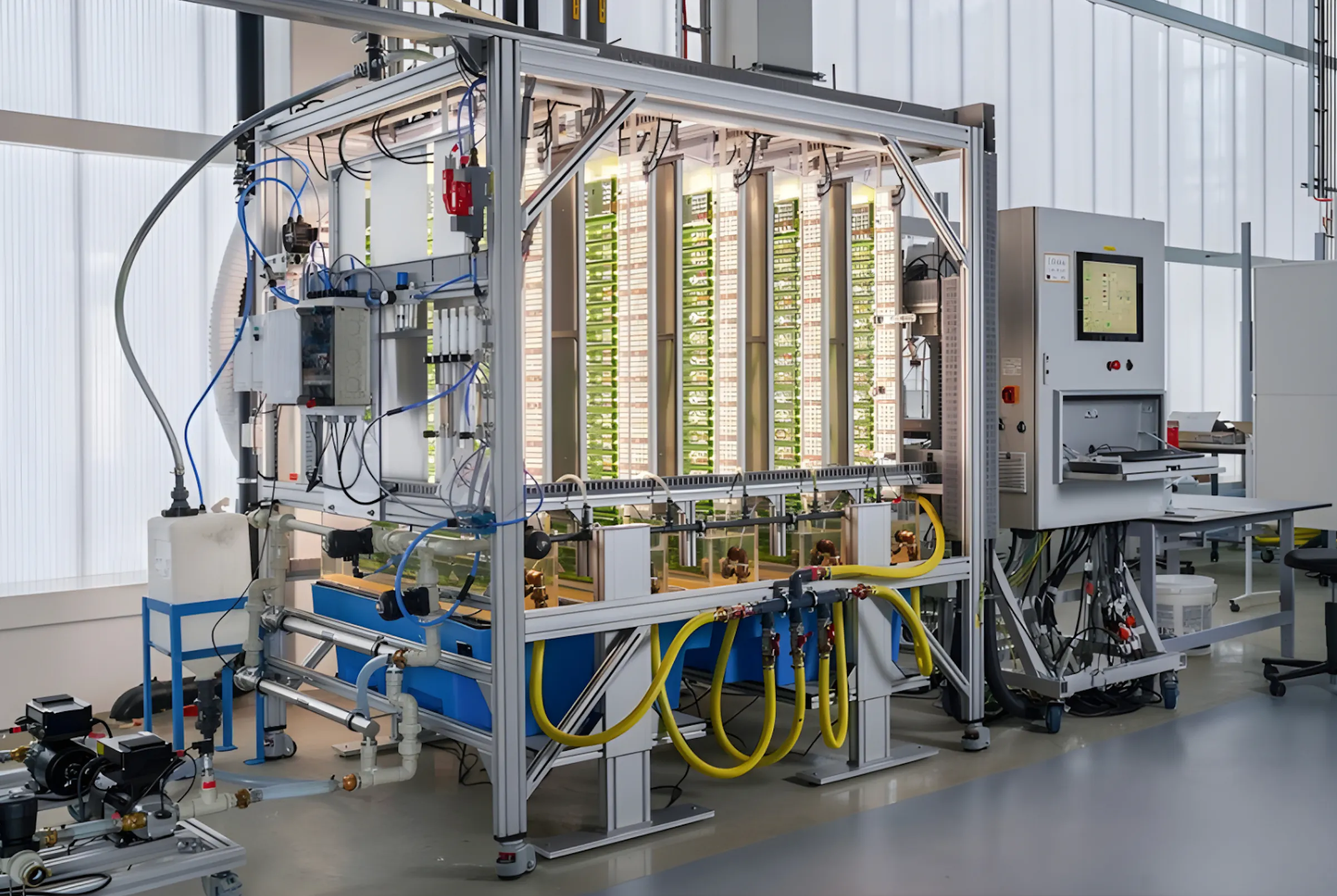
Pathway 2 Microalgae Transformation | Microalgae cultivation in flat panel bioreactor at Fraunhofer IGB © Fraunhofer IGB
From proof of concept to scaling
The next step is to move from small lab tests to a larger, working system. One near-term focus is scaling up the PHB pathway, starting with medical workwear because it is more uniform, easier to trace, and better suited for testing at this stage.
The team is also preparing for a new bacterial fermentation facility in Brandenburg, which could help move PHB production beyond the lab. At the same time, partners are improving the algae pathway, working on better sorting systems, and looking for the funding and coordination needed to make the full regional model possible.
A place-based future for textile waste
This work connects with One Earth’s Solutions Framework through the Circular Fibersheds sub-pillar, which focuses on building textile systems that reduce waste, use safer materials, and keep value circulating closer to home. The Germany pilot puts that idea into practice by exploring how hard-to-recycle textiles can become useful inputs rather than discarded waste.
It also offers a broader reminder: the textiles our systems reject do not simply disappear. They remain part of a larger environmental story and a missed opportunity. This pilot asks what it would look like to build a system that treats even the hardest-to-recycle materials as worth using again.

Subscribe to receive monthly updates on climate solutions, environmental heroes, and the profound beauty and wonder of our shared planet Earth.