The southern white rhinoceros: The grassland giant that beat extinction
- Nature Conservation
- Land Conservation
- Iconic Species
- Wildlife
- Mammals
- Southern Afrotropics
- Afrotropics Realm

One Earth’s “Species of the Week” series highlights an iconic species that represents the unique biogeography of each of the 185 bioregions of the Earth.
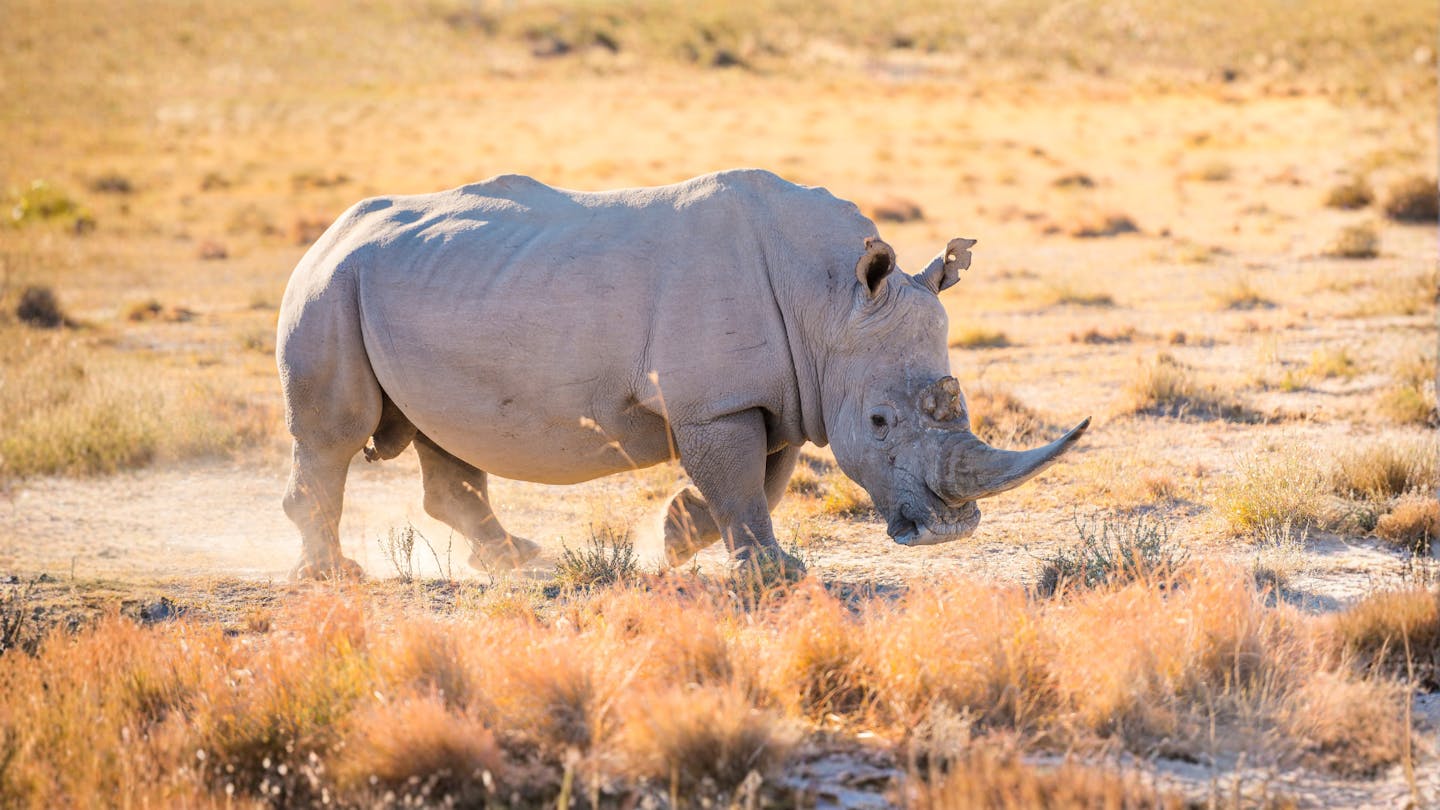
Broad-mouthed and imposing, the southern white rhinoceros (Ceratotherium simum simum) is one of the largest land mammals on Earth and the most widespread of all rhinos. Once pushed to the brink of extinction by hunting and land clearance, this subspecies has staged one of conservation’s most notable rebounds.

In the One Earth Bioregions Framework, Southern white rhinoceros are the iconic species of the Southeast African Subtropical Grasslands bioregion (AT8), located in the Southern Afrotropics subrealm of the Afrotropics.
Where southern white rhinos live today
Southern white rhinos inhabit grasslands, savannas, and shrublands across Southern Africa, from South Africa north to Zambia. The vast majority of the global population is concentrated in a handful of countries, with South Africa holding the largest share. Smaller reintroduced and assisted populations now occur in places such as Botswana, Eswatini, Namibia, Zimbabwe, Kenya, and Uganda, often within protected areas and conservancies.
Massive size and defining features
This subspecies is massive even by rhino standards. Females typically weigh around 1,600 to 1,700 kilograms (3,530–3,750 lbs), while males commonly reach 2,000 to 2,300 kilograms (4,410–5,070 lbs), with exceptional individuals heavier. Adults stand roughly 160 to 186 centimeters (5.25–6.1 ft) at the shoulder and measure 3.35 to 4 meters (11–13.1 ft) from head to body.
A prominent muscular hump supports the heavy head, which carries two horns. The front horn averages about 60 centimeters (24 in) and can be much longer, particularly in females. Sparse hair covers the body, with thicker fringes on the ears and tail. Their defining feature is a flat, wide mouth, an adaptation for cropping short grasses close to the ground.
Architects of the open savanna
Southern white rhinos are graminivores that feed almost exclusively on short grasses. Their square upper lip acts like a lawn mower, allowing them to graze efficiently over large areas.
By feeding on short grasses, southern white rhinos help maintain open grassland structure. Their grazing influences plant composition and creates feeding opportunities for smaller herbivores. Dung piles also recycle nutrients back into the soil and serve as territorial markers that shape how rhinos use the landscape.
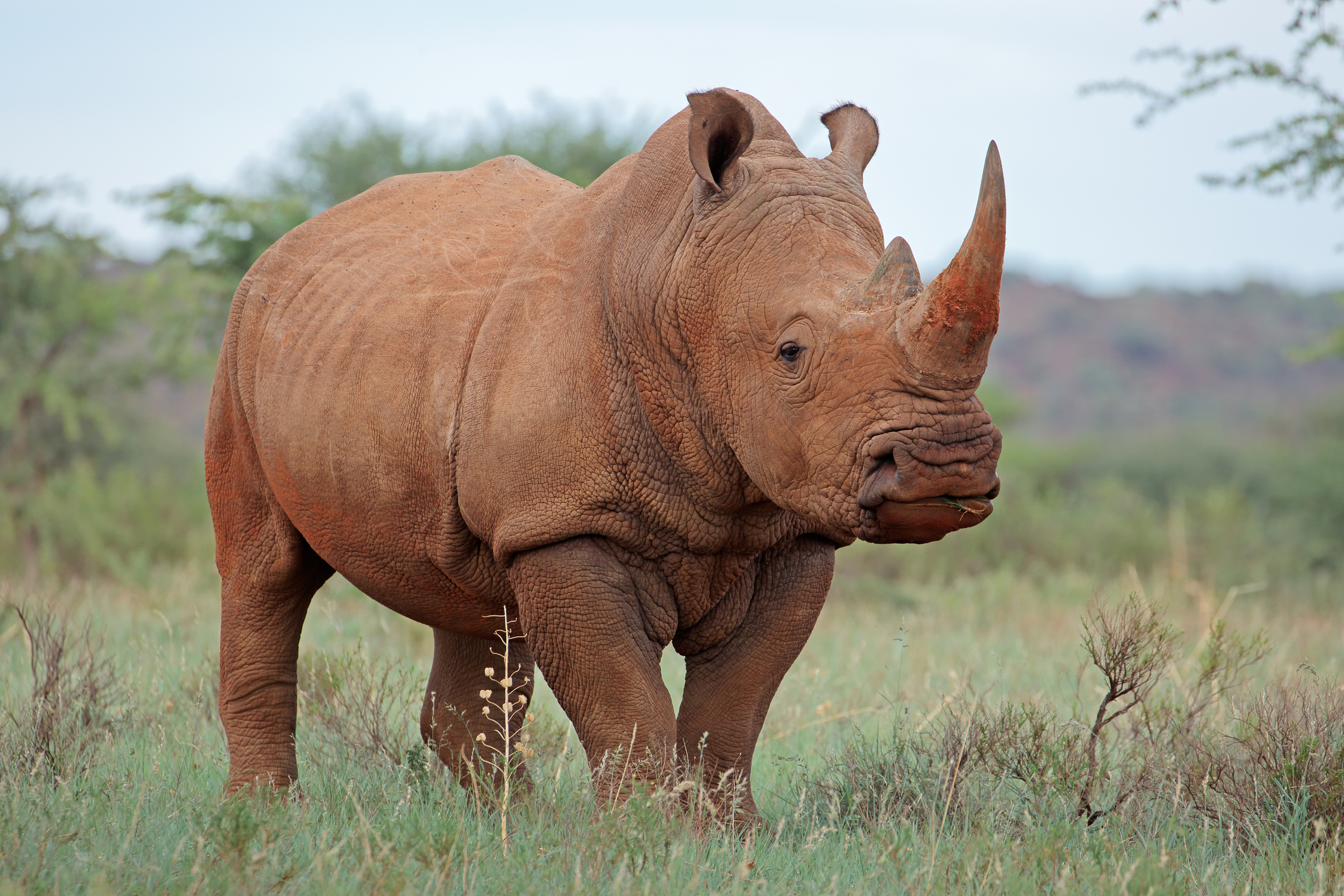
A southern white rhinoceros in South Africa. Image Credit: © Ecophoto, Dreamstime.
Social lives and daily behavior
White rhinos have more complex social structures than their solitary reputation suggests. Groups of up to 14 animals may form, especially females with calves. Adult males defend territories of roughly one square mile, marking boundaries with scraped dung piles. Females range more widely, sometimes covering areas many times larger depending on habitat quality. Conflicts between rival males can be intense, with horns and sheer size used to assert dominance.
Slow reproduction and long maternal care
Females typically give birth to a single calf every two to three years after a gestation of about 16 months. Newborns weigh around 45 kilograms (100 lbs) and remain closely bonded to their mothers. Young rhinos usually become independent after two to three years. Males play no role in raising calves, and in rare cases aggressive males may even attack young they perceive as future competition.
Pressures from poaching and habitat loss
Despite their recovery, southern white rhinos face persistent threats. Habitat loss continues across parts of their range, but the most serious danger is poaching for rhino horn, driven largely by demand for use in traditional medicines. After strong population growth through the 1990s and early 2000s, numbers declined between 2012 and 2017 as poaching intensified, particularly in South Africa’s Kruger National Park.
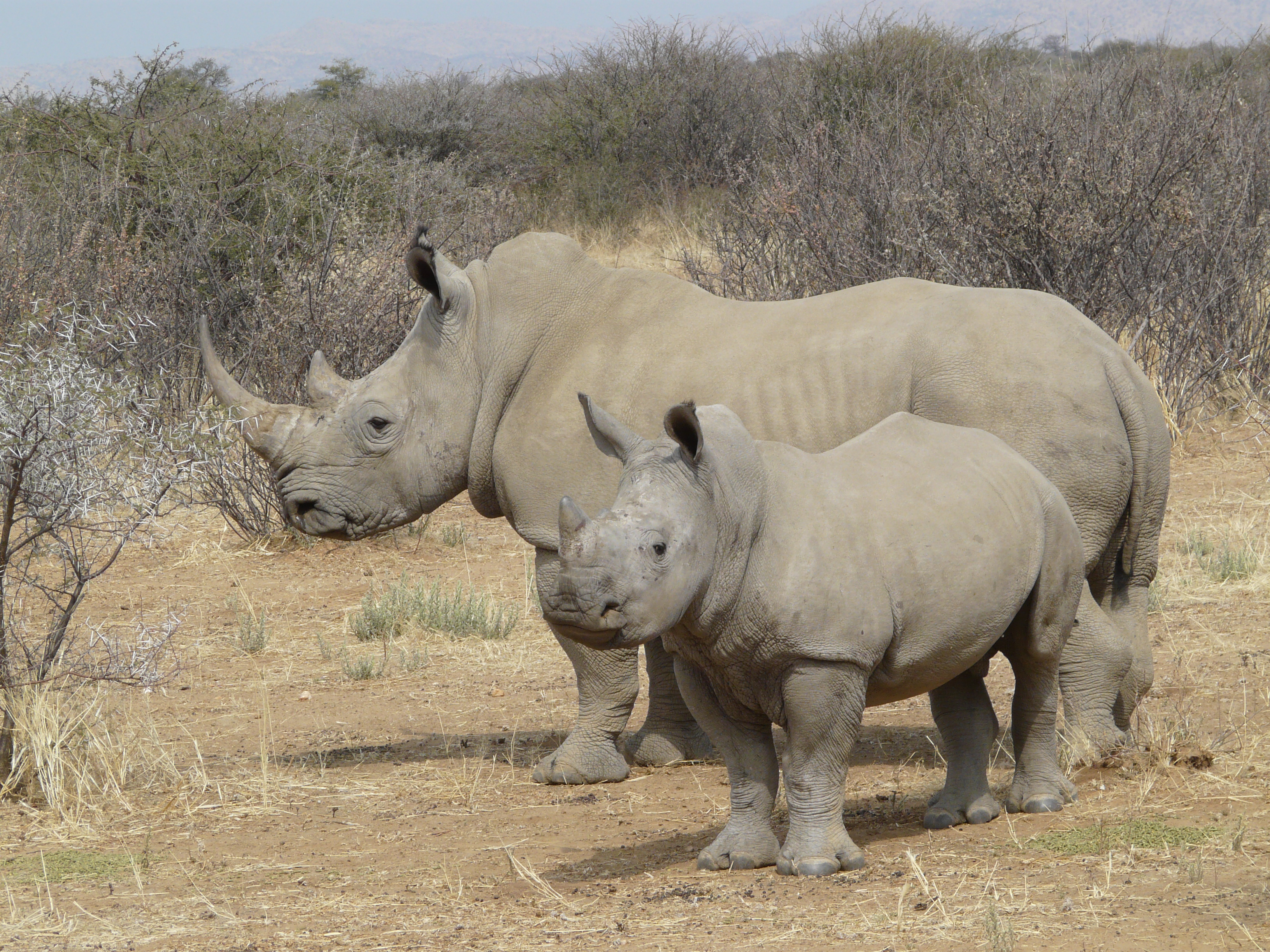
A southern white rhino mother with calf in Namibia. Image Credit: Zigomar, Wiki Commons.
Conservation status and efforts that made a difference
The southern white rhinoceros is listed as Near Threatened and is protected under the Convention on International Trade in Endangered Species. Intensive protection, translocation programs, and regulated trophy hunting introduced in 1968 have all contributed to population recovery by creating incentives for landowners to conserve rhinos.
Reintroduction projects across Africa and large-scale initiatives led by conservation organizations have focused on spreading risk by establishing new populations within the species’ historical range. Captive breeding programs, including long-running efforts in places such as the San Diego Zoo Safari Park, have also played a role in maintaining genetic diversity.
A cautious success story
From fewer than 100 individuals discovered in the late 19th century to around 18,000 animals in protected areas and private reserves today, the southern white rhinoceros stands as a reminder that extinction is not inevitable. Its future, however, depends on continued vigilance, strong protection, and global commitment to keeping this grassland giant roaming Africa’s open plains.
Support Nature Conservation

Subscribe to receive monthly updates on climate solutions, environmental heroes, and the profound beauty and wonder of our shared planet Earth.
What is an Iconic Species?
An iconic species is a charismatic and ecologically significant animal selected to represent the unique biogeographical diversity of each bioregion in One Earth's Bioregions Framework. Learn more >