The clown frog: Central America's colorful and critically endangered amphibian
- Nature Conservation
- Land Conservation
- Iconic Species
- Wildlife
- Amphibians
- Central America Subrealm
- Central America Realm

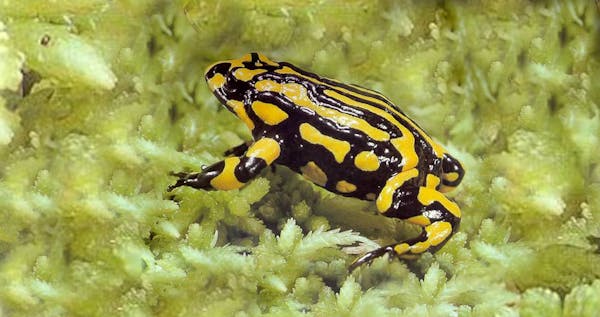
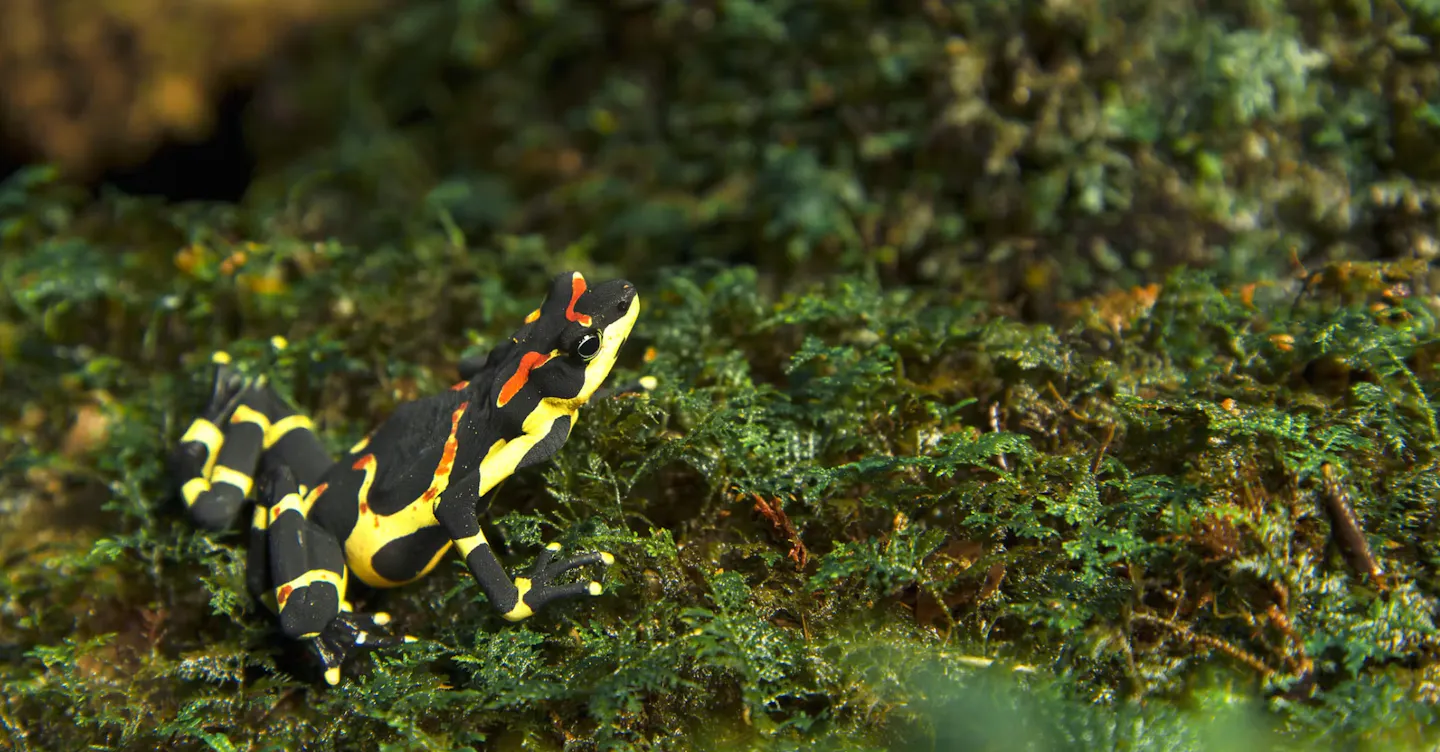
Deep in the humid forests of Central America, along the spray-soaked rocks of forest streams, lives one of the region's most visually striking amphibians. Lime green, yellow, and orange are broken by irregular black markings, while some individuals flash scarlet or blue-green underneath their bodies. The patterns vary so dramatically that no single look defines the species.
Known as the clown frog or Costa Rican variable harlequin toad, Atelopus varius is a small Neotropical true toad in the family Bufonidae. Once found across a much broader range, its populations began disappearing rapidly in the late 20th century. Today, this critically endangered amphibian survives in only a fraction of its former habitat.
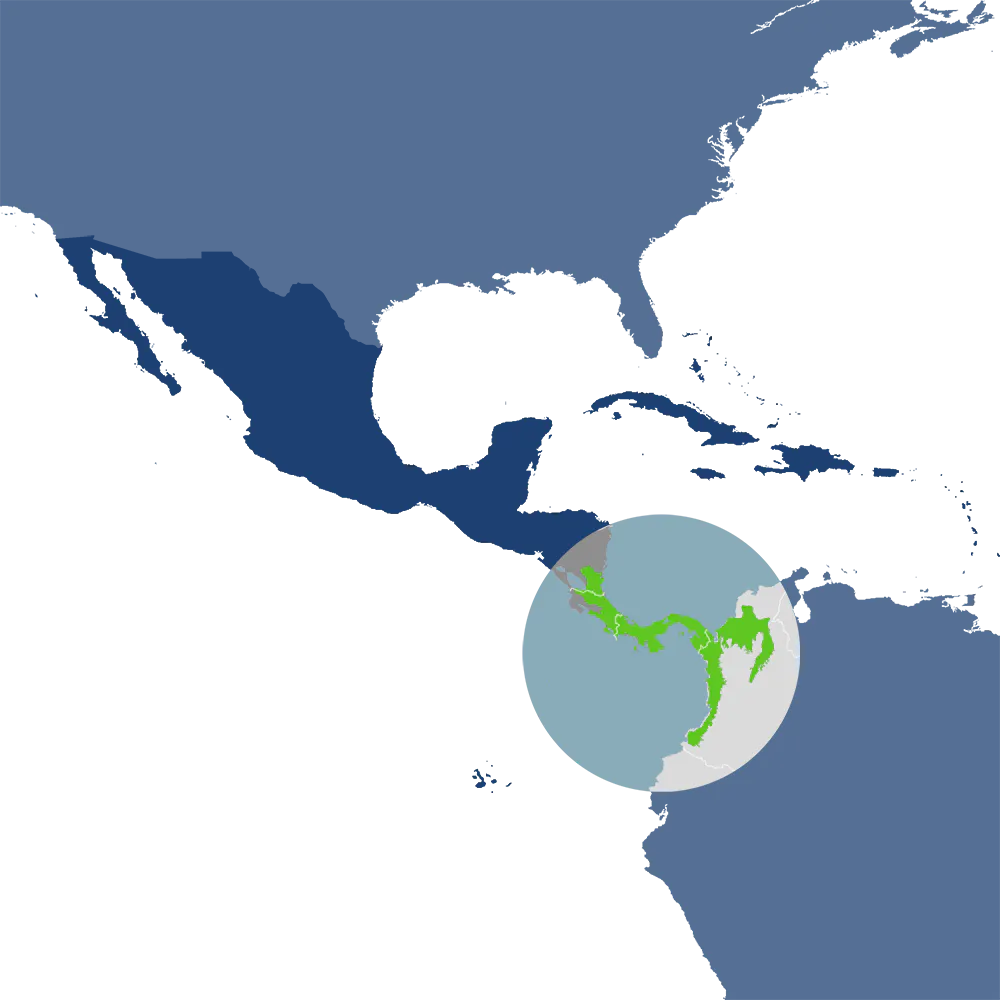
The clown frog is the iconic species of the Isthmian & Colombian Coastal bioregion (NT24), located in the Central America subrealm and realm.
Where the clown frog makes its home
The historic range of the clown frog stretched across the Pacific and Atlantic slopes of the Cordillera de Tilarán in Costa Rica and extended into western Panama, reaching as far as the Canal Zone and through Central Talamanca and Chiriquí.
These frogs have been found from near sea level to elevations of about 2,000 meters (6,562 ft), occupying tropical lowland, premontane, and lower montane zones. Their habitat includes both dry and wet forests along small stream courses, in regions where a wet season from late May to mid-November gives way to a distinct dry season.
Much of this historic range is now empty. A remnant population near Quepos, Costa Rica, was rediscovered in 2003, and a 2019 assessment confirmed two subpopulations in Costa Rica as well as surviving records of the species in Panama.
Bright colors serve as a warning
The clown frog's appearance can vary considerably. Its dorsal surface is mottled in light and dark tones, with a base color ranging from lime green to yellow-orange and black markings that can range from small dots to extensive patches covering much of the body.
The underside ranges from yellow-green to orange with similar black markings, while the throat and belly can appear bright scarlet and the groin may be blue-green or green. The snout is short and either pointed or rounded when viewed from the side, and the eyes have horizontally elliptical pupils. The species has no tympanum, or external eardrum, and lacks distinct glandular ridges.
Males and females differ in several ways. Males have webbing between the first and second fingers, and the first finger bears a nuptial pad used during reproduction. The toes are webbed except for the fourth, and there is no tarsal fold.
Size also varies by sex. Adult males measure about 25 to 41 millimeters (1.0–1.6 in) from snout to vent, while females are larger at approximately 33 to 60 millimeters (1.3–2.4 in).
This vivid coloration is more than decoration. It is thought to be aposematic, serving as a warning to potential predators that the frog's skin contains toxins. Wild clown frogs possess both bufadienolide compounds and tetrodotoxin, a potent neurotoxin.
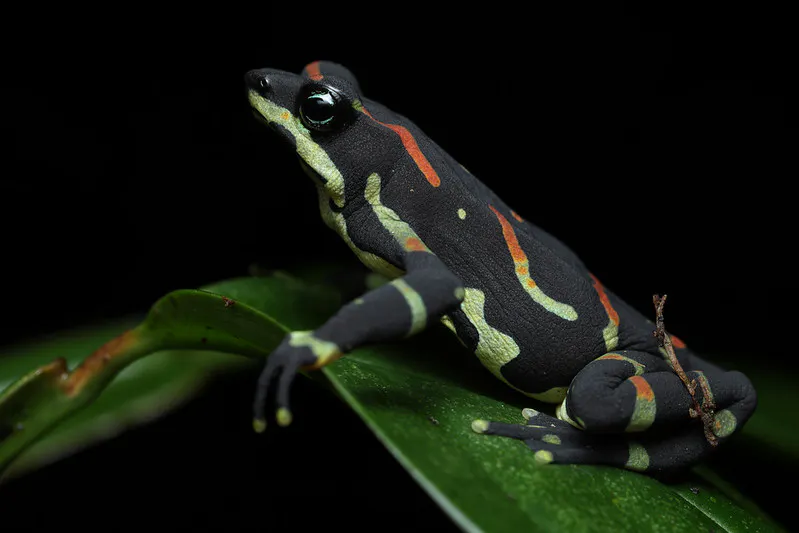
Clown frogs vary dramatically in color, with patterns of lime green, yellow, orange, and black, and some individuals displaying bright scarlet or blue-green markings. Image Credit: Duborget.R, Flickr.
A toxic piece of the food web
The clown frog feeds primarily on small arthropods, generally no larger than about 7 millimeters (0.3 inches). These prey become more abundant during the dry season, when clown frogs also increasingly gather around moist areas near streams and waterfalls.
Its toxic skin and conspicuous coloration help deter potential predators. The species is slow-moving, sedentary, and less wary than other frogs in the same habitat, traits researchers have linked to its aposematic coloration and chemical defenses.
One unusual threat documented in the scientific literature is a sarcophagid fly called Notochaeta bufonivora. The fly deposits larvae on the frog's thigh, where they burrow into the body and feed internally, killing the frog within a matter of days.
Daily habits and surprisingly territorial behavior
The clown frog is diurnal, meaning it is active during the day. It typically spends daylight hours sitting on rocks and logs near streams or sheltering in rock crevices, then retreats into crevices or low vegetation at night.
It is a poor swimmer and rarely enters streams outside of breeding. Instead, it appears to depend on wet surfaces in stream splash zones for moisture.
The species also displays complex territorial behavior. Aggression occurs both within and between the sexes and can include forelimb and foot wagging, chasing, pouncing, and squashing.
Male-to-male conflicts tend to last longer than encounters between females and can involve chirp-like advertisement calls and wrestling. Male aggression becomes more intense during the breeding season and when frog densities are high.
Female-to-female aggression is generally less intense and frequent, without the wrestling and calling seen in males, and appears to be associated with defending foraging or shelter sites.
Intersexual aggression is almost always directed by females toward males. Females may chase, pounce on, and squash males that enter their territories.
Experiments have also shown that established territory holders tend to have an advantage over intruders, achieving greater success in confrontations despite differences in body size.
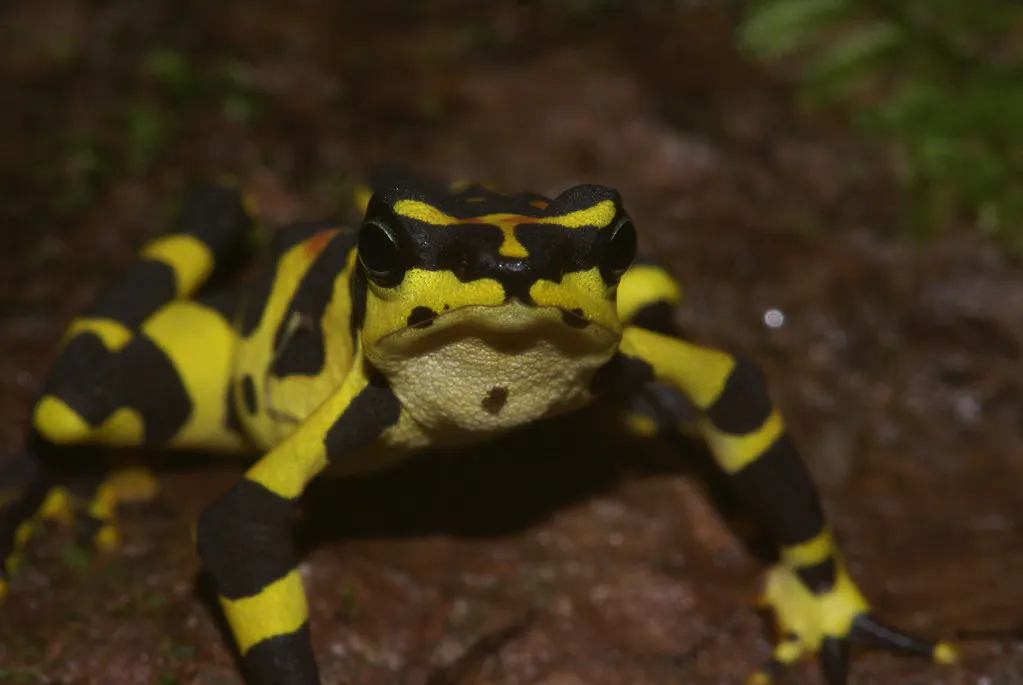
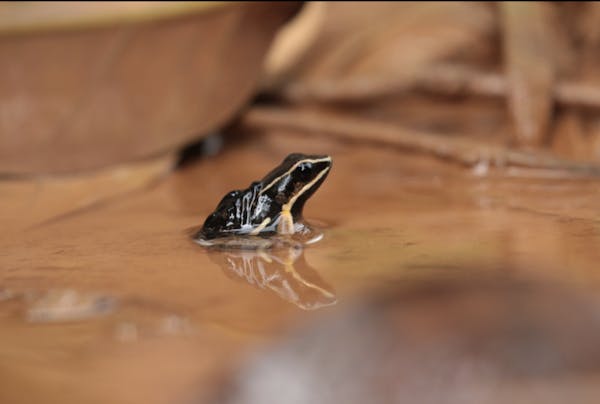
A primarily terrestrial species, the clown frog lives along rocky forest streams and relies on wet surfaces and stream spray for moisture. Image Credit: Mandi Martinez, Flickr.
Courtship can keep pairs together for weeks
Breeding begins when males start calling and defending territories at the onset of the wet season. Pairing follows roughly two to five months later, generally from mid-August through early December.
The sex ratio is male-biased, and once a male enters amplexus—the mating embrace used by frogs and toads—he may remain attached to a female for as long as 32 days.
Females deposit their eggs in water from the end of the wet season into the early dry season, generally between October and December. Breeding is one of the few times this primarily terrestrial species enters the stream.
Individual clown frogs can also survive for several years. Researchers have recaptured the same frogs across three consecutive years.
Climate shifts and disease drove a devastating population collapse
The clown frog's decline was both rapid and severe. Surveys near Monteverde, Costa Rica, recorded an average of 751 adults along a 200-meter (656-foot) transect in 1982 and 1983, with populations appearing stable through the late 1980s. Yet, surveys from 1990 to 1992 failed to detect a single frog, and the species remains absent from the area.
Researchers initially linked the disappearance to climatic stresses associated with major El Niño events, including changes in moisture and temperature. Later studies suggested a broader cause, finding that long-term shifts in precipitation, air temperature, and streamflow crossed a critical threshold in the late 1980s and contributed to widespread declines among tropical frogs.
Dry conditions may have compounded the problem. During the 1982 El Niño, clown frogs crowded into moist waterfall spray zones, where higher densities were associated with increased parasitism by Notochaeta bufonivora.
An even greater threat emerged from chytrid fungus, Batrachochytrium dendrobatidis. In 1997, three dead Atelopus varius in Fortuna, Panama, were found infected with the pathogen, which attacks keratinized skin, disrupting respiration and water balance and potentially killing frogs within weeks. Together, changing climatic conditions and the spread of chytrid fungus have been strongly linked to the species' dramatic decline.
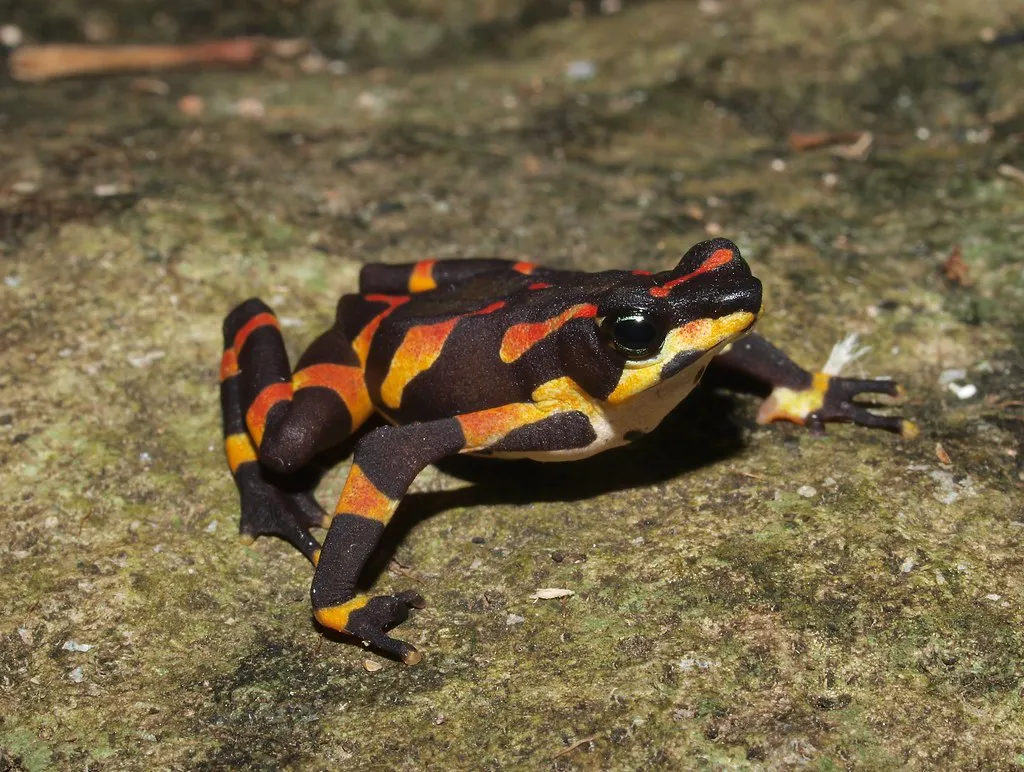
Once a bright presence along forest streams across Costa Rica and western Panama, the critically endangered clown frog has vanished from much of its historic range. Image Credit: Angel Solis, Flickr.
Captive breeding and habitat protection offer a path forward
By the 1990s, the clown frog had disappeared from many places where it was once recorded. In Costa Rica, the species was believed to have vanished entirely, while mass mortality drastically reduced populations in Panama.
Yet, surviving frogs were eventually found.
A population near Quepos, Costa Rica, was rediscovered in 2003, and a 2019 assessment documented two subpopulations in Costa Rica and recorded the species again in Panama.
Today, Atelopus varius is classified as critically endangered. Conservation efforts include captive breeding as well as continued protection of the forest habitat the species depends on.
In March 2021, conservationists announced that the clown frog had been successfully bred in captivity outside Panama for the first time, marking an important milestone in efforts to preserve the species.
A vivid reminder of what is at stake
The clown frog’s brilliant colors evolved as a warning to predators. Today, they offer another kind of warning: a reminder of how quickly climate shifts and disease can push a species toward disappearance, and how much sustained conservation can matter in keeping it alive.
Explore similar content

Subscribe to receive monthly updates on climate solutions, environmental heroes, and the profound beauty and wonder of our shared planet Earth.
What is an Iconic Species?
One Earth’s Species of the Week series highlights charismatic and ecologically significant animals that represent the diversity of each of our 185 bioregions. These iconic species are part of the One Earth Bioregions Framework. Learn more >