Caspian seals: Life in the world’s largest inland sea
- Nature Conservation
- Land Conservation
- Iconic Species
- Mammals
- Wildlife
- Caspian Sea & Central Asian Deserts
- Central Eurasia Realm

One Earth’s “Species of the Week” series highlights an iconic species that represents the unique biogeography of each of the 185 bioregions of the Earth.
The Caspian Sea is a world unto itself. Nearly 400,000 square kilometers of brackish water stretch across Eurasia, bordered by Russia, Kazakhstan, Turkmenistan, Iran, and Azerbaijan. Its northern basin, shallow and almost freshwater, freezes in winter and becomes a vast ice field. For the Caspian seal (Pusa caspica), the only marine mammal in this isolated sea, these icy plains are the cradle of life.
The species is found nowhere else on Earth. Adults haul out on rocky islands, floating ice, and remote sandbars, following seasonal shifts in water temperature. In winter and the cooler parts of spring and autumn, seals remain in the northern Caspian. As ice melts, they disperse south into deeper, colder waters and the deltas of the Volga and Ural Rivers.

In the One Earth Bioregions Framework, Caspian seals are the iconic species of the Caspian Sea, Coastal Deserts & Kopet Dagh Mountain Woodlands bioregion (PA33), located in the Caspian Sea & Central Asian Deserts subrealm of Central Eurasia.
Physical traits of a landlocked marine mammal
The Caspian seal is one of the smallest true seals. Adults reach about 126 to 129 centimeters in length (50–51 inches) and weigh roughly 86 kilograms (190 pounds).
Males grow slowly across several decades, while females experience faster growth until age ten. Their skull and dental structures link them closely to Baikal seals, and both species share ancestry with ancient ringed seals that once moved freely across waterways that later disappeared.
These seals are adapted to extreme temperatures, ranging from freezing winters at -35 °C (-31 °F) to sweltering summers reaching 40 °C (104 °F) Their thick coats and physiological resilience allow them to survive conditions that push the limits of most marine mammals.
Diet shaped by shifting seasons
Caspian seals are primarily fish eaters, consuming 2 to 3 kilograms (around 4-6 lb) of prey each day. Their diet shifts with the seasons and geography of the sea. In the northern Caspian’s shallow waters, they feed on gobies, sculpins, and crustaceans. In summer months farther south, they hunt herring, roach, carp, smelt, and sprat. When they enter estuaries, they feed heavily on Sander lucioperca, a freshwater species.
As top predators, the seals accumulate pollutants such as heavy metals, radionuclides, and organochlorine compounds in their tissues, making them important indicators of the sea’s environmental health.
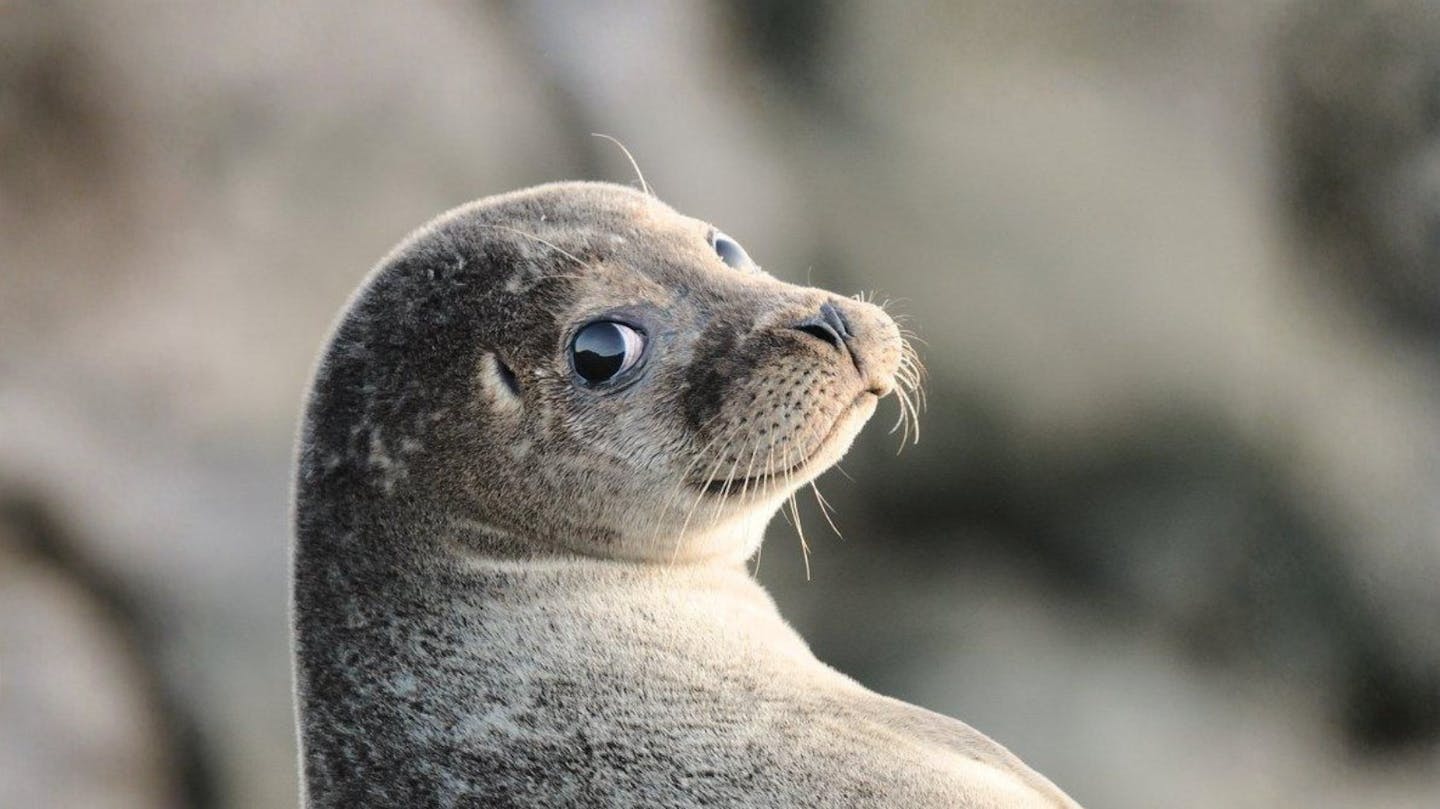
As top predators in the Caspian Sea, these seals help balance fish populations and reflect the overall health of this fragile, enclosed ecosystem. Image Credit: © Wirestock, Dreamstime.
Ecology and daily behavior
Caspian seals are shallow divers, usually descending about 50 meters (164 ft) for roughly a minute as they forage. After a dive, they rest at the surface before slipping back underwater.
In summer and winter, seals gather in dense groups, especially during mating. At other times, they are more solitary, often using aggressive snorts or flipper waving to maintain space on crowded haul-outs.
Reproduction on a fragile ice field
Monogamous pairs return each late autumn to the northern Caspian in anticipation of ice formation. After an 11-month gestation, females give birth from late January to early February. Most pups are born directly on exposed ice rather than inside snow lairs, because snowfall is typically too minimal for shelter construction.
Newborn pups weigh about 5 kilograms (11 lb) and rely on a long white lanugo coat for warmth. Mothers fast while nursing, sometimes supplementing their energy with minimal feeding. Pups are weaned after a few weeks and molt their white coats within three to four weeks.
Females mature at five to seven years, males at six to seven. Young seals are not fully grown until eight to ten years of age. After breeding and molting, adults migrate south as ice recedes, returning north again in late autumn to start the cycle anew.
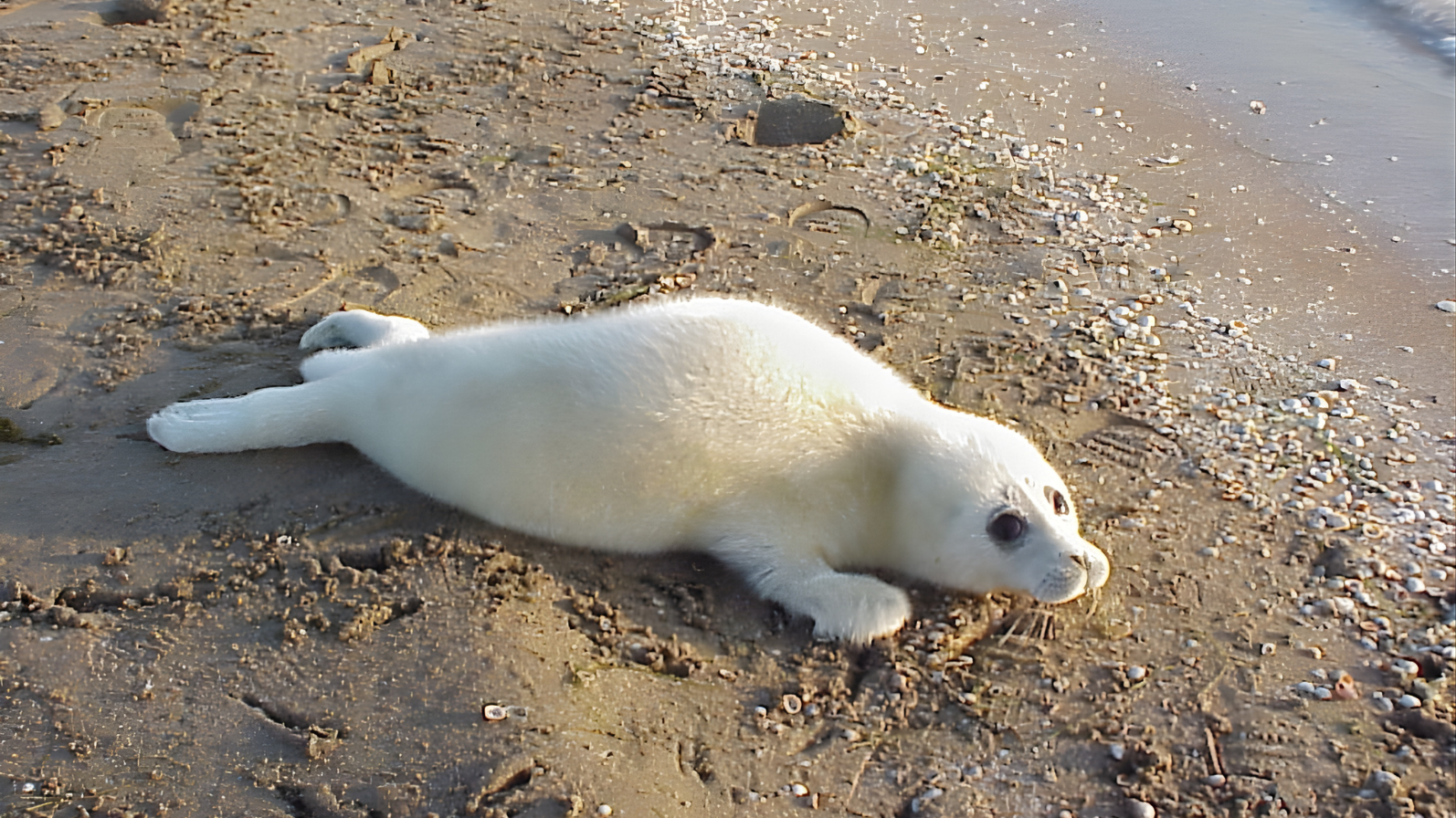
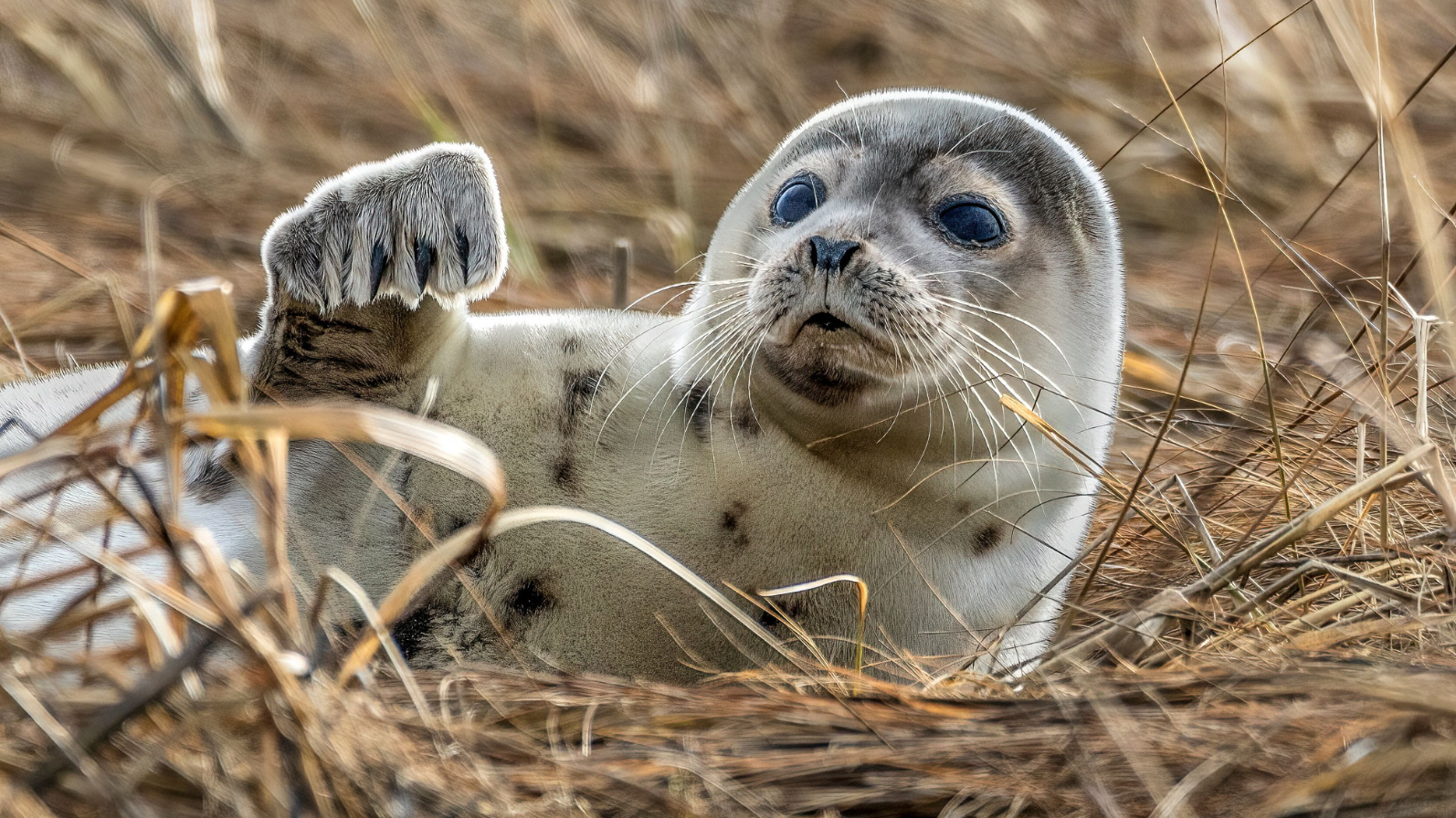
Newborn Caspian seal pups rely on their long white lanugo fur for insulation, staying on the ice until their waterproof adult coat grows in. Image Credit: Pavel Erokhin, Caspian Seal Project.
Human pressures and natural threats
At the beginning of the 20th century, an estimated one million Caspian seals lived in the region. By 2005, only 104,000 remained. By 2022, numbers had fallen to roughly 70,000. The decline continues at 3–4% each year.
Major threats include:
• Bycatch and deliberate killing in fisheries, especially in Iran, where an estimated 500 seals die annually.
• Commercial hunting, which continues in parts of Russia.
• Pollution, including heavy metals and organochlorines that impair immunity and fertility.
• Food chain disruption, intensified by overfishing and the invasion of the comb jelly Mnemiopsis leidyi.
• Loss of habitat from coastal development and disturbance of haul-out sites.
• Climate change, which may reduce or destabilize winter ice fields needed for breeding.
Mass mortality events continue to raise concern. In 2022, more than 2,500 dead seals washed ashore in a single incident, the cause still unknown.
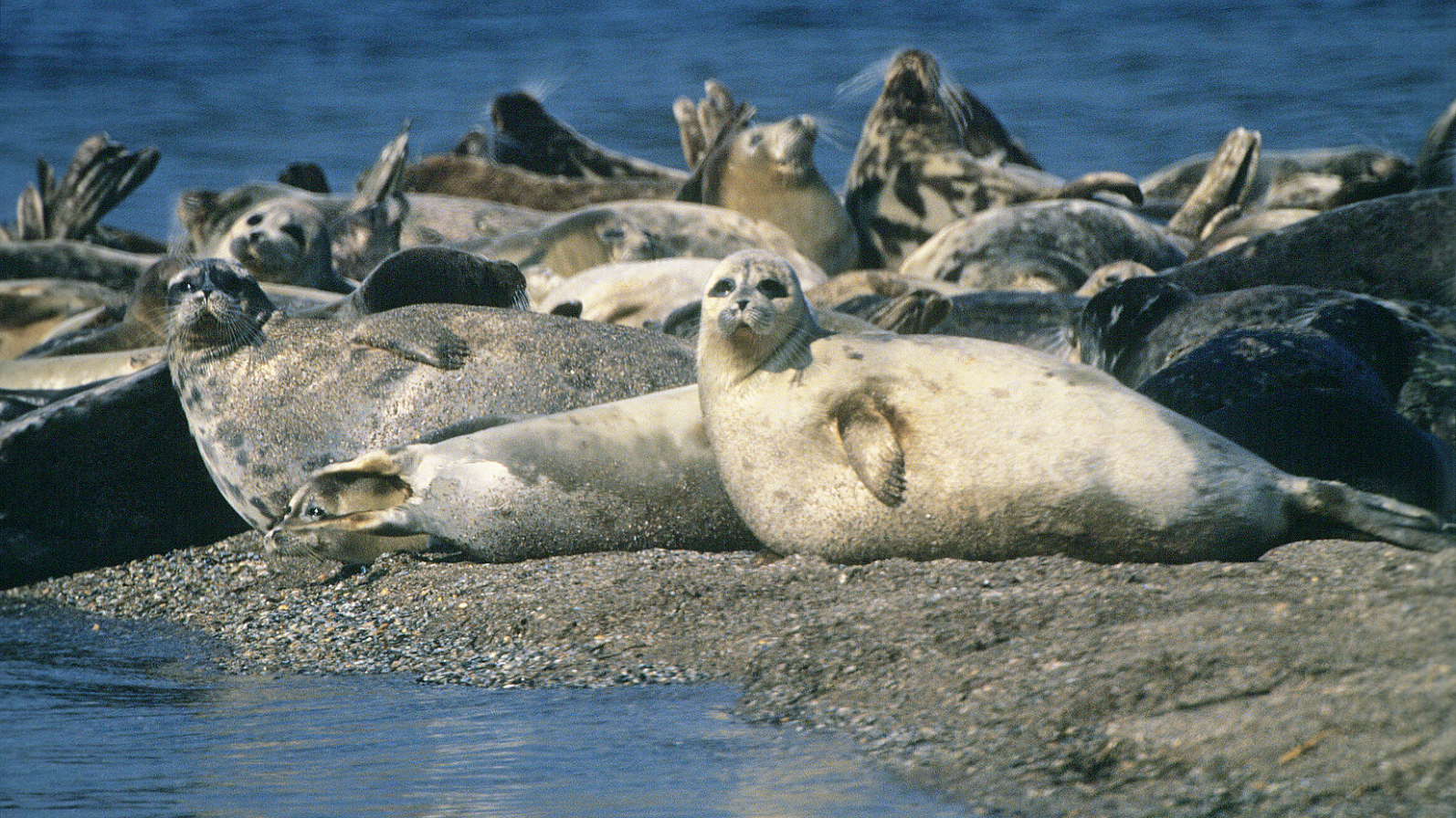
Caspain seal conservation efforts now focus on protecting breeding ice fields, reducing bycatch, and safeguarding the last strongholds of this endangered species. Image Credit: Pro-syanov from Getty Images Signature via Canva.
Current conservation efforts
The Caspian seal is listed as Endangered on the IUCN Red List. Conservation groups are pushing for a complete halt to commercial hunting and improved population monitoring across the seal’s range. Scientists within the Caspian region are adopting non-lethal research techniques, collecting tissue samples from live-captured seals rather than relying on “scientific hunts.”
In Iran, new protocols encourage fishermen to keep accidentally caught seals alive in holding tanks until researchers can release them safely. International teams are working to quantify bycatch, track population trends, and protect essential habitat such as Kenderli Bay and historic haul-out sites around the Apsheron Peninsula.
A comprehensive conservation strategy known as the Caspian Seal Conservation Action and Management Plan is now guiding multinational efforts. These measures aim to halt the decline of one of the region’s most iconic species and safeguard the fragile ecosystem that supports millions of people.

Subscribe to receive monthly updates on climate solutions, environmental heroes, and the profound beauty and wonder of our shared planet Earth.
What is an Iconic Species?
An iconic species is a charismatic and ecologically significant animal selected to represent the unique biogeographical diversity of each bioregion in One Earth's Bioregions Framework. Learn more >