Pātaka Kai and the living ties between food, land, and community
- Regenerative Agriculture
- Regenerative Croplands
- Smallholder Farming
- Social Justice
- Sustainable Livelihoods
- Community Action
- New Zealand
- Australasia Realm

A book that asks readers to see food differently
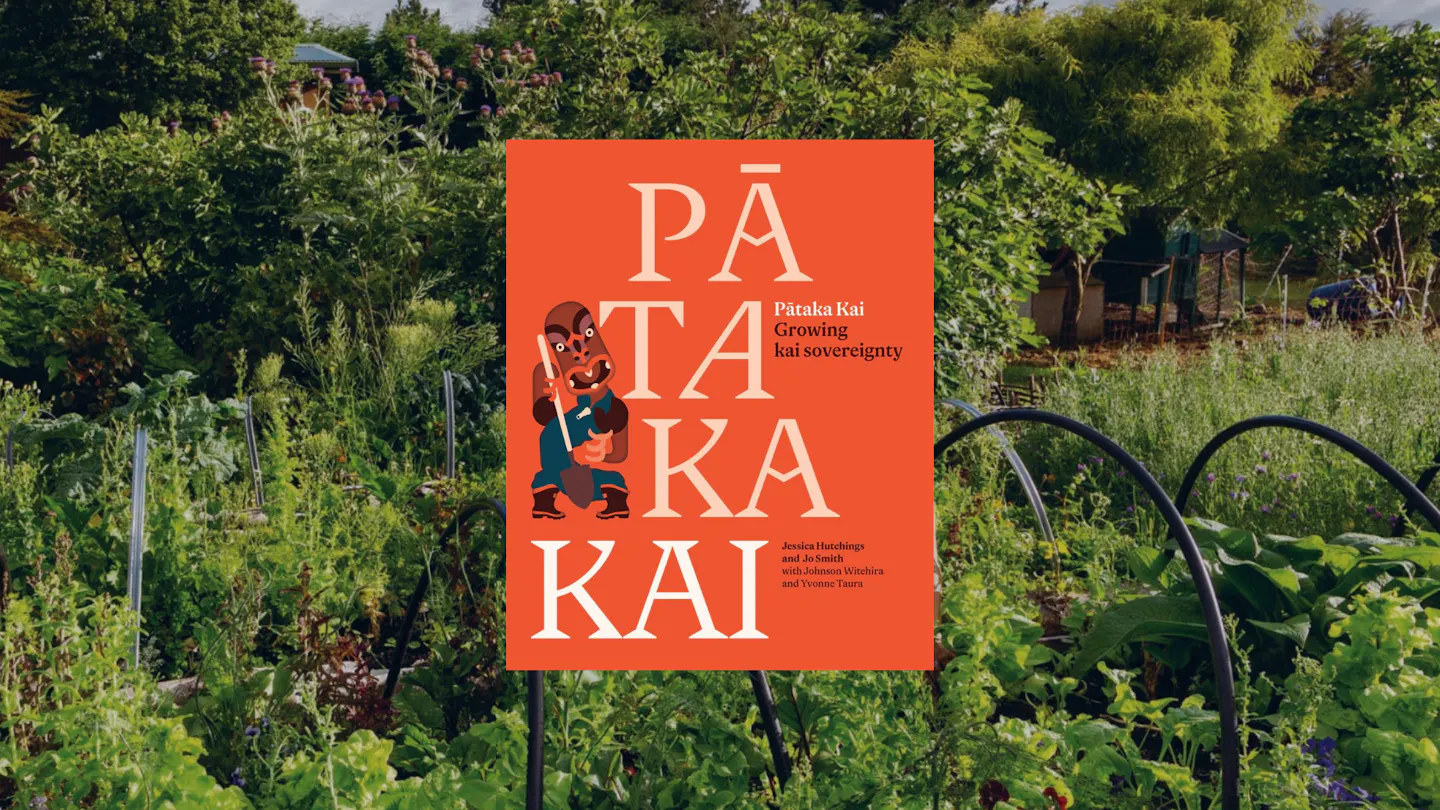
In Pātaka Kai: Growing kai sovereignty, Jessica Hutchings and Jo Smith present food as far more than a product to be bought, sold, or consumed. Across the book, kai is described as a living relationship between people and whenua, between ancestors and daily practice, and between human communities and the wider natural world.
The book is also filled with striking photography. In the foreword, renowned environmental thinker and food sovereignty advocate Vandana Shiva calls the stories it gathers “stories of beauty and love” and describes the volume itself as “a work of art.”
That description suits a book shaped not only by its ideas, but also by photographs of gardens, growers, and communities, images that help place those ideas back into the textures of lived experience.
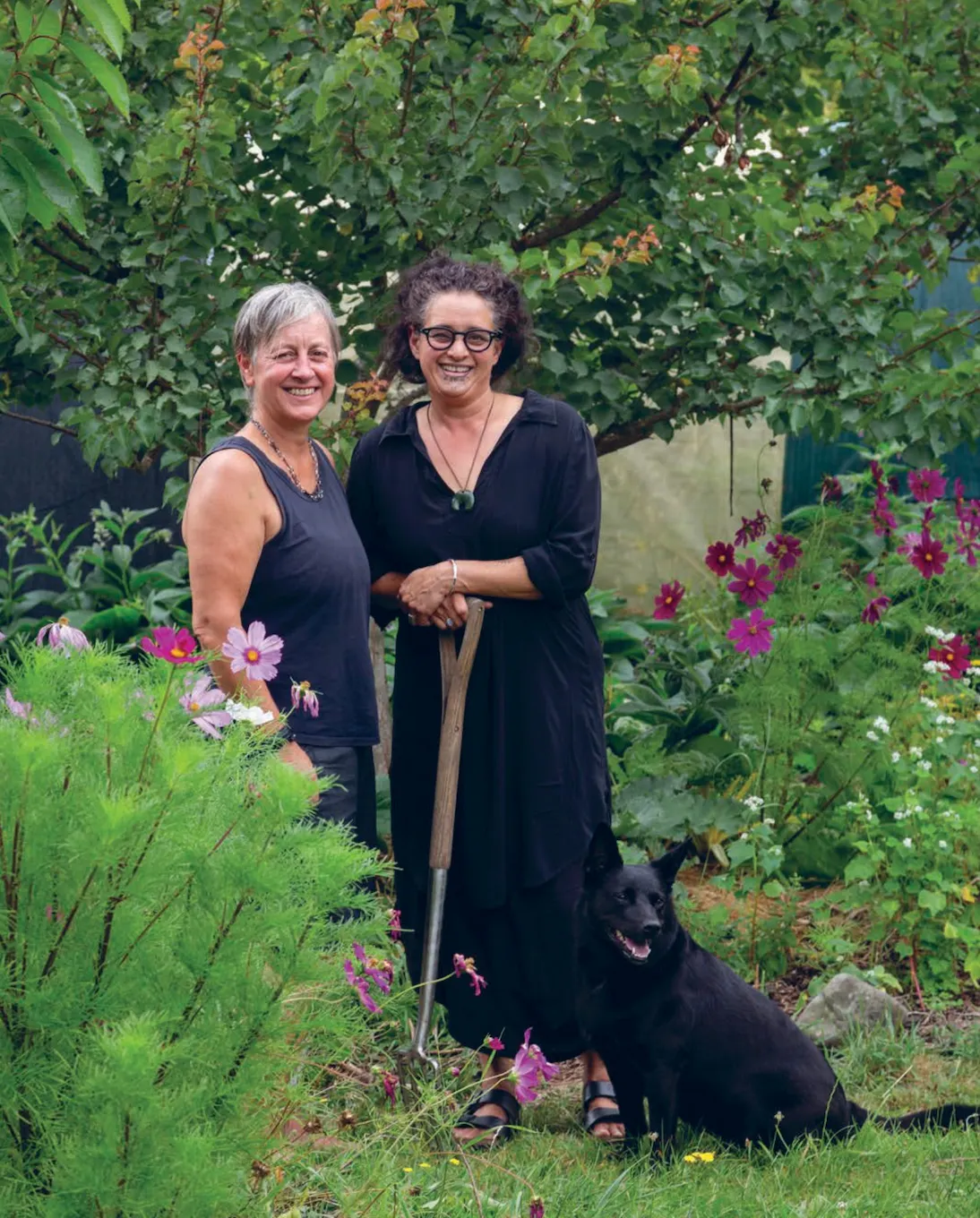
Jo Smith, Jessica Hutchings, and Tahi in the Hua Parakore māra at Papawhakaritorito farm. Photo: Paul McCredie from Pātaka Kai: Growing kai sovereignty.
The authors and the world they write from
Jessica Hutchings and Jo Smith write from deep experience in Māori food growing, research, and community work. In Pātaka Kai, they are introduced as Hua Parakore farmers, activists, and researchers whose lives are closely tied to the questions the book explores.
Hutchings is Gujarati from India and Ngāi Tahu. Smith has whakapapa links to Kāti Huirapa ki Puketeraki and the iwi of Waitaha, Kāti Mamoe, and Kai Tahu. Both live on Papawhakaritorito, a whānau food farm in Kaitoke, New Zealand.
The book also includes work by Johnson Witehira and Yvonne Taura. Witehira is a Māori artist and designer working across art, technology, and storytelling. Taura is a Māori researcher with Manaaki Whenua – Landcare Research and a PhD candidate at the University of Waikato.
Food as whakapapa, manaakitanga, and care
One of the book’s central ideas is that Indigenous food systems are rooted in relationship, reciprocity, and respect rather than profit or efficiency alone. In this view, kai sovereignty is not only about access to food. It also means access to culturally meaningful food, the protection of land and water, the renewal of language and knowledge, and the ability to feed people in ways that strengthen community and honor responsibilities to the living world.
That is why terms such as whakapapa (genealogy and relational connection), manaakitanga (care and hospitality), and kaitiakitanga (guardianship) appear throughout the book. Together, they help describe food as something that binds people to ancestors, place, the living world, and one another.
How colonisation and agribusiness changed the food system
From there, Pātaka Kai turns to history, tracing how agricultural colonisation in Aotearoa, the Māori name for New Zealand, transformed Māori relationships to kai by displacing communities from their ancestral lands, severing access to traditional foodways, and reshaping landscapes around export agriculture and private profit.
The book shows that these changes were not only economic. They were also social, ecological, and cultural, altering diets, weakening intergenerational knowledge, and contributing to food insecurity and poor health.
The critique then widens to the global scale. In the book’s account, industrial agriculture and global agribusiness concentrate power while eroding biodiversity, degrading soil and water, and deepening dependence on distant supply chains and corporate inputs.
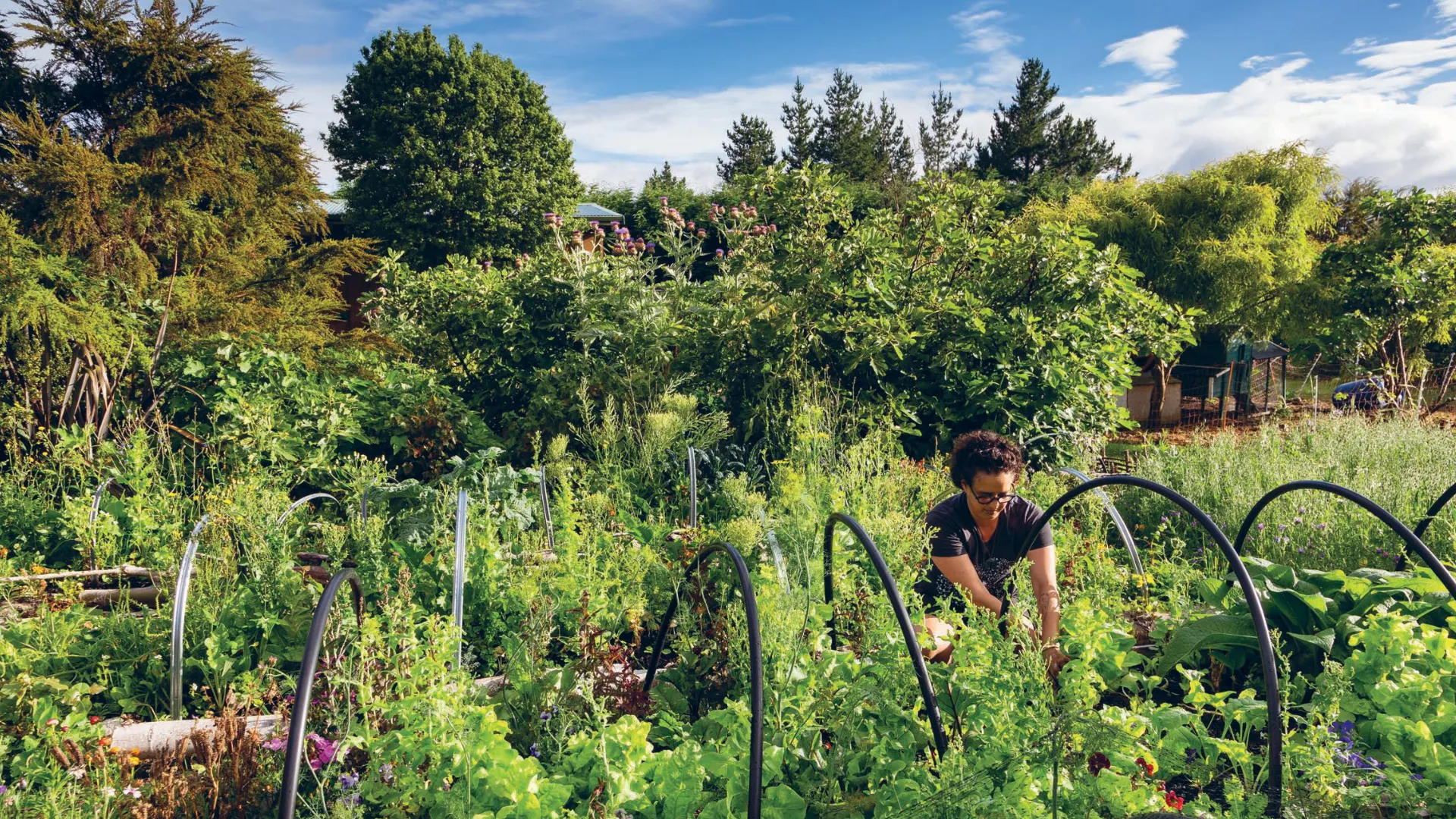
Jessica in the māra at Papawhakaritorito. Māori kai sovereignty is an everyday practice. Photo: Paul McCredie from Pātaka Kai: Growing kai sovereignty.
Stories from communities across Aotearoa
The second half of the book shifts from analysis to lived examples, gathering stories of food growing, land care, and community renewal. A few examples include:
- Papatūānuku Kōkiri Marae in Māngere: Here, food sovereignty takes shape through education, composting, and the Kai Ika project, which redistributes fish parts as food and uses the leftovers to nourish the soil. One teaching shared in this section is simple and powerful: “food is your medicine.”
- Ihumātao: This chapter shows how food growing can be part of land return. Gardens become part of a wider effort to protect and reclaim ancestral land, showing that growing food is not separate from history, memory, and political struggle.
- Kai Rotorua: In Rotorua, Te Rangikaheke Kiripatea’s work includes backyard gardens, school programs, and fruit distribution. His section shows how food growing can reconnect families to land, knowledge, and everyday practice.
Food stories across Te Moana-nui-a-Kiwa
The book then widens again to the wider Pacific. These chapters carry the same themes of care, responsibility, and connection to place, while showing that each food system is shaped by its own landscape, history, and community. A few examples include:
- Rekohu: Māui Solomon and Susan Thorpe describe efforts to restore local food traditions through seed sharing, native planting, and ecological care. Their chapter shows how food sovereignty can also mean reducing dependence on imported food and creating healthier conditions for birds and other species.
- Pacific organics: Karen Mapusua expands the conversation to food systems across the Pacific. She explains that many traditional growing practices were already sustainable long before they were labeled “organic,” and argues that food systems should be guided by values such as health, care, and cultural tradition.
- Samoa: Floris Niu describes her farming as “more than organic,” rooted in a deep relationship to ancestral land. Her story highlights women’s leadership, biodiversity, and the effort to reclaim traditional foods and growing practices in ways that support both people and place.
Taken together, these chapters show that food sovereignty is not one single model. It is a set of place-based practices shaped by memory, care, and responsibility to the land.
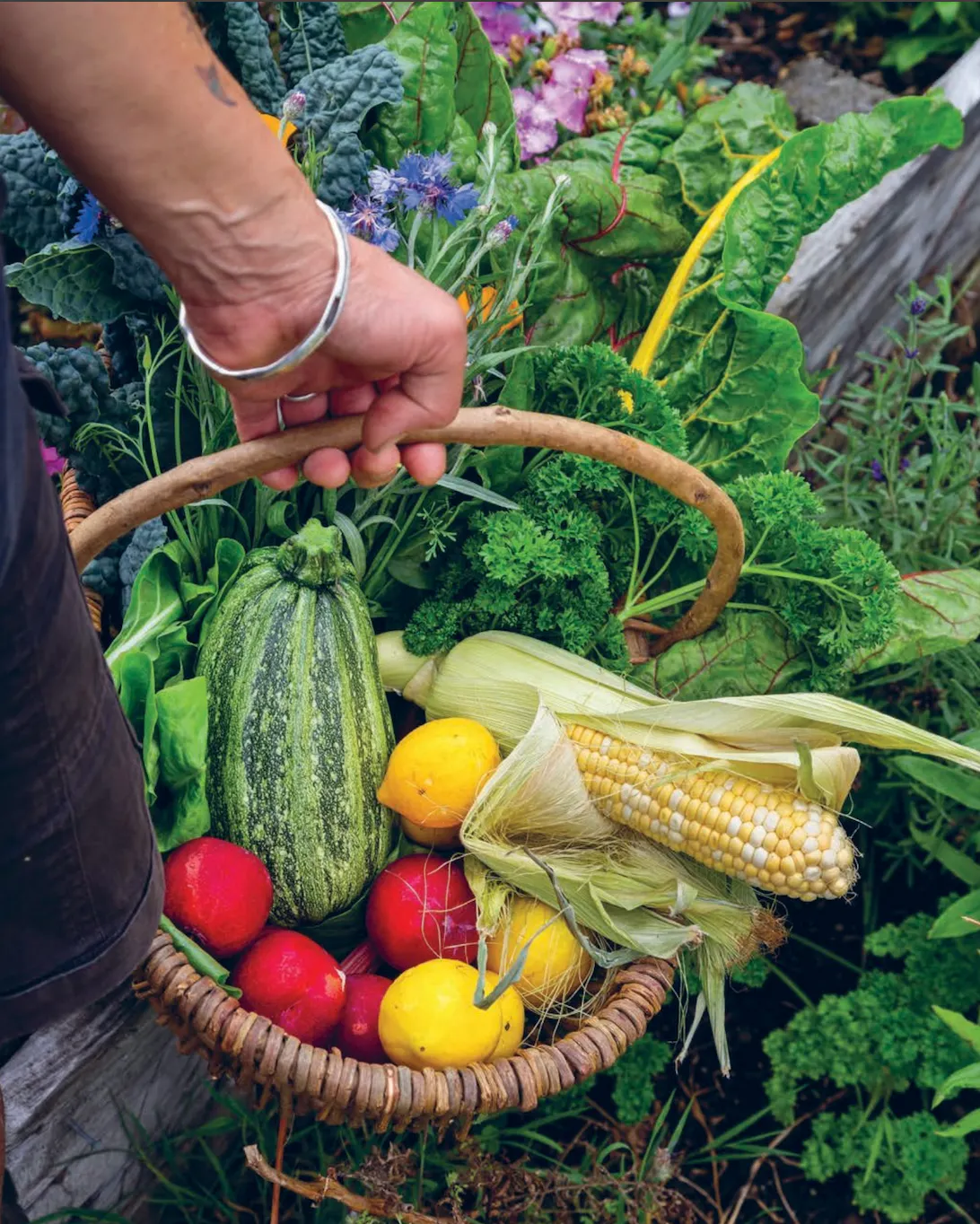
Kai from the māra at Papawhakaritorito. Photo: Paul McCredie from Pātaka Kai: Growing kai sovereignty.
A future rooted in the small and the collective
In its closing, Pātaka Kai points toward a different food future, one shaped not by larger corporate systems, but by small-scale, local food growing grounded in Indigenous knowledge, biodiversity, and community care.
This final whakataukī, or Māori proverb, captures the book’s vision: that seeds, gardens, food-sharing networks, and the living systems that make nourishment possible should be cherished. The future imagined here begins with attention, relationship, and the steady rebuilding of food systems rooted in care.
Explore similar content

Subscribe to receive monthly updates on climate solutions, environmental heroes, and the profound beauty and wonder of our shared planet Earth.