Handmade Future: Nine artisans around the world preserving culture, community, and craft
- Regenerative Agriculture
- Circular Fibersheds
- Sustainable Fiber & Pulp
- Green Textiles
- Recycle & Reuse
- Women
- Sustainable Livelihoods

Across the world, skilled artisans are quietly carrying forward traditions that have shaped human cultures for centuries. From weaving wool blankets in Morocco’s High Atlas Mountains to carving marble in India and weaving baskets in Kenya, these crafts represent far more than beautiful objects. They hold stories, ecological knowledge, and livelihoods passed down through generations.
Yet, many of these traditions are disappearing.
The documentary Handmade Future, directed by sustainable fashion pioneer Kirsten Dickerson, explores a global movement to reconnect craft with dignity, fair markets, and cultural identity. By highlighting nine artisans in six countries, the film reveals both the fragility of these traditions and the profound role they could play in building a more equitable and resilient world.
1. The Anou Cooperative: Weaving independence in the Morocco's High Atlas Mountains
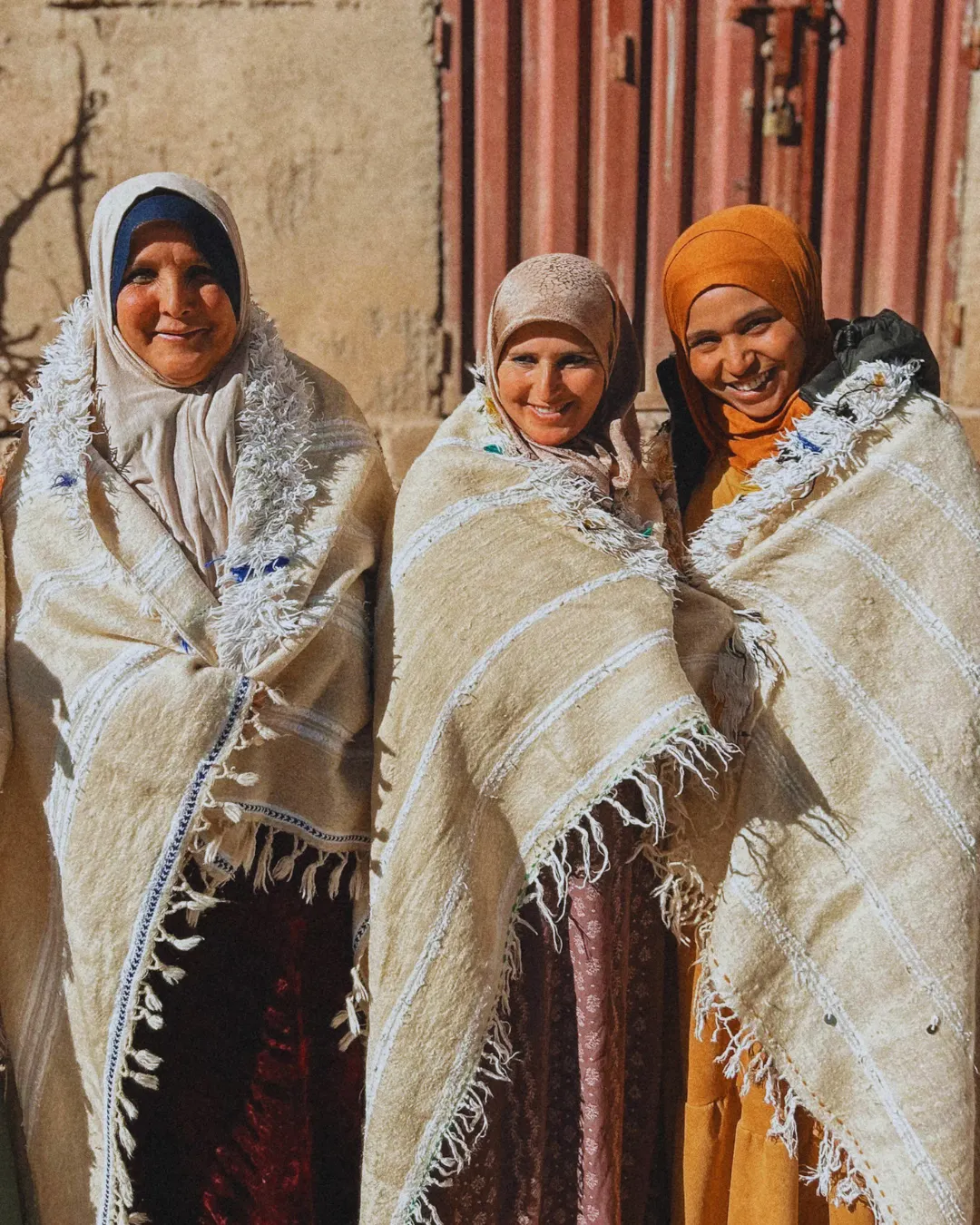
The Anou Cooperative. Image Credit: Artist and Nomad.
In the High Atlas Mountains of Morocco, weaving is part of daily life. Wool moves through practiced hands, shaped into rugs and textiles that carry generations of knowledge.
At the Anou Cooperative, more than 600 artisans work across villages, creating a network that is both economic and deeply social. For many women, this work provides rare financial independence in remote mountain communities.
That independence was not always possible. For years, middlemen controlled access to materials and markets, leaving artisans with little bargaining power and limited income.
By shifting toward direct trade, the cooperative is helping return both value and agency to the people who create the work. Furthermore, some initiatives in the region are experimenting with producing carbon-negative wool using solar power, wind energy, and rainwater before distributing the yarn to cooperatives across Morocco.
What was once an extractive system is becoming something more circular and community-led.
2. Irfan Marble Inlay Studio: Preserving a centuries-old craft in Agra, India
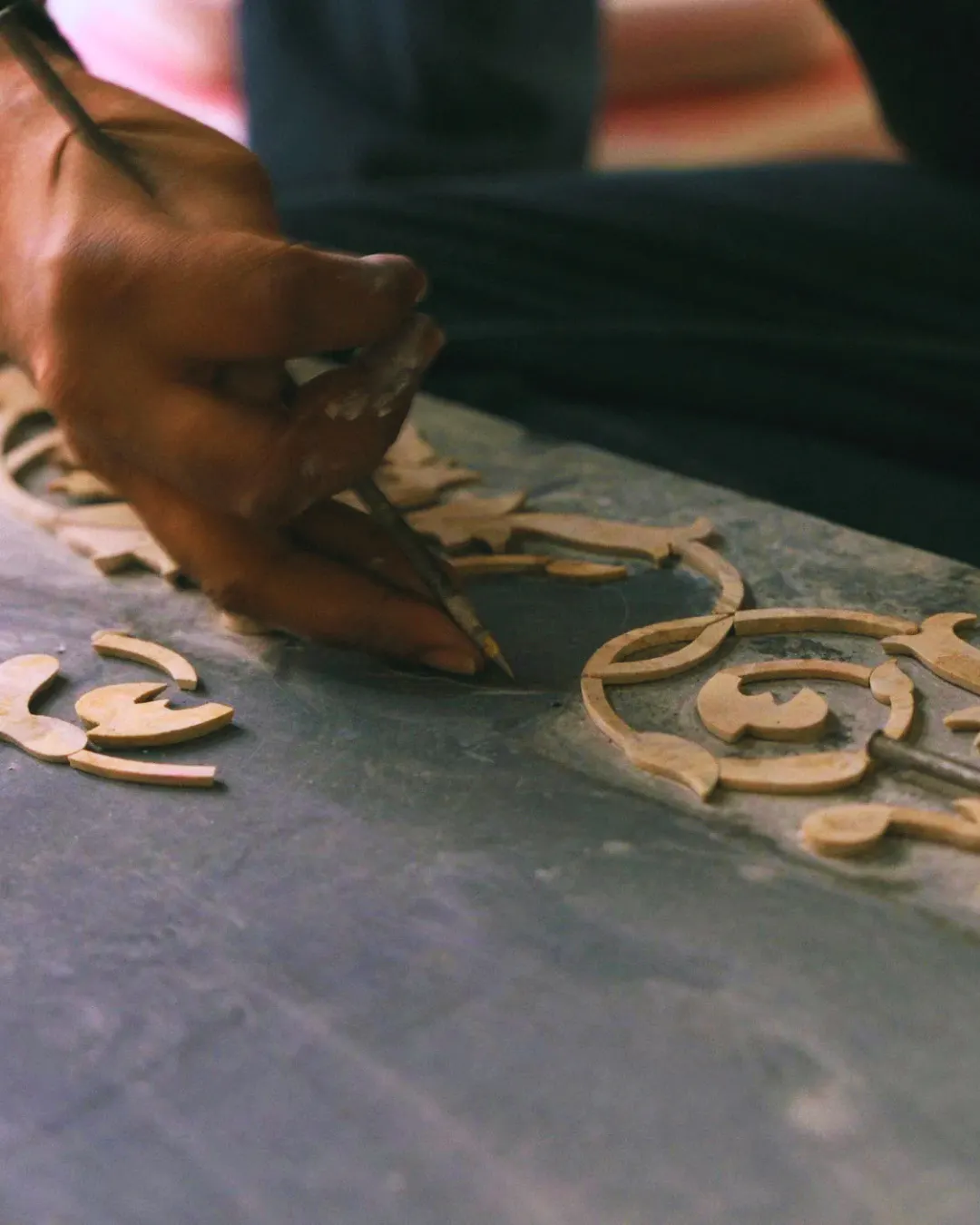
Irfan Marble Inlay Studio. Image Credit: Artist and Nomad.
In Agra, artisans continue a tradition that adorns one of the most famous buildings in the world: the Taj Mahal.
Marble inlay is a painstaking craft in which tiny pieces of stone are cut and embedded into marble to create intricate patterns. The work demands extraordinary patience and skill. A single piece may take months to complete.
At Irfan Marble Inlay Studio, this knowledge is still alive, but increasingly fragile. Despite the extraordinary skill required, artisans are often paid only for their labor, not for the true value of their work. As pieces pass through layers of middlemen, prices multiply, but the makers rarely see the difference.
Without fair compensation, younger generations see little reason to continue the craft. The number of practicing marble artisans has declined dramatically in recent decades, and only a handful of master artists remain capable of replicating these techniques.
Efforts to connect artisans directly with visitors and buyers aim to restore dignity and economic opportunity to the people preserving this extraordinary heritage.
3. Hadithi Crafts: Basket weaving community and conservation in Kenya’s Taita Hills
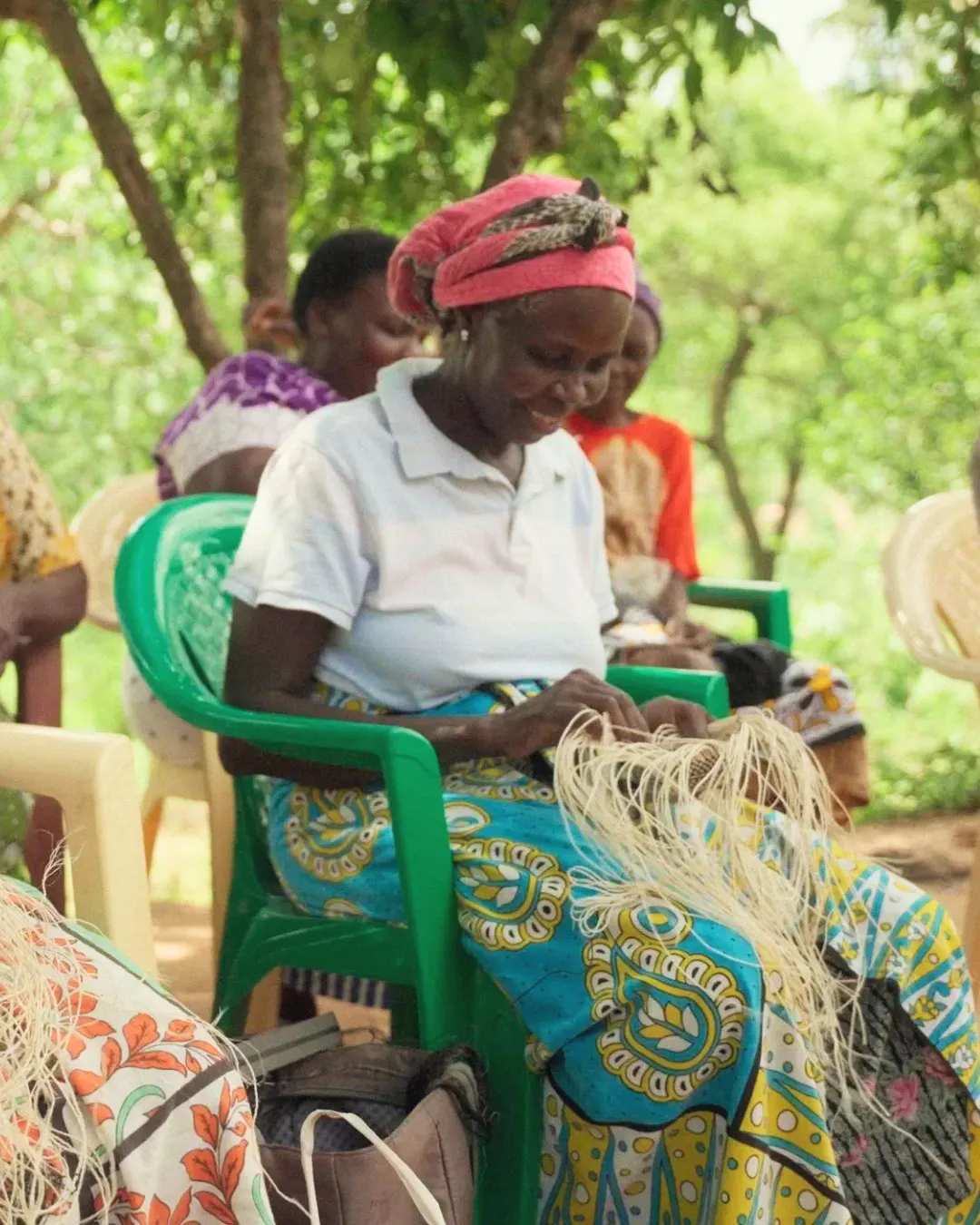
Hadithi Crafts. Image Credit: Artist and Nomad.
In Kenya’s Taita Hills, basket weaving begins with the land itself. Agave fibers are stripped, softened, and woven into baskets all by hand. These baskets support far more than craft traditions; they help sustain entire communities.
Through Hadithi Crafts, more than 1,900 artisans are connected, and their art becomes a form of environmental stewardship. The income generated through weaving helps reduce reliance on activities like charcoal production and poaching, both of which degrade surrounding ecosystems.
The work also elevates women’s leadership. Many of the artisans are mothers and grandmothers whose craft income helps pay school fees and support their families. When children see their mothers leading artisan groups and contributing to the household, something powerful happens.
What looks like a simple basket is, in reality, part of a much larger system of resilience.
4. Anchor Crafts: Elevating African craftsmanship in Kenya
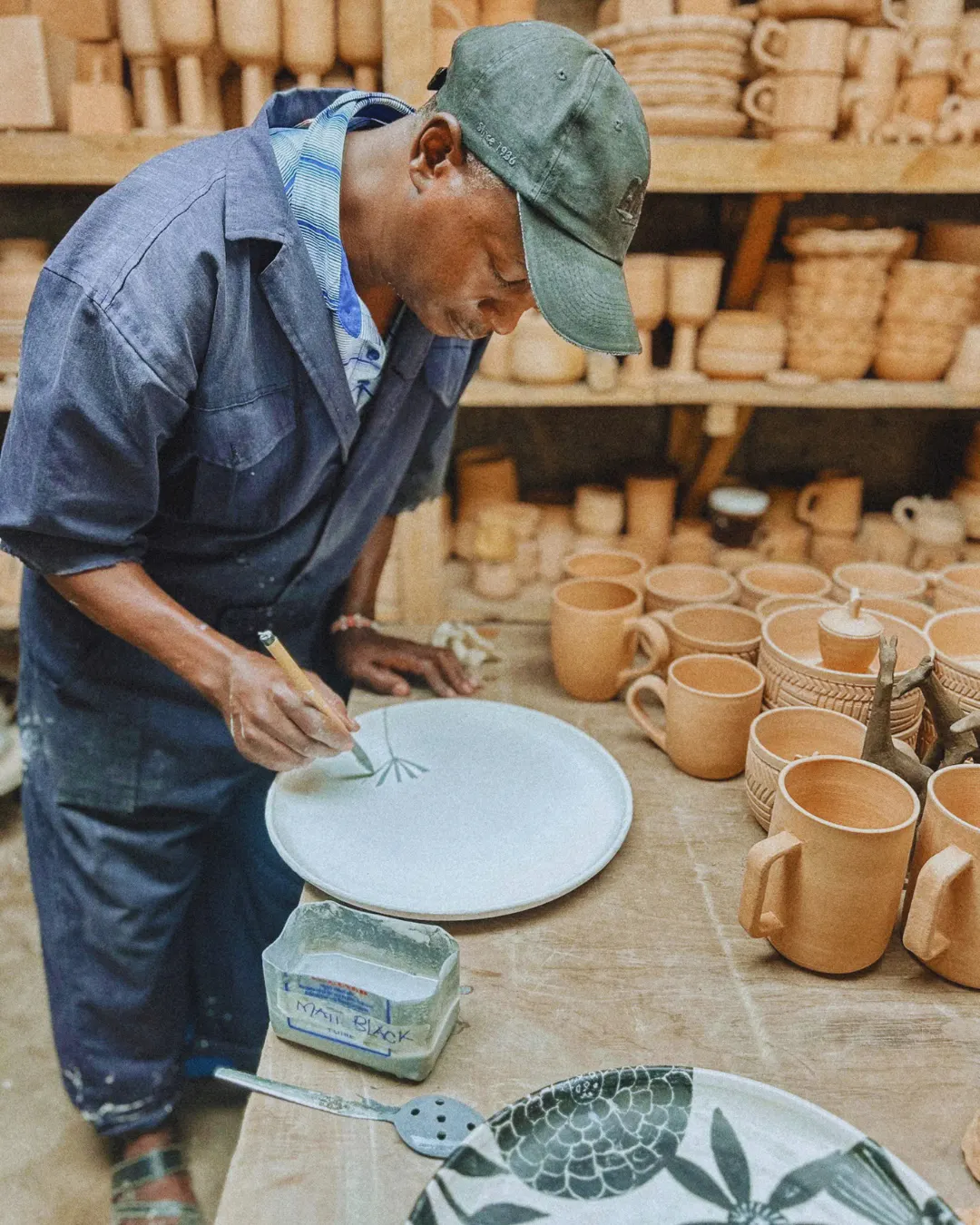
Anchor Leather and Crafts. Image Credit: Artist and Nomad.
In another Kenyan workshop, artisans transform discarded glass bottles into hand-blown vessels and decorative objects, giving new life to materials that might otherwise be thrown away.
This work is part of a larger ecosystem at Anchor Crafts, a women-led enterprise where artisans produce leather goods, textiles, jewelry, and glassware with a clear intention: to position African craftsmanship as high-quality, design-forward, and globally relevant.
This is a shift away from the way many handmade goods have historically been perceived, often undervalued or treated as informal. The challenge is not a lack of skill. It is recognition.
By investing in design, material quality, and storytelling, Anchor is helping reframe handmade work as something enduring rather than disposable. The result is a growing market for pieces that carry both cultural meaning and long-term value.
5. Celia Birchall Studio: Reconnecting fashion to land in rural England
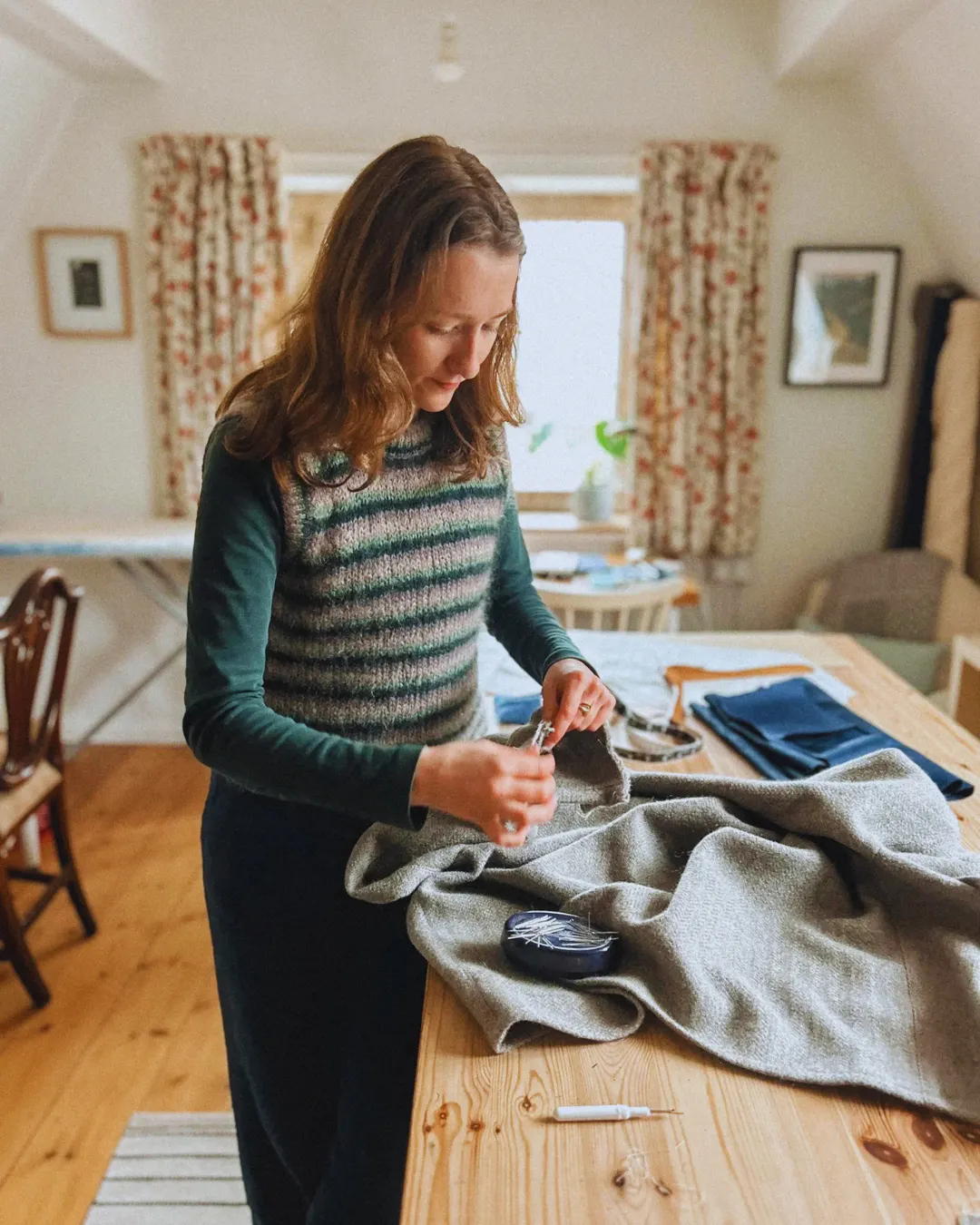
Celia Birchall Studio. Image Credit: Artist and Nomad.
Most clothing today is made without a story. Fabric is sourced globally, production is fragmented, and the origins of a garment are often invisible to the person who wears it. At Celia Birchall Studio, that process is reversed.
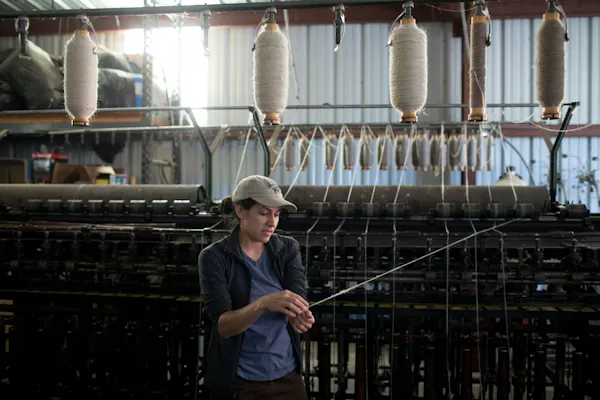
In rural England, wool travels from sheep to loom to garment, each step held close to the land. Fibers are sourced from nearby farms, spun and woven locally, then made into garments designed to last.
“There's so much textile in the world, and not all of it is made ethically or sustainably. And I felt that if I could keep it as local as possible, I would be able to trace it as far back as I could.” —Celia Birchall, Slow Fashion Designer.
This approach stands in contrast to fast fashion, where clothing is produced quickly and discarded just as easily. Working this way is slower and often more costly, but it offers something increasingly rare: transparency.
Each piece carries a clear origin, asking not just how a garment looks, but where it comes from and how long it will endure.
6. Casa Viviana: Crafting ceremony and tradition in Oaxaca, Mexico
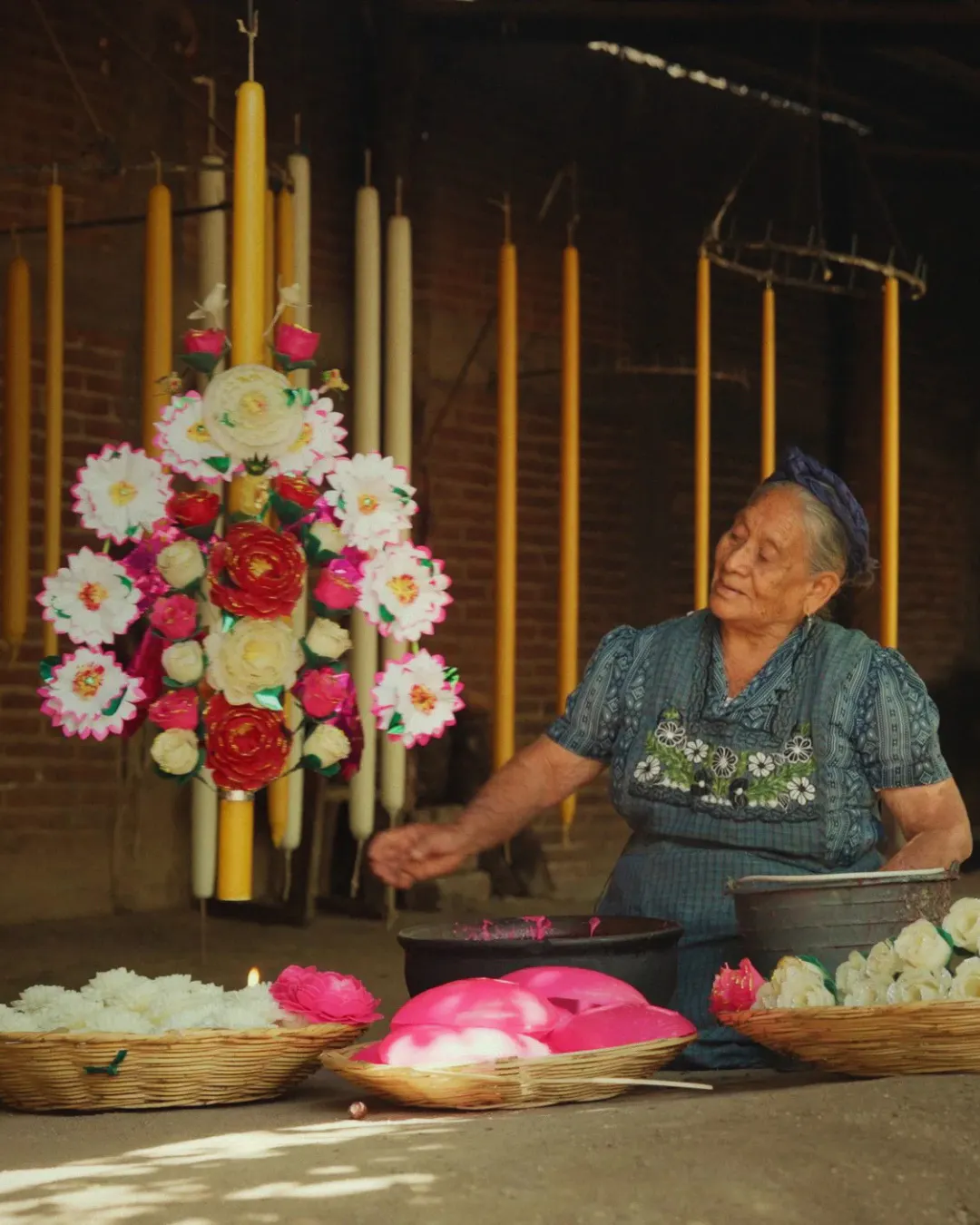
Casa Viviana. Image Credit: Artist and Nomad.
In Oaxaca, wax is shaped into flowers for candles that illuminate baptisms, weddings, funerals, and other moments that define a life. At Casa Viviana in Teotitlán del Valle, this tradition has been carried forward for generations, rooted in Zapotec culture and ceremony.
For much of its history, candle making was sustained through barter, leaving many artisans with little income. When Doña Viviana Alávez began selling her work beyond the village, she not only supported her family, but helped revive and reshape the craft.
As demand grew, she opened her workshop to other women, creating new opportunities and expanding the tradition. When faced with the loss of traditional molds, she turned to nature for inspiration, developing new floral designs that are now central to the work.
Today, each candle is still made by hand, petal by petal, often taking weeks to complete. What continues at Casa Viviana is not just tradition, but a living practice, shaped by creativity and community.
7. Bia Beguug: Weaving identity into every thread in Mitla, Mexico
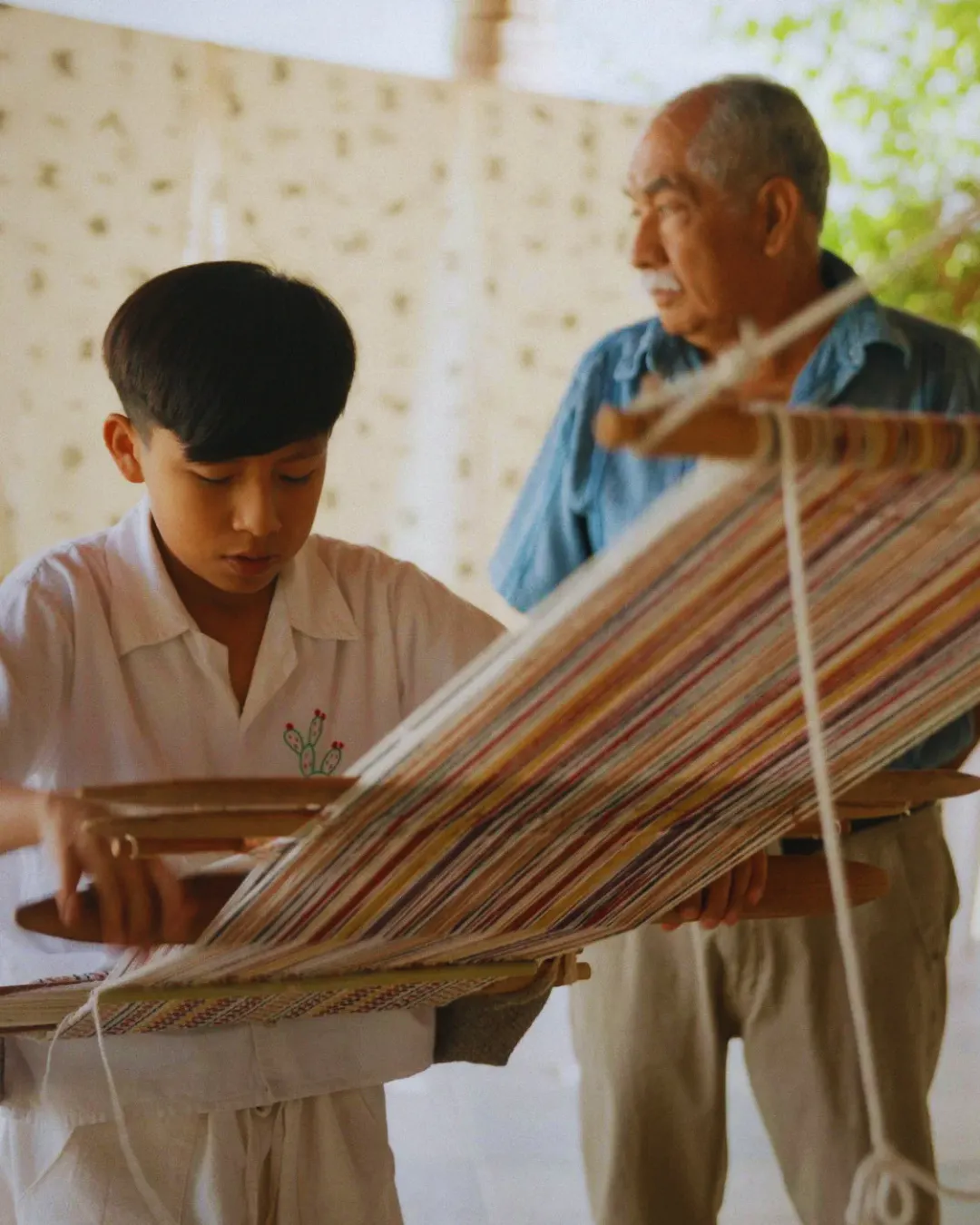
Bia Beguug. Image Credit: Artist and Nomad.
In the town of Mitla, Oaxaca, Mexico, weaving is more than a craft. It is a language.
At Bia Beguug, master weaver Arturo Hernandez works alongside his family to create textiles from locally sourced wool and cotton, using natural dyes and both wood and backstrap looms. In the backstrap tradition, the weaver’s own body becomes part of the loom, leaning back to create tension and guide each thread into place.
The designs carry meaning. Geometric patterns reflect Zapotec cosmology, the natural world, and daily life, while colors and motifs connect past knowledge with present expression.
Like many traditional crafts, weaving here exists within a changing world. Younger generations must decide whether to continue the work, often balancing cultural inheritance with economic realities.
In studios like Bia Beguug, the practice endures. Families create together, adapting where needed while holding onto what matters.
8. Sunhouse Craft: Reviving handmade traditions in Appalachia, United States
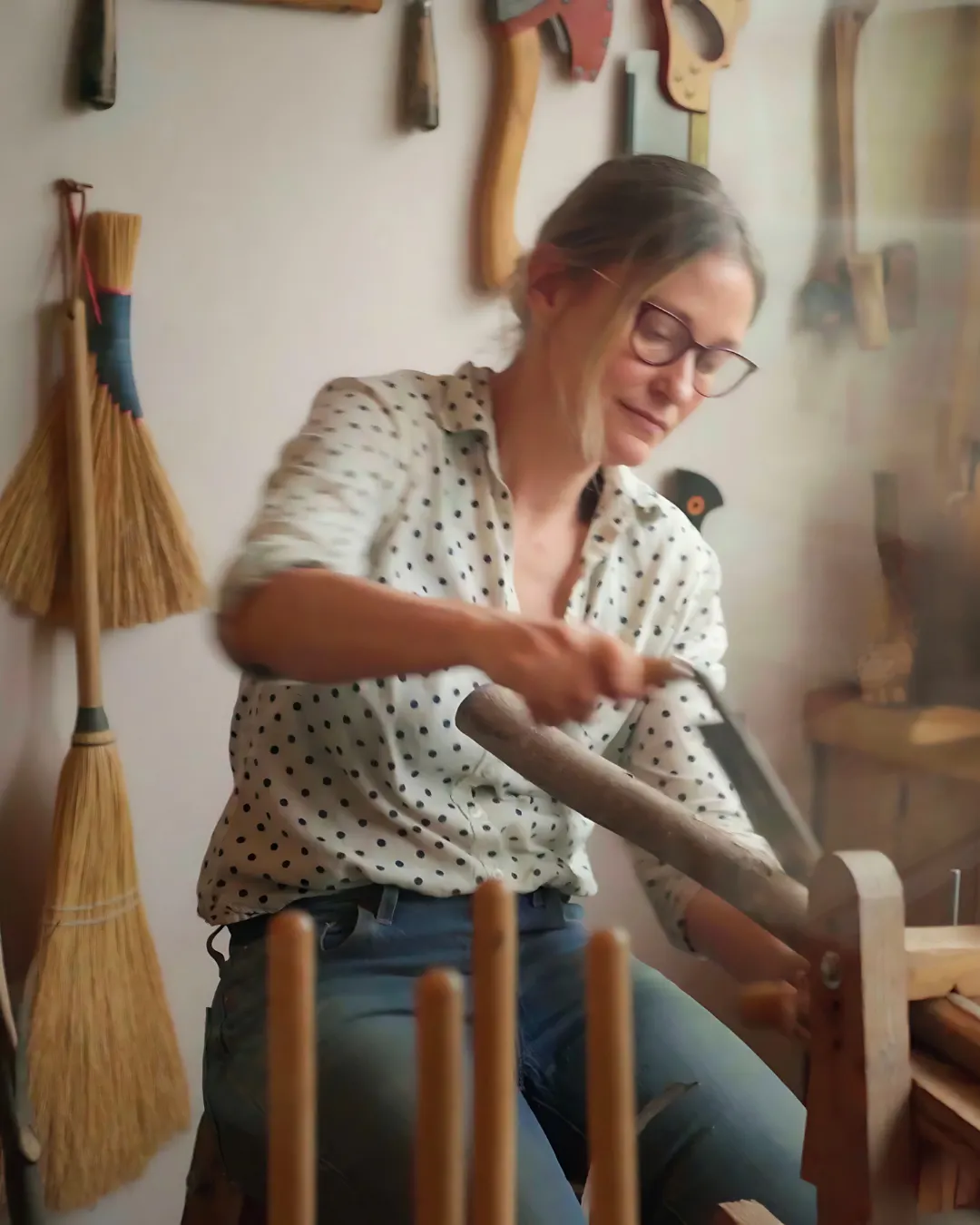
Sunhouse Craft. Image Credit: Artist and Nomad.
Broom making is simple, at least in theory. A handle, a bundle of fiber, and a method of binding them together. But in practice, the craft demands repetition, precision, and a deep understanding of materials.
At Sunhouse Craft in Berea, Kentucky, a region known for its folk arts heritage, this tradition has been reimagined as a modern workshop. Thousands of brooms are produced each year, each one shaped by hand.
The challenge is not how to make them, but how to sustain the work. In a market dominated by cheap, mass-produced goods, handmade items must compete on entirely different terms, balancing fair wages with accessible pricing.
Still, the workshop continues to grow, part of a broader effort to rebuild craft economies in places where traditional industries have declined.
What’s taking shape here is not just a product, but a possibility. That handmade work can still support livelihoods, strengthen communities, and take root again in the present.
9. Studio Bagru: Printing precision and tradition into cloth in Rajasthan, India
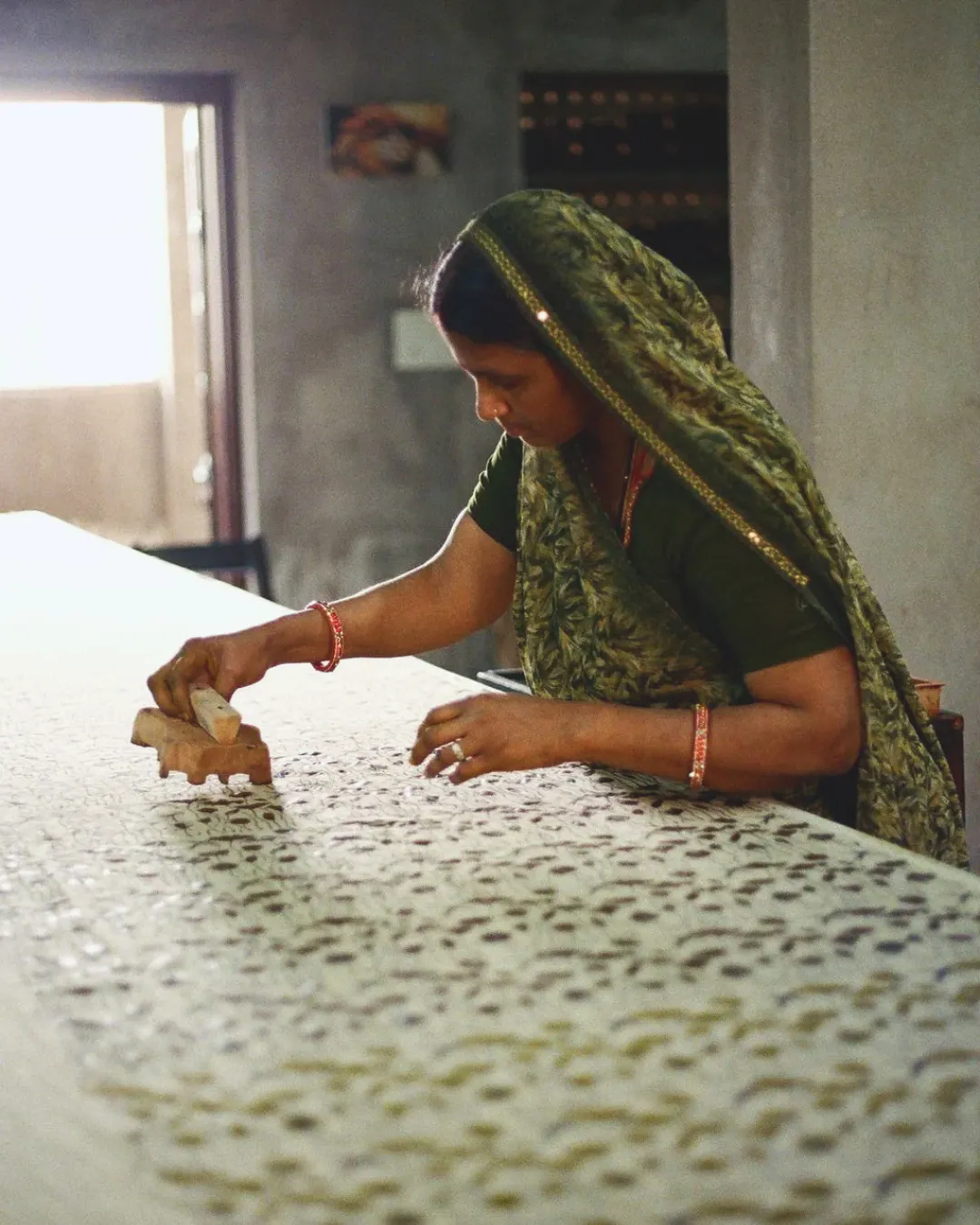
Studio Bagru. Image Credit: Artist and Nomad.
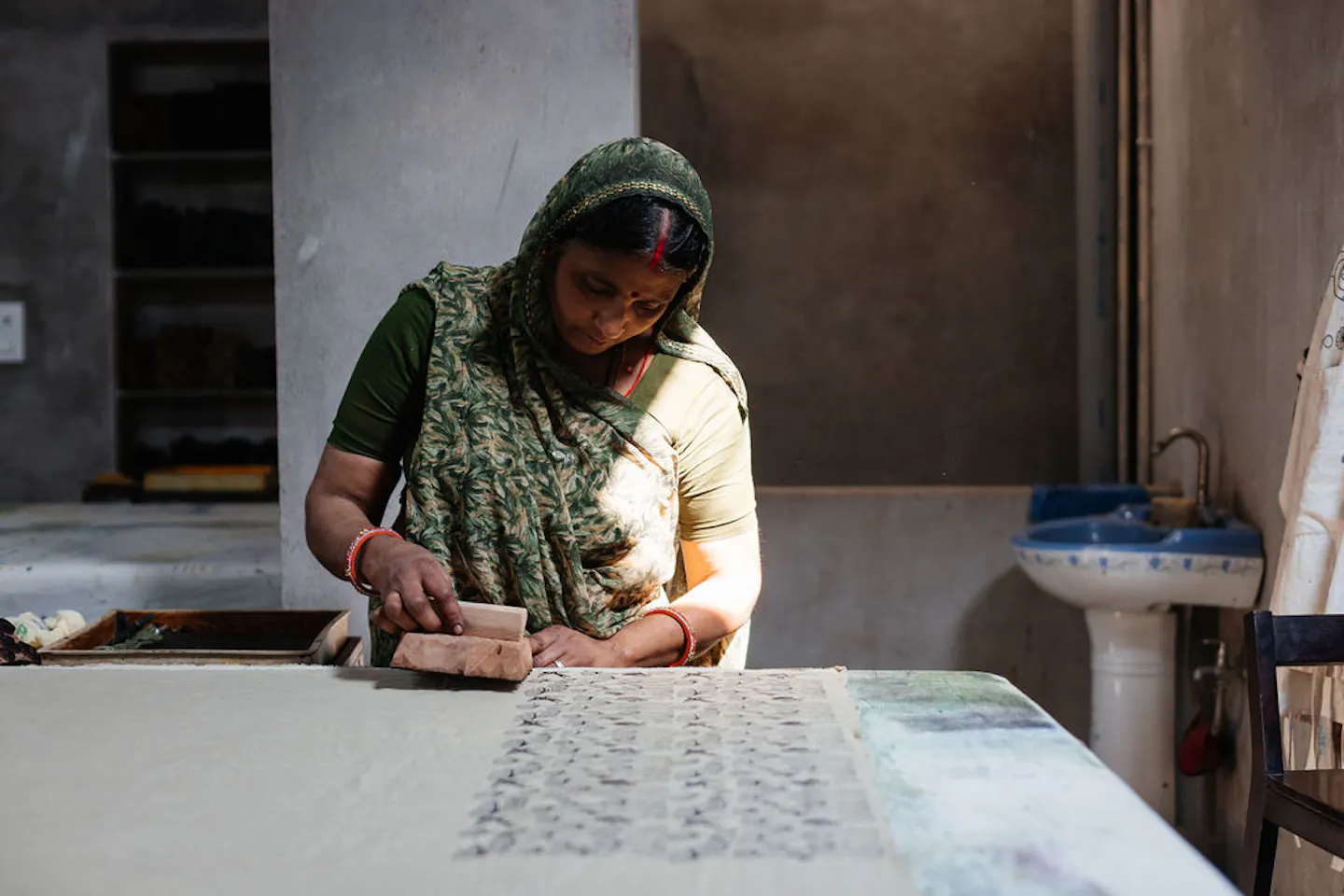
In the desert region outside Jaipur, the town of Bagru has been known for centuries as a center of block printing. Here, artisans create intricate textiles by stamping patterns onto cloth using hand-carved wooden blocks and dyes drawn from the surrounding landscape.
At first glance, the process appears simple: a wooden stamp dipped in dye, pressed carefully onto fabric. Yet, watching the Bagru printers at work reveals the extraordinary level of skill involved. Rather than relying on machines or templates, every motif is placed entirely by hand.
Gripping the wooden block, the printer aligns it by eye with the previous imprint, pressing down with practiced, steady pressure. As the block lifts, it moves a few inches to land again. Over and over, in a rhythmic dance of precision. To maintain perfect spacing across meters of cloth requires a mastery of spatial awareness; even the slightest misplacement would disrupt the entire flow. Despite this, rows of flowers, vines, and geometric forms unfold in seamless repetition, each stamp connecting perfectly to the one before it.
At Studio Bagru, what is most striking is not just the skill, but the refusal to be rushed. In a world built for speed, this process honors the time required to create something truly enduring.
Why handmade traditions matter
Across all these places, the challenges are similar. Fast fashion, globalized supply chains, and layers of middlemen often leave artisans undervalued and disconnected from the people who appreciate their work.
At One Earth, we believe a thriving future depends on solutions that work with, not against, the living systems of our planet. The artisans featured in Handmade Future reflect this approach, strengthening local economies, empowering women, and preserving traditional knowledge while working with materials drawn ethically from the ecosystems around them.
In doing so, they reveal a broader truth: culture, ecology, and community are deeply intertwined, and sustaining one helps sustain them all.
A future still made by hand
In a world increasingly defined by automation and mass production, handmade objects remind us of something deeply human. Each woven basket, carved stone, or stitched garment carries the imprint of a person, a place, and a story. These objects are not simply products, but expressions of connection and meaning.
“Artisans don’t just create livelihoods. They carry culture, identity, and a sense of community that cannot be replaced.” — Kirsten Dickerson, Director of Handmade Future.
If we choose thoughtfully, what we wear and bring into our homes can carry value back to the hands that made them, reminding us that making is part of our nature. Just as birds weave nests and bees build hives, humans shape beauty from the materials of the Earth... and our future depends on remembering how.
Handmade Future will begin screening at festivals this May, with a wider online release expected by Thanksgiving 2026, alongside opportunities to host community screenings.
Explore similar content

Subscribe to receive monthly updates on climate solutions, environmental heroes, and the profound beauty and wonder of our shared planet Earth.