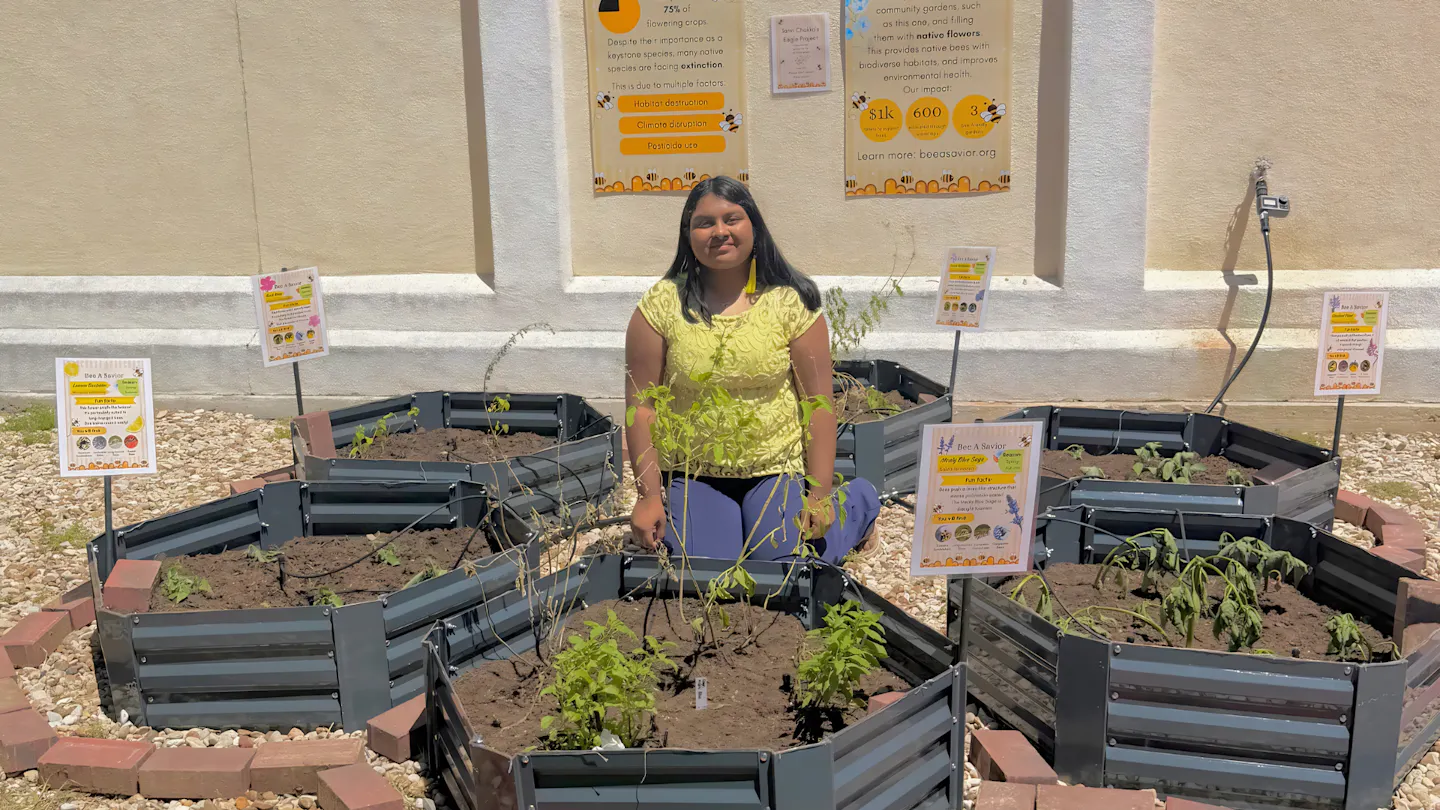
From granite to garden: How a youth-led nonprofit grew a pollinator paradise
- Nature Conservation
- Land Conservation
- Urban Biodiversity
- Youth Leadership
- Education & Culture Shift
- Insects
- Pollinators
Bees are some of the most important pollinators on the planet, but they face growing pressure from habitat loss, pesticide use, and declining plant diversity.
For young people like myself, problems this large can feel overwhelming. But all it takes to create real change is one person taking action.
My name is Tanvi Chakka, and I am the founder of Bee A Savior, a youth-led nonprofit working to protect pollinators through education and hands-on conservation. What began as a simple effort to raise awareness eventually grew into our first pollinator garden, transforming a bare strip of granite into habitat for bees, butterflies, and other insects.
Why pollinators need more places to thrive
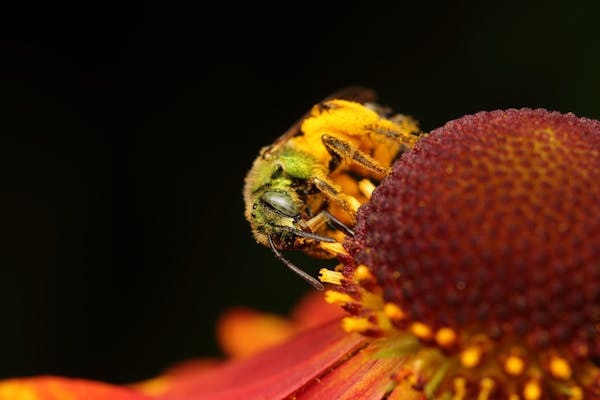
Every day, billions of worker bees fly out of their hive to get nectar. Their five eyes are specialized for detecting flowers with pollen, and their fuzzy bodies naturally get covered in the yellow substance as they travel from plant to plant. Bees typically visit 7,000 flowers a day, and are responsible for one third of the food humans consume.
What happens when pollinators can no longer find the food and habitat they need?
On their journey, these small pollinators face multiple hazards. Farmers often use chemical-laden pesticides on large expanses of land. Although these sprays are designed to kill harmful insects, they can kill beneficial ones too, including bees and butterflies.
Furthermore, agriculture has seen an unsustainable practice become even more prevalent: monocropping. Growing the same plant over a giant area is easy, but reduces biodiversity in the long run. When all the flowers bloom during the same season, bees may have to travel even farther to find food throughout the rest of the year.
And if a disease makes its way to the plants, it can spread quickly.
Bees have also lost a large portion of their habitat to urbanization. As cities expand, they often leave less room for native wildlife. Existing plants may be decorative, chosen primarily for aesthetics rather than their ability to support local pollinators.
These were the problems I began noticing, and they ultimately inspired me to start Bee A Savior.
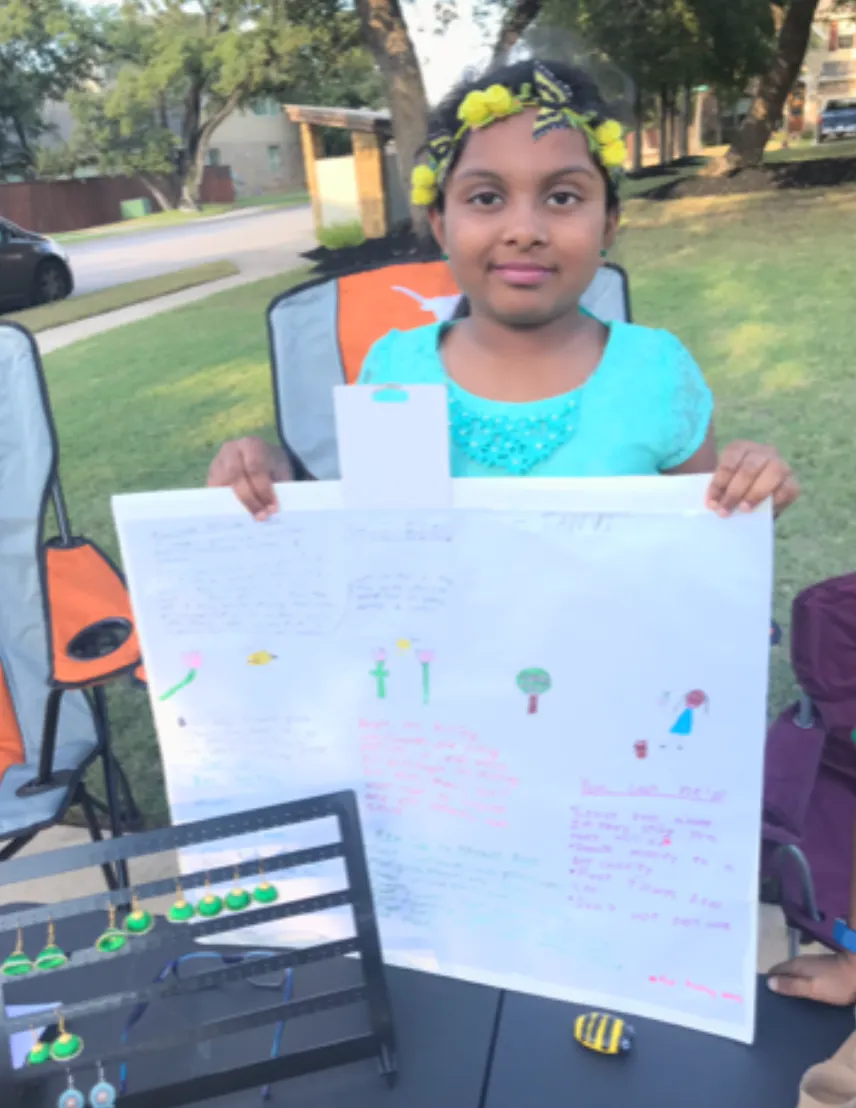
Bee A Savior hosts their first booth in 2018, educating the neighborhood about the importance of pollinators. Image Credit: © Tanvi Chakka, Bee A Savior.
It started with a flyer
I had just learned about how vital bees, a keystone species, were to human survival. But as a second grader, what could I do? It seemed as if no one knew about the problem in the first place, let alone had the resources to enact change on a larger scale.
As soon as I got home from school, I drew a flyer and stuck it to the neighborhood mailbox. With a drawing of a bee and some flowers, I wrote about how bees are important to the environment, and advocated for others to take action. This is when the first seed was planted in the community.
Over the years, I continued educating others about essential pollinators. I sold beeswax candles and T-shirts to my neighborhood, using these funds to host hands-on workshops with the next generation. From origami bees to wildflower seed bombs, Bee A Savior was steadily growing. But was education really changing anything?
Eventually, I realized that awareness alone could only go so far. I wanted to turn that awareness into action.
A habitat of hexagons
Picture this. Outside a community building in Cedar Park, Texas, a bare strip of granite gravel. Not even grass was growing there, and the only sign of life was a wasp nest nearby. This was an area deprived of biodiversity, and although it looked bare, I knew Bee A Savior could turn it into something living.
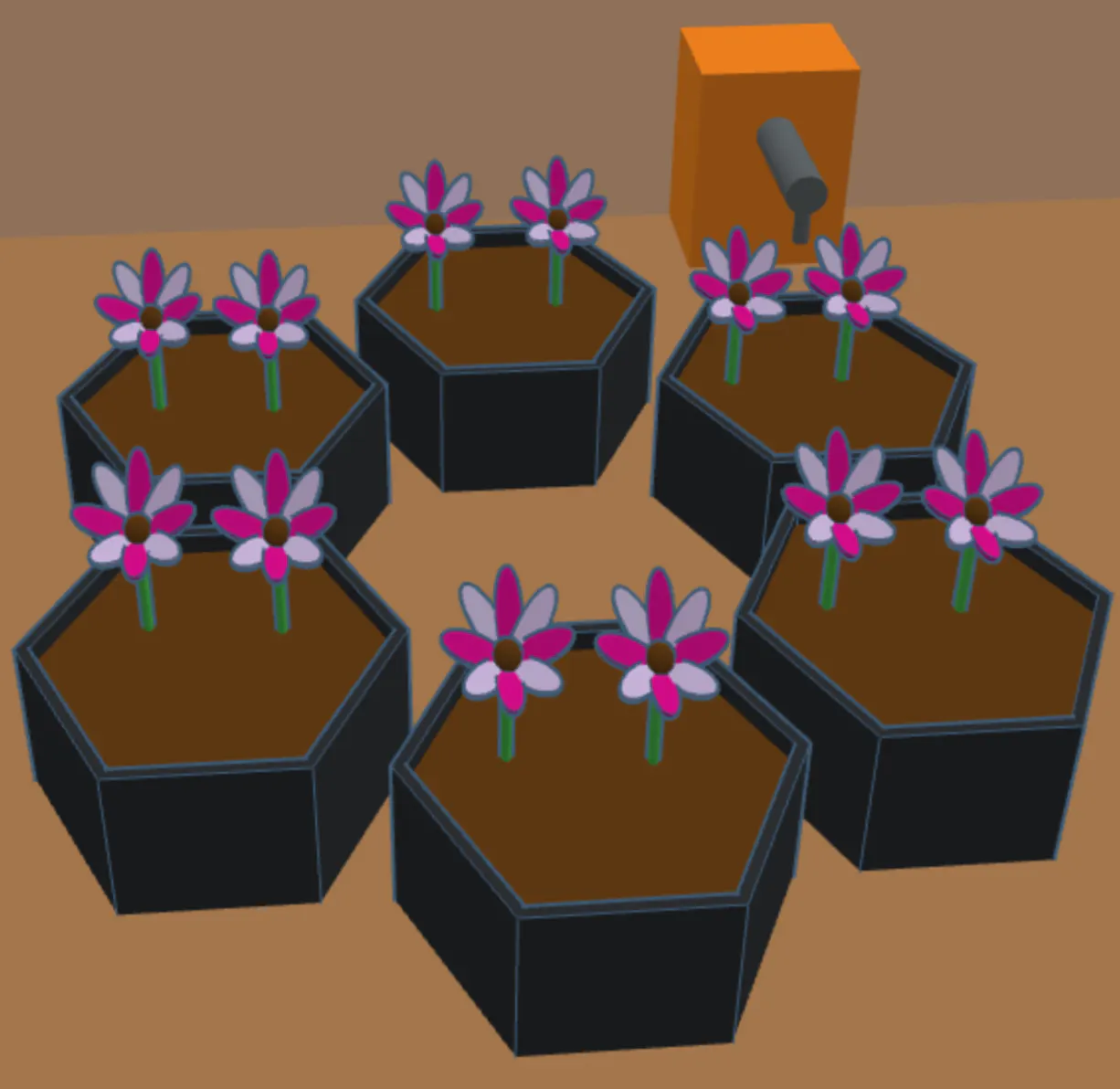
A 3D model of the pollinator garden. Image Credit: © Tanvi Chakka, Bee A Savior.
The first step was designing the garden. Native flowers were essential, since they are adapted to local pollinators . Taking inspiration from the bees themselves, I decided on hexagonal garden beds. Educational signs would allow bystanders to learn more about bees, and the benefit of a bee-friendly garden firsthand. I took all of these ideas and built a 3D model of the layout, mapping out where every hexagon would sit.
The beds were planted with Texas natives including bee balm, mealy blue sage, obedient plant, purple mistflower, and rock rose. Unlike ornamental plants chosen for how they look, these bloom on a schedule local bees evolved alongside.
Sourcing materials was the most difficult portion of this project. Bee A Savior reached out to roughly 400 businesses asking for sponsorship. One said yes. A local farm contacted me and offered to donate plants. We funded the rest of the garden the same way we had funded our workshops, through beeswax candle and T-shirt sales, along with materials donated by neighbors.
With the date set, Bee A Savior started recruiting volunteers. Twenty like-minded people worked together, including members of my scout troop, assembling the garden bed by bed. What was originally a two-day project came together in just two hours.
Now, Bee A Savior's pollinator garden is established. Bumblebees and monarch butterflies have joined the wasps, resting and feeding on the flowers. A timed irrigation system helps keep the garden alive through the heat of the Texas summer, and our teen volunteers still check on it regularly.
One garden isn't enough
Although six hexagons of native plants are real habitat,one garden alone cannot improve biodiversity on a global scale. What made this garden work was not funding or expertise, but passion from a student who wanted to solve a real issue in her community. The question became how to transfer that to other students.
Bee A Savior has since expanded to 13 countries through their chapter model. Students establish clubs in their schools, and each chapter builds gardens and hosts their own workshops in their communities while advancing through different tiers and earning volunteer hours.
Our 30 chapter presidents and 20 robotics team partners are taught about bees, why they matter, the challenges they face, and how they can help.
Overall, Bee A Savior now has more than 300 volunteers, and has educated more than 15,000 people in their workshops and community events. We have also raised more than $3,000 to support our work for pollinators.
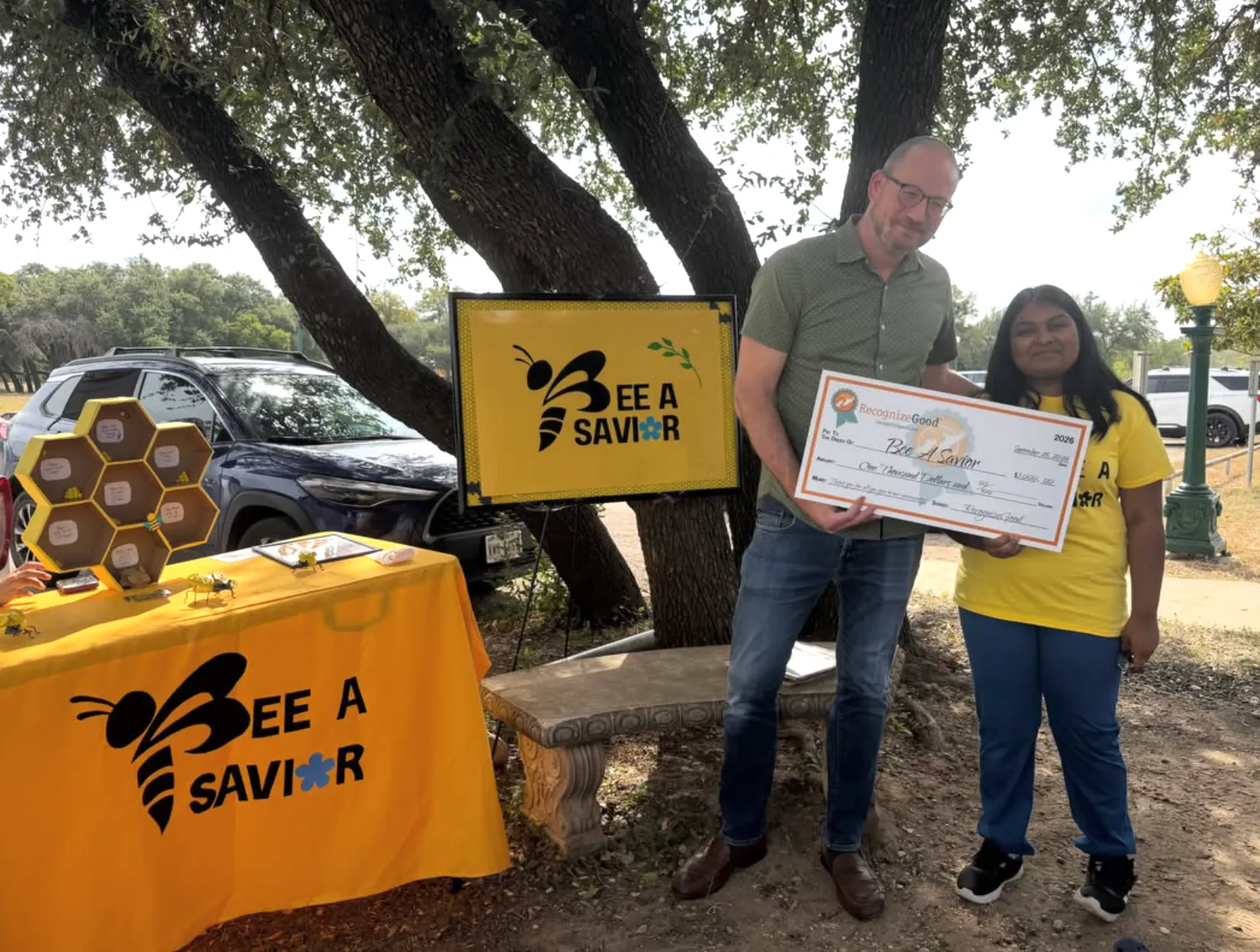
RecognizeGood, a 501(c)(3) nonprofit that highlights acts of kindness, issues Bee A Savior a $1000 grant. Proceeds will be used to fund our pollinator gardens. Image Credit: © Tanvi Chakka, Bee A Savior.
How you can help
One of the best things you can do to help your local pollinators is planting flowers native to your area, which you can look up through your regional native plant society. Native plants are especially valuable because local pollinators have evolved alongside them.
Some native bees rely on a limited range of plants for food, so planting a variety of native species can help provide the nectar and pollen they need.
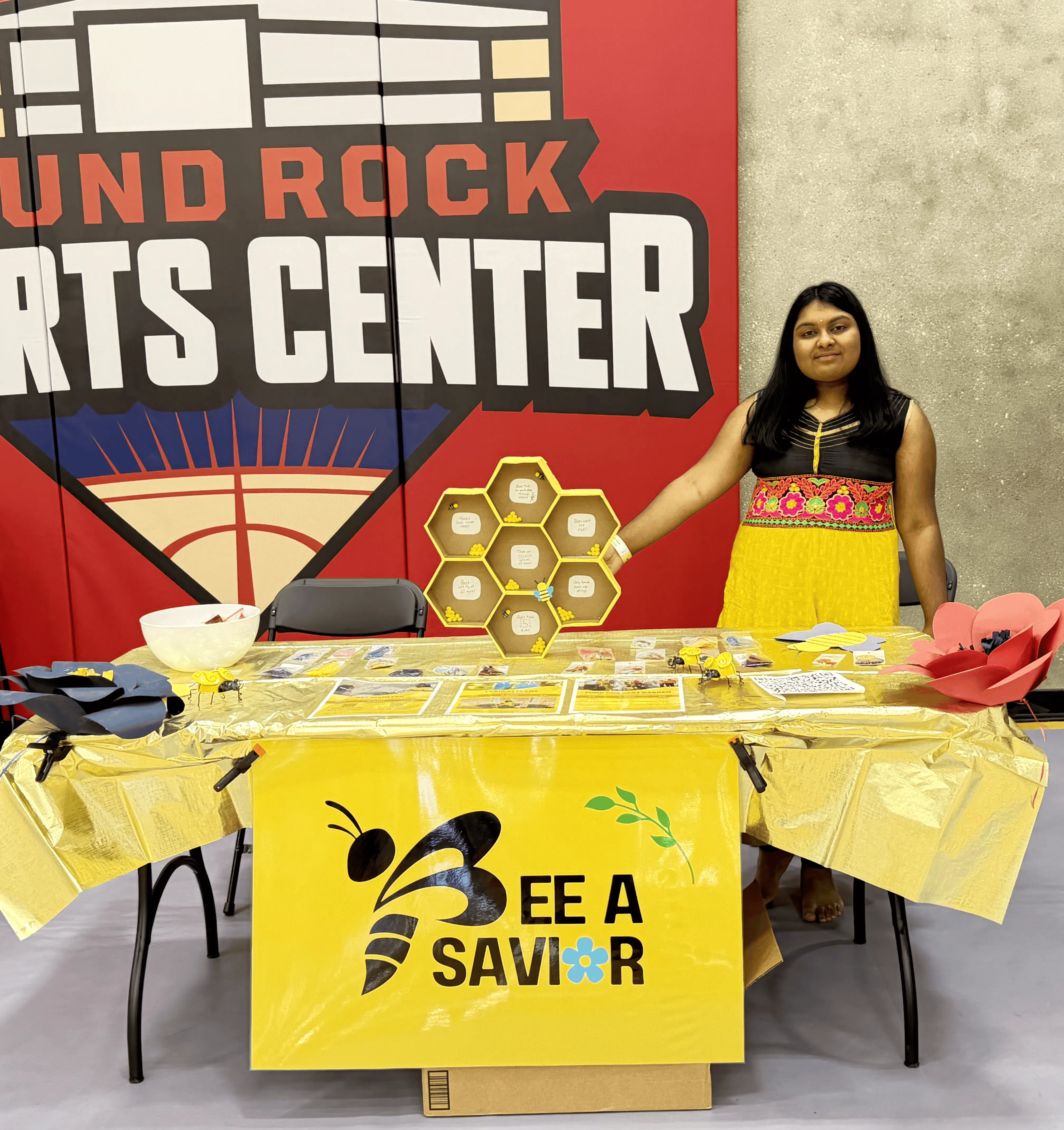
Bee A Savior educates students, hosting a booth at a local event. Image Credit: © Tanvi Chakka, Bee A Savior.
Another small change you can make is to reduce your pesticide use. When possible, try nonchemical approaches first. Even products considered natural can harm beneficial insects, especially when sprayed on flowers in bloom.
If you are buying plants from a nursery, you can also ask whether they have been treated with neonicotinoids. These systemic pesticides can remain in plant tissues and may expose bees and other pollinators that feed on them.
Motivated volunteers can also start Bee A Savior chapters in their area. There’s no age limit. Bee A Savior’s chapter leaders range from middle schoolers to master’s students. If you want access to educational workshop curriculums, garden tutorials, and a community excited about helping pollinators, apply here.
If you have land that could hold a garden, resources to donate, or want to help a local chapter, get in touch with Bee A Savior at [email protected].
After asking four hundred companies, one said yes. That one yes became a pollinator paradise in a strip of gravel, and that one garden motivated students in 13 countries to build for bees themselves. The bees don't need everyone to say yes. They just need someone to keep asking.
Explore similar content

Subscribe to receive monthly updates on climate solutions, environmental heroes, and the profound beauty and wonder of our shared planet Earth.
.jpeg?auto=compress%2Cformat&h=600&w=600)